

Dealing with the loss of a loved one is emotionally taxing, and inheriting a mobile home adds a layer of complex logistical responsibility. According to recent industry data, over 10 million mobile homes exist in the United States, yet many sit unused or deteriorating on private property after the original owner passes away. This guide provides a clear, actionable roadmap for navigating the legal, financial, and physical aspects of managing an inherited manufactured home, ensuring you make informed decisions that honor your family's legacy while protecting your financial interests. (About Us Banyan Mobile)
Step 1: Determine Legal Ownership and Title Status
The first critical step in managing an inherited mobile home is establishing its legal identity. Unlike traditional site-built houses, mobile homes are often classified as personal property rather than real estate. This distinction dictates how the asset is transferred during probate.
You must locate the vehicle title for the mobile home. If the title is available, the transfer process is similar to transferring a vehicle. If the title is lost, you will need to apply for a duplicate through your state's Department of Licensing or equivalent agency. Mobile Home is a movable structure built on a permanent chassis. This definition is crucial because it determines whether the home is treated as a vehicle or real property in legal proceedings.
If the home was previously registered as real estate, the title may have been extinguished. In this case, you must reverse the extinguishment to re-establish the vehicle title before any transfer or removal can occur. This step is often overlooked but is mandatory for legal compliance. Consult with a probate attorney to ensure the title transfer aligns with your state's specific inheritance laws.
Step 2: Assess Land Ownership and Property Integration
Once the title status is clarified, you must determine the relationship between the mobile home and the land it sits on. This assessment dictates your options for disposal or transfer.
Real Property Integration occurs when a mobile home is permanently affixed to land owned by the homeowner. If the inherited home is on land you also inherited, it may be considered part of the real estate. This integration can complicate sales, as buyers may need to secure traditional mortgages rather than personal property loans. Conversely, if the home is located in a rented lot within a mobile home park, you are likely only inheriting the structure, not the land. This distinction significantly impacts the value and marketability of the asset.
Review the deed and any existing leases to understand your rights. If the home is on private land, you have the option to sell the land and home together or separately. If it is in a park, you must coordinate with park management regarding the removal or sale of the unit. Understanding this boundary is essential for accurate valuation and legal clarity.
Step 3: Conduct a Financial and Tax Assessment
Inheriting an asset comes with financial implications that must be addressed early. You need to determine the current market value of the mobile home and understand the tax obligations associated with the inheritance.
First, obtain a professional appraisal. Mobile homes depreciate differently than traditional homes, often losing value over time unless they are well-maintained or newly constructed. An accurate appraisal helps you decide whether selling, donating, or removing the home is the most financially prudent choice. Market Value is the estimated price at which a property would sell in a competitive market. This figure is critical for tax reporting and negotiation.
Next, consult with a tax professional regarding capital gains tax and estate tax implications. In many cases, the basis of the inherited property is stepped up to its fair market value at the time of the original owner's death. This can significantly reduce potential capital gains taxes if you decide to sell the home later. Additionally, if you choose to donate the home, you may be eligible for a charitable tax deduction based on the appraised value.
Step 4: Evaluate Removal, Donation, or Sale Options
After assessing the legal and financial landscape, you must choose a path forward. The three primary options are selling the home, donating it for a tax deduction, or arranging for free removal.
| Option | Pros | Cons | Best For |
|---|---|---|---|
| Sale | Potential for immediate cash profit | Requires marketing, showings, and buyer financing | Well-maintained homes in high-demand areas |
| Donation | Tax deduction, no removal hassle | No cash proceeds, strict eligibility criteria | Homes needing repair or owners seeking tax benefits |
| Free Removal | Zero cost, quick land clearance | No financial return, home is repurposed | Unwanted homes, deteriorating units, or land redevelopment |
Selling a mobile home can be challenging due to the niche market and financing hurdles. Many buyers struggle to secure loans for older units. Donating the home offers a streamlined alternative, especially if the home is in poor condition. Charitable Donation is the voluntary transfer of an asset to a qualified nonprofit organization. This process allows you to remove the home without cost while supporting affordable housing initiatives.
Free removal is ideal for homes that have no resale value or are located in difficult-to-access areas. Organizations like Banyan Mobile Home Removal specialize in coordinating the logistics of removing unwanted manufactured homes at no cost to the owner. This option is particularly relevant for homes built in 1980 or newer, which meet specific safety and transport standards.
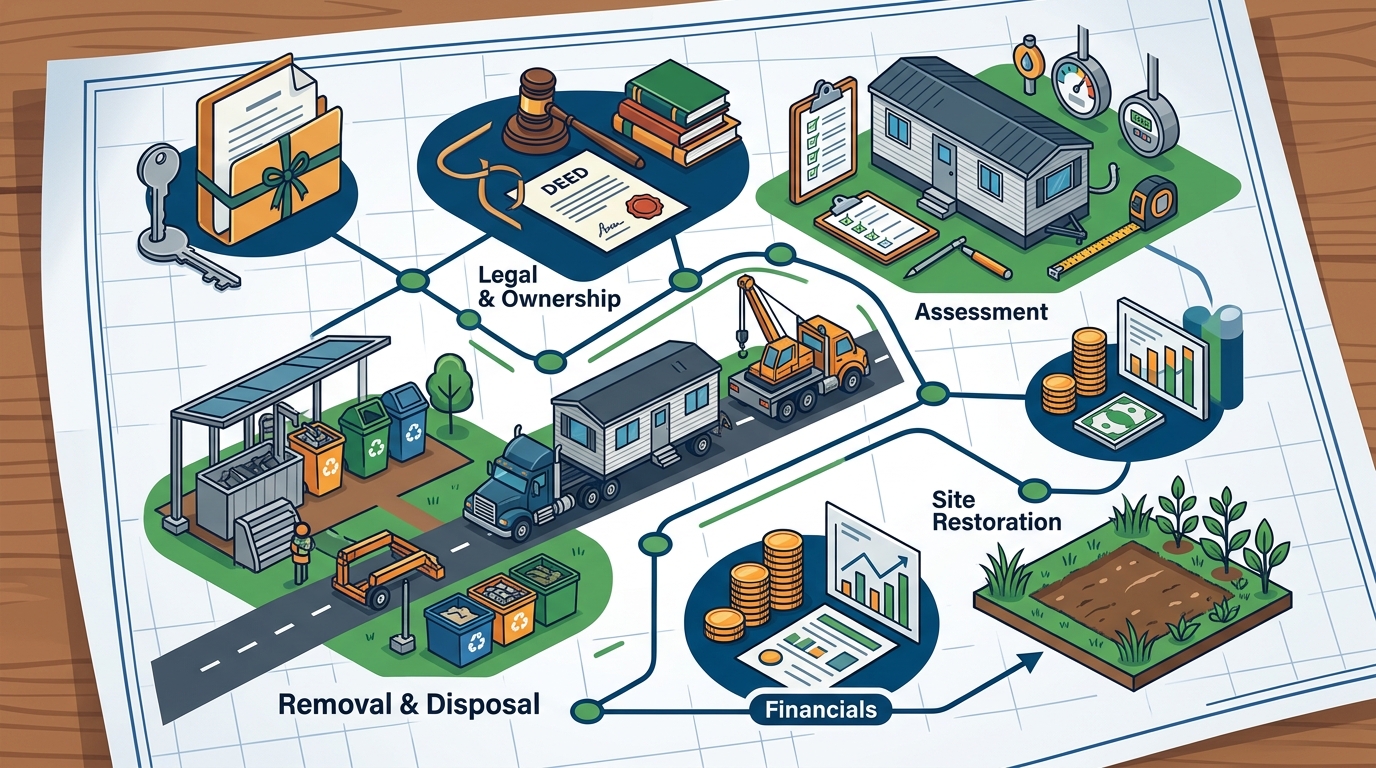
Step 5: Execute the Donation and Removal Process
If you choose to donate or arrange for free removal, the process is structured and transparent. The first step is to contact a qualified removal service to submit a qualification form. You will need to provide details about the home's age, condition, and location.
Once the home is approved, the organization coordinates with licensed and insured local mobile home movers. This partnership ensures that the removal is conducted safely and efficiently. Professional Removal involves the coordinated effort of licensed movers to transport a manufactured home from its current site. This service eliminates the burden of finding contractors and managing logistics yourself.
During the removal process, you will receive updates on the timeline and next steps. The movers will remove skirting, tie-downs, and any attached structures before transporting the home. After removal, you will receive documentation for your tax deduction. This process not only clears your land but also contributes to a larger mission of providing affordable housing to families in need.
Key Takeaways
- Verify Title Status: Locate the vehicle title or apply for a duplicate through your state's Department of Licensing before taking any action.
- Check Land Ownership: Determine if the home is real property or personal property based on land ownership and permanent affixation.
- Get an Appraisal: Obtain a professional valuation to understand the home's market value and potential tax implications.
- Consider Donation: Donating a qualifying home (1980 or newer) can provide a tax deduction and free removal services.
- Use Licensed Movers: Ensure any removal service partners with licensed and insured professionals to protect your property.
- Consult Tax Professionals: Understand the capital gains and estate tax implications of your chosen disposal method.
- Act Promptly: Delaying removal can lead to increased property taxes, safety hazards, and further deterioration of the home.
Frequently Asked Questions
Can I donate a mobile home with back taxes or liens?
Yes, but the process is more complex. Back taxes or liens must typically be resolved before the donation can be finalized. You may need to work with a title company or attorney to clear these encumbrances. Some organizations can assist with navigating these issues, but it is essential to disclose all financial obligations upfront.
What is the age requirement for mobile home donation?
Most reputable removal organizations, including Banyan Mobile Home Removal, accept mobile homes built in 1980 or newer. This requirement ensures that the home meets federal safety standards established by the U.S. Department of Housing and Urban Development (HUD). Homes built before 1976 are generally not eligible due to outdated construction standards.
How does mobile home depreciation affect inheritance value?
Unlike traditional homes, mobile homes often depreciate in value over time. However, the inheritance value is based on the fair market value at the time of the original owner's death, not the original purchase price. This "stepped-up basis" can significantly reduce capital gains taxes if you sell the home later.
Is the removal process really free?
Yes, for qualifying homes, the removal is completely free to the owner. The organization covers the costs of moving, including the labor and equipment required to transport the home. In exchange, you donate the home, which may qualify for a charitable tax deduction.
What happens to the mobile home after removal?
Qualified mobile homes are typically repurposed to provide affordable housing for individuals and families in need. The organization may sell the home to a deserving buyer, often with assistance in financing or moving. This process helps reduce waste and supports community housing initiatives.
Do I need to clear out the home before removal?
While it is ideal to remove personal belongings, it is not always mandatory. However, clearing out the home allows you to keep any items of value and ensures a smoother removal process. The removal team will secure appliances and fixtures inside the home before transport.
How long does the removal process take?
The timeline varies based on location and logistics, but most removals are completed within 8 weeks of approval. The organization coordinates with local movers to schedule the transport, ensuring minimal disruption to your property.
Contact Us for Free Removal
Managing an inherited mobile home does not have to be a burden. If you are looking to clear your land and potentially receive a tax deduction, Banyan Mobile Home Removal offers a streamlined, no-cost solution. We are an accredited 501(c)(3) nonprofit dedicated to facilitating the removal of unwanted manufactured homes and repurposing them for affordable housing.
Take the first step today. Contact us online or call 855-545-8646 to learn if your mobile home qualifies for our free removal program. Let us help you turn a complex inheritance into a meaningful contribution to your community.