

Common Mistakes When Removing a Mobile Home and How to Avoid Them
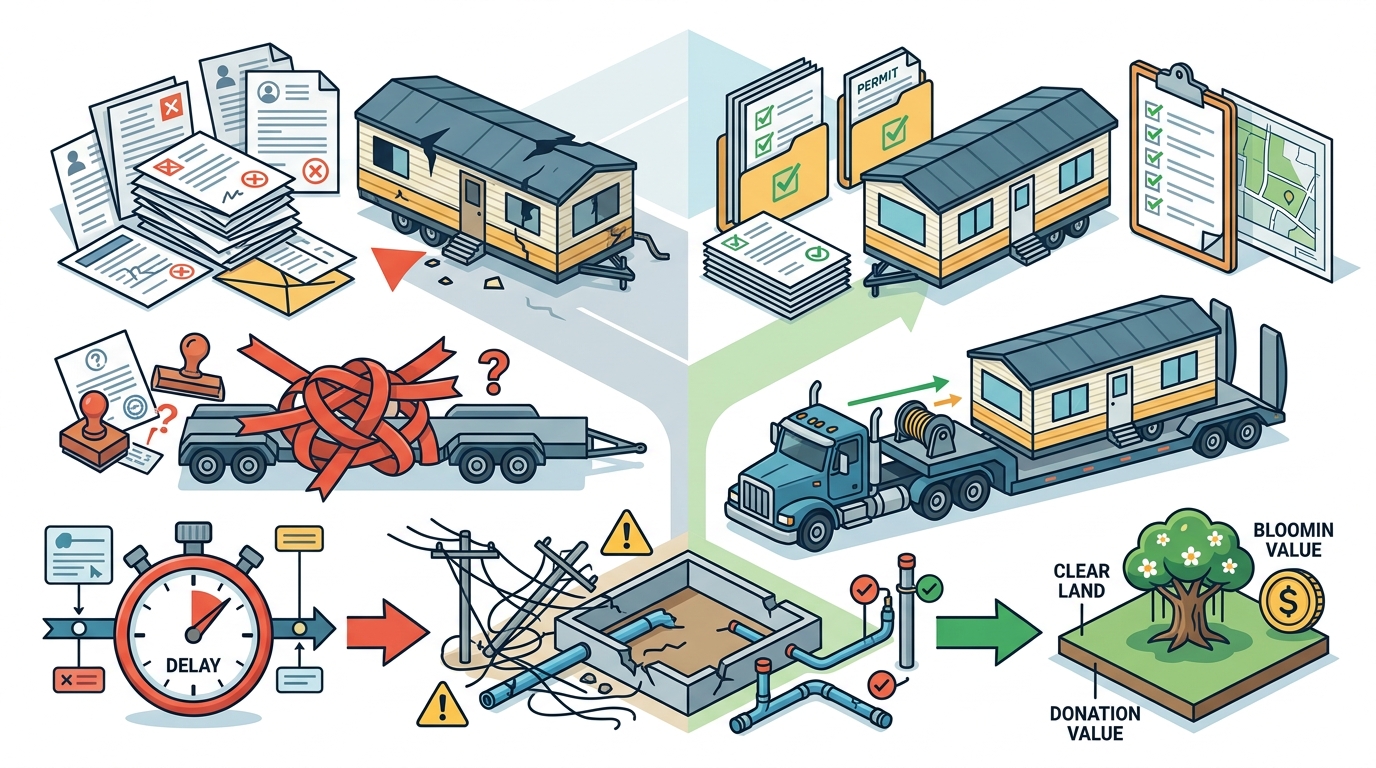
Removing an unwanted mobile home is rarely as simple as calling a junk removal service. It involves navigating complex property laws, vehicle titling regulations, and logistical hurdles that can stall a project for months. According to recent industry data, over 60% of property owners encounter significant delays due to administrative errors before the first mover even arrives. Understanding these pitfalls is critical to clearing your land efficiently and potentially turning a liability into a financial asset through charitable donation.
Mistake 1: Failing to Re-establish the Vehicle Title
One of the most common and costly errors property owners make is assuming that because the mobile home is attached to their land, it is no longer a vehicle. This assumption creates a legal bottleneck. If the title was extinguished when the home was originally placed on the property, you cannot legally move it without re-establishing its status as a vehicle.
The Fix: Before contacting any removal service, verify the current status of your mobile home's title. If it is considered part of the real estate, you must work with your local Department of Licensing to reverse the extinguishment. This process involves submitting specific forms and paying fees to get the "pink slip" back in your name. Without this document, professional movers will refuse to transport the home because they cannot legally operate it on public roads. Banyan Mobile Home Removal requires this title to be in order before they can proceed with an inspection and removal.
For more details on the donation process, visit our Donate Your Mobile Home page to understand how we handle these administrative steps.
Ignoring Local Zoning and Permit Requirements
Mobile homes are subject to strict local zoning laws that vary significantly by county and state. Many property owners assume that removing a home from their own land is a private matter. However, transporting a structure of that size often requires special permits from local transportation authorities. These permits dictate the time of day, the routes movers can take, and the need for escort vehicles.
The Fix: Always consult with your local building department or zoning office before scheduling a removal. Ask specifically about "oversize load" permits and any restrictions on moving manufactured homes through residential neighborhoods. Failing to secure these permits can result in heavy fines and the removal crew being forced to leave the home stranded on your property. Professional removal teams, like those partnered with Banyan Mobile Home Removal, are experienced in navigating these regulatory landscapes, but they rely on the property owner to provide accurate location details.
Underestimating the Cost of Utility Disconnection
Mobile homes are connected to multiple utility lines, including electricity, water, sewer, and sometimes natural gas. A frequent mistake is assuming that simply turning off the main switches is sufficient. Professional disconnection is required to prevent environmental hazards, such as sewage leaks or gas explosions, and to ensure the home can be safely detached from the foundation.
The Fix: Contact your local utility providers at least two weeks before the scheduled removal date. Request a formal disconnection and meter removal. In many cases, you will be responsible for the final bills and any fees associated with closing the accounts. If the home is connected to a septic system, you may also need a certified inspector to pump and seal the tank. Ignoring this step can lead to costly environmental cleanup fees that far exceed the cost of the removal itself.
Attempting DIY Removal Instead of Hiring Pros
The allure of saving money often leads property owners to attempt a DIY removal. This is a dangerous and often illegal endeavor. Mobile homes are heavy, wide, and structurally fragile when not on a foundation. Moving them requires specialized equipment, including hydraulic dollies, heavy-duty trucks, and experienced crews who understand how to brace the structure to prevent it from collapsing during transit.
The Fix: Hire licensed and insured mobile home movers. While this seems like an added expense, it is far cheaper than the liability of an accident, property damage, or legal trouble. If you are looking for a cost-free option, consider donating your home to a qualified nonprofit. Organizations like Banyan Mobile Home Removal coordinate with licensed movers to remove the home at no cost to you, provided the home meets their eligibility criteria.
Overlooking Tax Deduction Opportunities
Many property owners view an unwanted mobile home solely as a liability to be disposed of. They pay thousands for removal and receive nothing in return. However, if the home is in decent condition, it may have significant charitable value. Donating the home to a registered 501(c)(3) nonprofit can result in a substantial tax deduction.
The Fix: Research the fair market value of your mobile home. If it is serviceable, contact a nonprofit that specializes in affordable housing. They will send an inspector to assess the condition and provide a letter of donation for your tax records. This process not only clears your land for free but also provides a financial benefit. For more information on how this works, check out our Blog section for guides on maximizing your donation.
Comparison of Removal Options
| Option | Cost to Owner | Tax Benefit | Best For |
|---|---|---|---|
| Charitable Donation | Free | Yes (if itemized) | Serviceable homes (1980+) |
| Private Sale | Commission Fees | No | High-value, newer models |
| Junk Removal | $1,000 - $5,000+ | No | Unserviceable or condemned homes |
Key Takeaways
- Title Status is Critical: You must re-establish the vehicle title if it was extinguished before removal can proceed.
- Permits are Mandatory: Local zoning and oversize load permits are required for legal transport.
- Utility Disconnection: Professional disconnection of water, sewer, and gas is a safety requirement.
- Professional Movers Only: DIY removal is unsafe and often illegal due to the weight and size of the structure.
- Tax Benefits Exist: Donating a serviceable home to a 501(c)(3) nonprofit can provide a significant tax deduction.
- Eligibility Matters: Most donation programs, including Banyan, require homes built in 1980 or newer.
- Communication is Key: Work with a team that provides clear, step-by-step guidance throughout the process.
Frequently Asked Questions
Can I donate a mobile home that is no longer on its chassis?
Yes, but you must first re-establish the vehicle title with your state's Department of Licensing. Once the title is in your name, you can donate the home, and the nonprofit will handle the re-chassis and removal process.
How long does the removal process take?
After qualification, the removal typically occurs within 8 weeks. This timeframe allows for the coordination of licensed movers, permit acquisition, and utility disconnection.
What is the minimum age of a mobile home for donation?
Most accredited nonprofits, including Banyan Mobile Home Removal, only accept mobile homes built in 1980 or newer. This is due to stricter federal safety and construction standards implemented after that date.
Do I need to clean the home before donation?
Deep cleaning is not required. The home will be inspected for structural integrity and basic safety. Personal belongings should be removed, but the home does not need to be professionally cleaned.
How do I calculate my tax deduction?
The tax deduction is based on the fair market value of the home as determined by the nonprofit's inspector. You will receive a formal letter of donation to include with your tax filings. Consult a tax professional for specific advice.
What happens if the home is condemned?
If the home is deemed unserviceable or condemned, it may not qualify for donation. In this case, you may need to hire a junk removal service. However, some nonprofits may still assist with removal for a fee or through local government programs.
Is the removal really free?
Yes, for qualifying donations, the nonprofit covers the cost of the movers and permits. You do not pay for the removal service, and you may receive a tax benefit for the donation.
Ready to Clear Your Land?
Don't let an unwanted mobile home sit on your property and drain your resources. By avoiding these common mistakes and choosing the right removal path, you can clear your land efficiently and potentially benefit your community. If your home is in good condition, consider donating it to Banyan Mobile Home Removal today. Call us at 855-545-8646 to start the qualification process and get your free removal scheduled.