
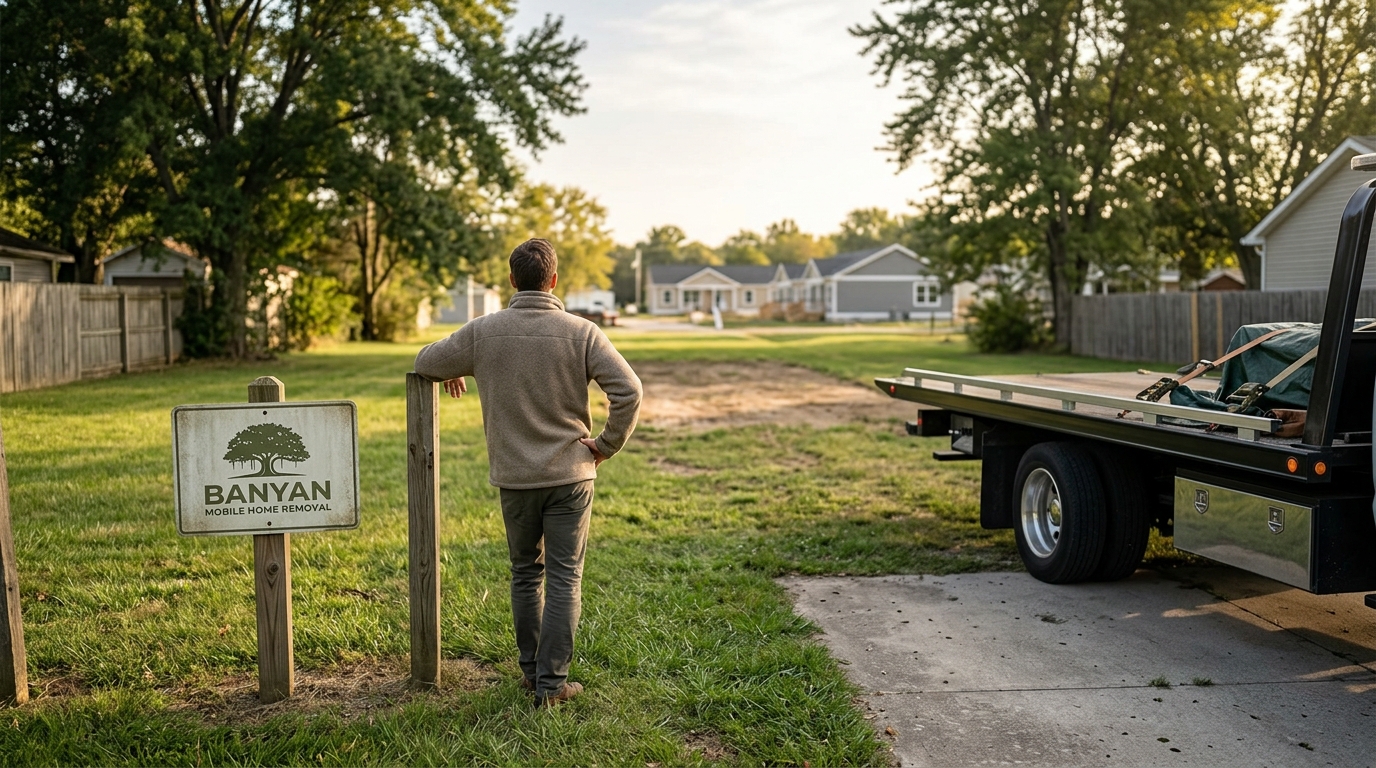
Removing an unwanted mobile home from your property is a complex logistical challenge that often costs thousands of dollars in towing, demolition, and disposal fees. However, donating your home to a qualified nonprofit organization can eliminate these costs entirely while providing a significant tax benefit. According to recent industry data, over 100,000 manufactured homes are abandoned or removed annually in the United States, creating a massive need for affordable housing solutions. By choosing donation, you transform a liability into a community asset. (About Us Banyan Mobile)
Step 1: Verify Home Eligibility and Age
The first hurdle in the donation process is determining whether your mobile home qualifies for removal. Most reputable nonprofit organizations, including Banyan Mobile Home Removal, have strict criteria regarding the age and condition of the structure. Generally, homes built in 1980 or later are eligible because they must comply with the federal HUD Code standards for manufactured housing. Homes built before this date are often classified as "pre-HUD" and may not meet current safety and transport regulations.
Manufactured housing is defined as a structure built on a permanent chassis, transported to a site, and connected to utilities. This definition distinguishes it from modular homes, which are built in sections and assembled on-site. Understanding this distinction is critical because pre-HUD homes often require demolition rather than relocation, which falls outside the scope of free removal programs.
Additionally, the home must be structurally sound enough to be moved without collapsing. Severe rot, foundation failure, or extensive water damage can disqualify a property. If your home is beyond repair, you may need to explore local demolition grants or municipal disposal services instead.
Step 2: Gather Title and Ownership Documentation
Before you can initiate a donation, you must prove legal ownership of the mobile home. This is often the most confusing step for homeowners because the documentation requirements vary by state. In many jurisdictions, a mobile home is treated as personal property, similar to a vehicle, rather than real estate.
You will need to locate the original certificate of title or the "pink slip" issued by your state's Department of Licensing or Motor Vehicles. If you purchased the home as part of a real estate transaction, the title may have been "extinguished," meaning it was merged with the land deed. In this case, you must work with your county recorder's office to re-establish the title as a vehicle before the donation can proceed.
Having these documents ready accelerates the entire process. Without a clear title, the nonprofit cannot legally accept the donation, and the subsequent tax deduction cannot be processed. If you have lost your title, contact your local DMV immediately to request a duplicate. This step ensures that the transfer of ownership is clean and unencumbered by liens or back taxes.
Step 3: Submit Photos for Professional Assessment
Once you have confirmed eligibility and gathered your documents, the next step is to submit your home for a professional assessment. Nonprofits like Banyan require high-resolution photographs to evaluate the home's condition remotely. This step is crucial for determining if the home can be safely transported to a new location.
When taking photos, capture the following areas:
- The exterior roof and siding for structural integrity.
- The interior living spaces to check for water damage or mold.
- The undercarriage and skirting to assess foundation support.
- The title and any visible damage markers.
Send these images to the nonprofit's evaluation team. They will review the photos against their criteria for affordability and transportability. This assessment typically takes a few business days. During this time, a case manager will contact you to discuss the next steps and answer any questions about the process.
Step 4: Receive Acceptance and Tax Guidance
If your home meets the criteria, the nonprofit will issue a formal acceptance letter. This document is vital for your tax records. It confirms that the organization is a registered 501(c)(3) nonprofit and that they have accepted the donation for charitable purposes. You should receive this letter before the home is removed.
At this stage, you will also receive guidance on how to value your donation. The IRS requires that you do not simply guess the value. Instead, you must rely on the nonprofit's appraisal or a qualified independent appraiser. For homes that are being donated for removal rather than resale, the deductible amount is often limited to the cost of the materials or a fraction of the fair market value.
Understanding the tax implications early prevents surprises during tax season. Keep all correspondence, including the acceptance letter and any appraisal documents, in a dedicated folder. These records will be essential when you file your taxes.
Step 5: Coordinate the Free Removal Process
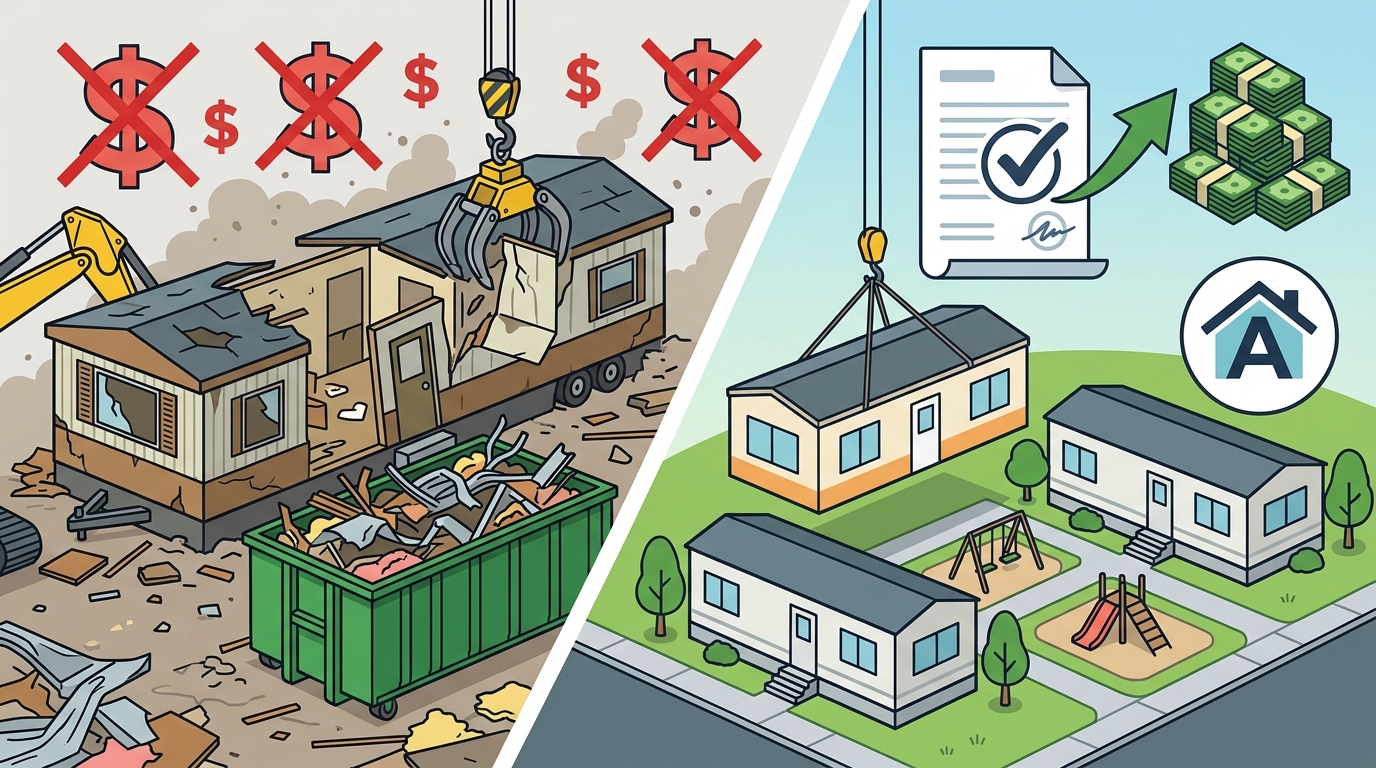
With acceptance secured, the nonprofit will coordinate the physical removal of your mobile home. This is where the "free" aspect of the service comes into play. The organization contracts with licensed and insured local mobile home movers to handle the logistics. You do not pay for the towing, cranes, or labor involved in this process.
The removal team will arrive at your property to prepare the home for transport. This includes removing skirting, disconnecting utilities, and securing appliances inside. They will then attach wheels and a tongue to the chassis, making it road-ready. The entire process is designed to be transparent and stress-free for the homeowner.
Typically, the removal occurs within 8 to 12 weeks of acceptance, depending on the mover's schedule and the distance to the new location. You will be notified in advance of the moving date. On the day of removal, ensure that pets are secured and that the path to the home is clear for the heavy machinery.
Step 6: Claim Your Charitable Deduction
The final step is claiming your tax deduction. Once the home has been removed, the nonprofit will provide you with a final acknowledgment letter. This letter must include the fair market value of the donation as determined by their appraisal. You will use this value to complete IRS Form 8283 if the donation exceeds $5,000.
Consult with a tax professional to ensure you are maximizing your deduction. The value of the deduction depends on whether the home is sold for resale or used for charitable housing. In many cases, the deduction is based on the cost of the materials rather than the full market value, but it still represents significant savings compared to the cost of private removal.
By following these steps, you not only clear your property but also contribute to a national effort to provide affordable housing. The process is streamlined, professional, and designed to benefit both you and the community.
Comparison of Removal Options
| Option | Cost to Owner | Tax Benefit | Timeframe | Best For |
|---|---|---|---|---|
| Nonprofit Donation | $0 (Free) | Yes (Charitable Deduction) | 4-12 Weeks | Owners seeking tax relief and hassle-free removal |
| Private Hauling | $3,000 - $10,000+ | No | 1-4 Weeks | Urgent removal needs with no tax interest |
| Demolition Service | $2,000 - $5,000 | No | 1-2 Weeks | Unsalvageable or pre-1980 homes |
Key Takeaways
- Eligibility Age: Homes must generally be built in 1980 or later to qualify for free removal programs.
- Title Requirements: You must have a clear vehicle title or be able to re-establish it from the county recorder.
- Nonprofit Status: Banyan Mobile Home Removal is an accredited 501(c)(3) organization dedicated to affordable housing.
- Cost Savings: Donation eliminates the typical $3,000 to $10,000 cost of private mobile home removal.
- Timeline: The removal process typically takes 8 to 12 weeks from acceptance to completion.
- Tax Deduction: Donors receive a formal appraisal letter to support their charitable tax deduction claims.
- Condition Check: Severe structural damage or mold can disqualify a home from donation.
Frequently Asked Questions
Can I donate a mobile home that is not in perfect condition?
Yes, many nonprofits accept homes that require minor repairs. However, the structure must be safe to transport. Severe foundation failure or extensive water damage may disqualify the home.
What if I have lost the title to my mobile home?
You must re-establish the title before donation. Contact your state's Department of Licensing or DMV to request a duplicate title. Without it, the nonprofit cannot legally accept the donation.
How is the tax deduction value determined?
The value is determined by a qualified appraisal or the nonprofit's assessment of the home's fair market value. You should consult a tax professional to determine the exact deductible amount.
Is the removal really free?
Yes, if your home qualifies, the nonprofit covers all costs associated with towing, cranes, and labor. You do not pay for the removal service.
How long does the removal process take?
After acceptance, the removal typically occurs within 8 to 12 weeks, depending on the mover's schedule and the distance to the new location.
Can I donate a double-wide mobile home?
Yes, both single-wide and double-wide manufactured homes are eligible if they meet the age and condition requirements.
What happens to the mobile home after it is removed?
The home is typically resold to low-income families or relocated to affordable housing communities to provide safe and stable housing.
Ready to Remove Your Mobile Home?
Do not let an unwanted mobile home become a burden on your property. Take the first step toward a free, tax-beneficial removal today. Contact Banyan Mobile Home Removal to schedule your qualification review and start the process.