
Deciding what to do with an unwanted mobile home is one of the most complex challenges property owners face. The structure is valuable, yet it often sits as a liability on your land. According to recent industry data, over 22 million manufactured homes exist in the United States, yet a significant percentage are abandoned or deteriorating on private property. This creates a massive opportunity for homeowners who need to clear their land but do not want to deal with the hassle of traditional real estate sales. Understanding the difference between donating your mobile home and selling it privately is critical for maximizing your financial return and minimizing stress. (Contact Us Banyan Mobile)
Understanding the Options: Donation vs. Sale
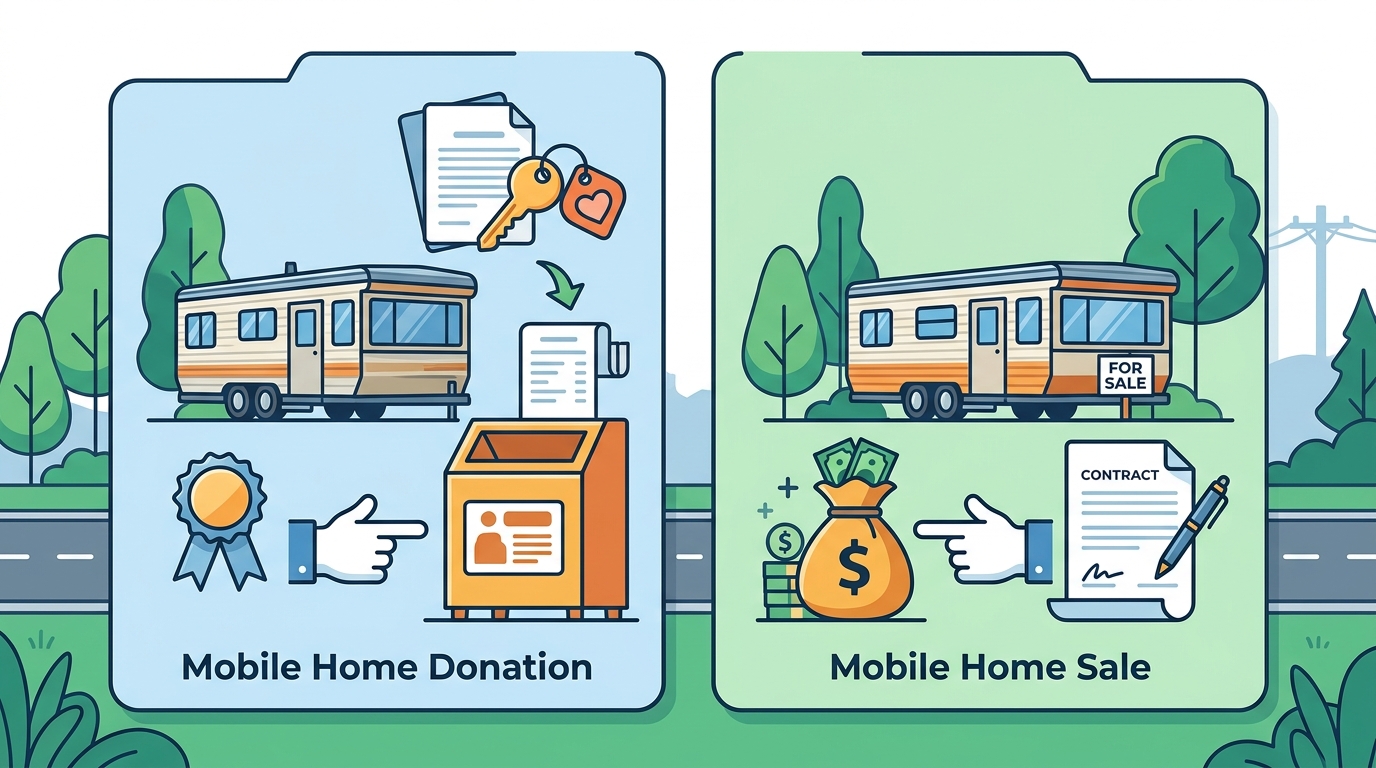
When you own a mobile home that no longer serves your needs, you generally have two primary exit strategies. The first is a private sale, where you list the home as a used asset. The second is a charitable donation, where you transfer ownership to a nonprofit organization that handles the removal and repurposing of the structure. Both paths offer distinct advantages depending on your immediate goals, the condition of the home, and your financial situation.
A private sale requires you to find a buyer, negotiate terms, and often manage the logistics of moving the home yourself. This path is ideal if the home is in excellent condition and you want to maximize immediate cash flow. Conversely, donating the home is designed for property owners who need to clear land quickly, avoid repair costs, and potentially receive a tax deduction. The choice ultimately depends on whether you prioritize immediate liquidity or long-term tax benefits and convenience.
The Donation Pathway: Tax Benefits and Ease
Donating your mobile home has become a popular alternative to traditional disposal methods. Organizations like Banyan Mobile Home Removal facilitate this process by coordinating with licensed and insured local movers to remove the structure at no cost to the owner. This service is particularly valuable for homeowners who are burdened by the physical and financial weight of an unwanted asset.
The primary benefit of donation is the potential for a charitable tax deduction. As an accredited 501(c)(3) nonprofit, Banyan provides the necessary documentation to support your tax filing. However, the value of this deduction is not arbitrary. It is based on the fair market value of the home at the time of donation, which is determined by its condition, age, and local demand. For homes that are older or require significant repairs, the appraised value may be lower, but the convenience of free removal often outweighs the financial return of a private sale.
Another critical advantage is the speed of the process. Private sales can take months to close, especially in markets with low demand for used manufactured homes. Donation programs typically move much faster, with removal often scheduled within weeks of qualification. This speed is crucial for homeowners who need to prepare their land for new construction or sale.
The Private Sale Pathway: Maximum Profit
Selling a mobile home privately allows you to capture the full market value of the asset. If your home is relatively new, well-maintained, and located in a desirable mobile home park, you could potentially receive thousands of dollars in cash. This path is most effective when the home is considered a "turnkey" property that requires no immediate investment from the buyer.
However, the private sale route comes with significant hurdles. You must handle marketing, showings, and negotiations. Many buyers are hesitant to purchase used mobile homes due to concerns about financing, moving costs, and potential hidden defects. Consequently, the pool of potential buyers is often small, leading to prolonged listing times.
Additionally, you may be responsible for the cost of moving the home to the new location. In many cases, the cost of transport can exceed the sale price, leaving the seller with a net loss. This is particularly true for older single-wide units that have depreciated significantly in value. Understanding the current depreciation rates is essential before listing a home for sale.
Eligibility and Logistics: What Matters Most
Not all mobile homes are eligible for donation. Nonprofit organizations have strict criteria to ensure that the homes they accept can be safely transported and repurposed. Generally, homes must be in a structurally sound condition and meet specific age requirements. For instance, many programs only accept homes built in 1980 or later, as these units comply with the federal HUD Code standards for manufactured housing.
Logistics also play a major role in the decision-making process. If your home is located in a remote area or has complex tie-downs, the cost of removal can be prohibitive for a private buyer. Donation programs mitigate this by absorbing the logistical burden. They coordinate with local movers who are equipped to handle the specific challenges of your property.
Furthermore, the condition of the interior and exterior is scrutinized. Homes with severe mold, water damage, or structural compromise may be rejected for donation. In such cases, a private sale might still be possible if the buyer is willing to take on the renovation risks. However, the market for "fixer-upper" mobile homes is extremely niche and often requires a significant discount.
Financial Comparison: Tax Deduction vs. Cash
Comparing the financial outcomes of donation versus sale requires a nuanced look at both immediate and long-term benefits. A private sale provides immediate cash, which can be used to pay off debts or fund new projects. However, this cash is subject to capital gains tax if the home was considered an investment property and appreciated in value.
On the other hand, a donation does not provide immediate cash but offers a tax deduction. The value of this deduction depends on your tax bracket and the appraised value of the home. For high-income earners, a substantial tax deduction can be equivalent to a significant cash payout. Additionally, donating a home can help reduce property taxes by removing a depreciating asset from your land.
| Factor | Donation | Private Sale |
|---|---|---|
| Immediate Cash | No | Yes |
| Tax Benefits | Charitable Deduction | Capital Gains Tax |
| Removal Cost | Free | Often Paid by Seller |
| Time to Close | Weeks | Months |
| Eligibility | Strict (Age/Condition) | Flexible |
Key Takeaways
- Eligibility Age: Most donation programs, including Banyan, only accept mobile homes built in 1980 or newer to ensure compliance with federal safety standards.
- Cost of Removal: Donating your home typically results in zero out-of-pocket costs for removal, whereas private sellers often bear the burden of moving expenses.
- Tax Implications: A charitable donation may qualify for a tax deduction, but the value is based on fair market appraisal, not the original purchase price.
- Speed of Process: Donation programs can often complete removal within 8 weeks, significantly faster than the months required for a private sale.
- Condition Requirements: Homes must be structurally sound and free of severe damage to qualify for donation, limiting the pool of eligible properties.
- Market Volatility: The private market for used mobile homes is highly localized and volatile, making price prediction difficult for sellers.
- Nonprofit Status: Banyan Mobile Home Removal is an accredited 501(c)(3) nonprofit, ensuring that donations are processed according to IRS regulations.
Frequently Asked Questions
Can I donate a mobile home with back taxes or liens?
Yes, you can often donate a mobile home even if it has back taxes or liens. The nonprofit organization will typically work with local authorities to resolve these issues as part of the transfer process. However, you must disclose all existing liens to ensure a clear title transfer.
How is the tax deduction value determined?
The tax deduction is based on the fair market value of the home at the time of donation. This value is determined by an independent appraisal that considers the home's age, condition, and local demand for used manufactured homes.
What happens to my mobile home after I donate it?
After donation, the home is inspected, repaired if necessary, and then sold to a low-income family or individual. The proceeds from the sale help fund the nonprofit's operations and future removal programs.
Is the removal really free?
Yes, for qualifying homes, the removal is completely free. The nonprofit covers the costs of hiring licensed movers, transporting the home, and preparing it for its new location.
Do I need to clean the home before donation?
While a clean home is appreciated, it is not a strict requirement for donation. The nonprofit organization will handle the cleaning and repairs after the home is removed from your property.
How long does the donation process take?
The process typically takes several weeks from initial contact to removal. This includes the qualification review, title transfer, and scheduling with the moving crew.
Can I donate a double-wide mobile home?
Yes, both single-wide and double-wide manufactured homes can be donated, provided they meet the structural and age eligibility requirements.
Next Steps: Start Your Free Removal
If you are struggling with an unwanted mobile home, you do not have to navigate the complex private sale market alone. By choosing to donate your home, you can clear your land, avoid removal costs, and potentially receive a tax deduction. Banyan Mobile Home Removal is ready to help you through every step of this process.
Contact us today to learn if your home qualifies for our free removal program. Visit our donation page to get started, or call us directly at 855-545-8646. You can also read more about our mission on our about us page or check our customer reviews to see how we have helped others in similar situations.