
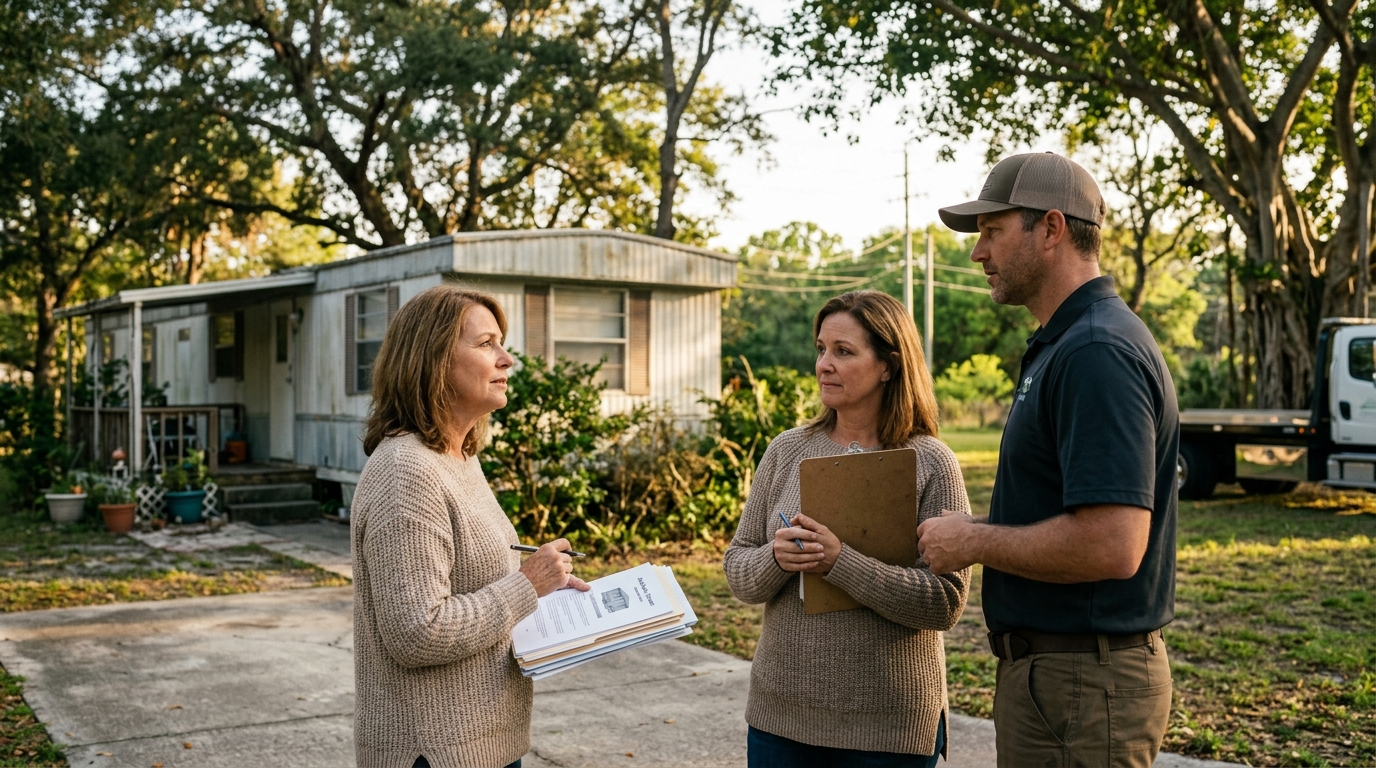
Property owners facing the burden of an unwanted mobile home often find themselves at a crossroads. The decision to remove a structure is rarely simple, especially when financial implications are involved. According to recent industry data, the average cost to demolish and dispose of a single-wide mobile home can exceed $5,000, while double-wide units often cost significantly more due to their size and complexity. This financial reality forces many homeowners to look for alternatives that offer both relief and potential value. Understanding the nuances between donating and selling is critical for making an informed decision that aligns with your property goals and financial needs. (Free Mobile Home Removal)
Understanding the Core Options
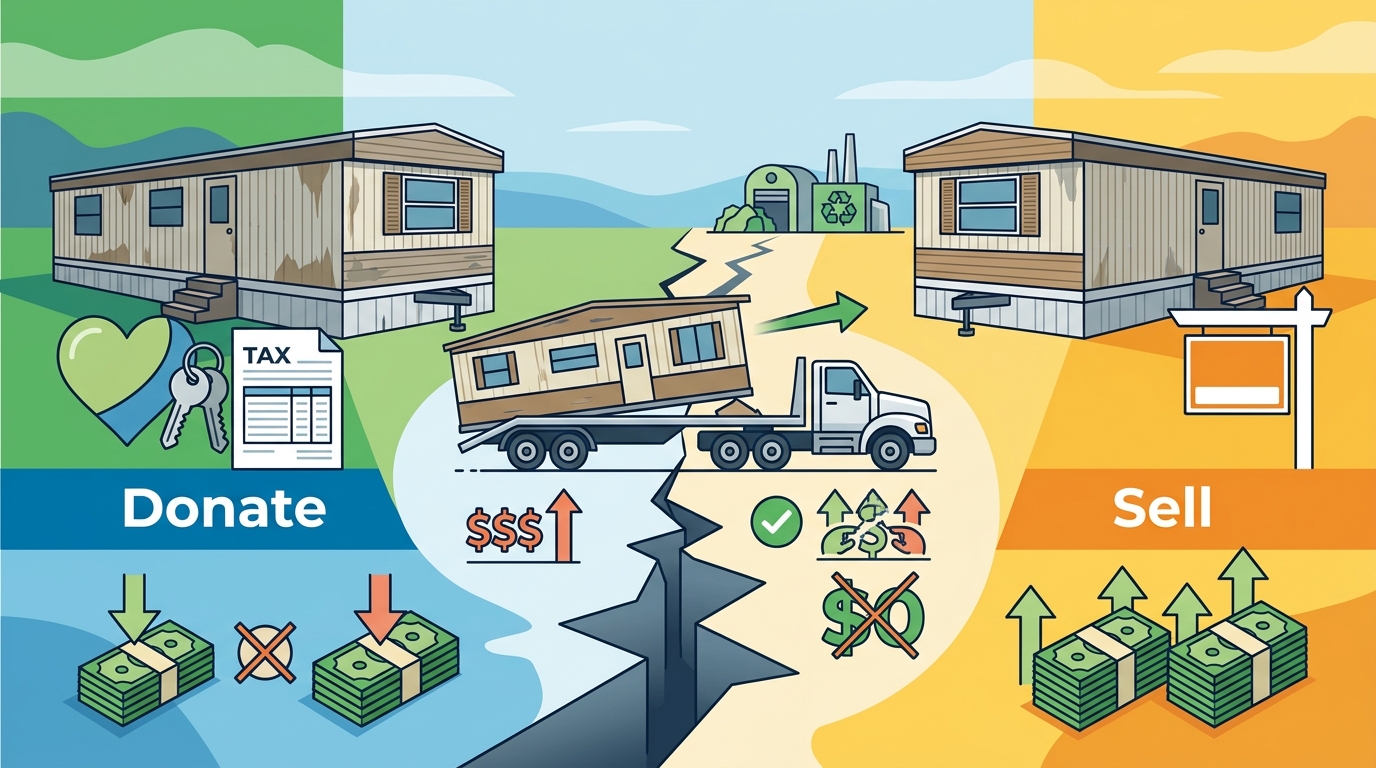
When a mobile home reaches the end of its useful life on your property, or when you simply need to clear land for new development, you generally have two primary avenues: selling the structure or donating it. Both methods allow you to remove the asset from your title, but they operate on fundamentally different economic principles. Selling involves a direct transaction where you exchange the home for cash. Donating involves transferring ownership to a qualified nonprofit organization, which then handles the removal and potentially resells the home to fund its charitable mission.
The choice between these two paths depends heavily on the condition of the home, your immediate financial needs, and your long-term property plans. A home in excellent condition might fetch a decent price on the private market. Conversely, a home that is deteriorating or located in a difficult-to-access area may have little to no resale value, making donation the only viable option for removal. It is essential to evaluate the physical state of the structure and the local market demand before committing to either route.
The Donation Pathway: Benefits and Process
Donating your mobile home has gained significant traction as a strategic property management tool. The primary benefit is the removal of the asset at absolutely no cost to you. Organizations like Banyan Mobile Home Removal specialize in coordinating the logistics of picking up unwanted homes, which eliminates the need for you to hire movers or contractors. This service is particularly valuable for properties that are difficult to access or for homes that are too damaged to be sold conventionally.
Another critical advantage of donation is the potential for a charitable tax deduction. When you donate a qualifying mobile home to an accredited 501(c)(3) nonprofit, you may be eligible to deduct the fair market value of the home from your taxable income. This deduction can significantly offset the tax burden for the year in which the donation is made. The process typically involves submitting photos and details of the home for a qualification review. Once approved, the organization sends an inspector to verify the condition and issues a lockbox for the property title, streamlining the transfer of ownership.
Furthermore, donation provides a sense of community impact. Your unwanted home can be repurposed to provide affordable housing for families in need. This circular economy approach ensures that materials are not wasted in landfills but are instead given a second life. For homeowners who are emotionally attached to the idea of their home helping others, this pathway offers a meaningful conclusion to their ownership.
Selling Your Mobile Home: Pros and Cons
Selling a mobile home privately or through a dealer offers the potential for immediate cash liquidity. If your home is in good condition, located in a desirable area, and has a clear title, you might attract buyers who are looking for affordable housing options. The pros of selling include receiving cash upfront, which can be used to pay off existing liens, cover removal costs, or fund new construction projects. It also allows you to control the timeline of the sale to some extent.
However, the cons of selling are substantial and often outweigh the benefits for many homeowners. The mobile home market is highly saturated, and demand fluctuates based on regional economic conditions. Selling a home that requires repairs can be particularly challenging, as buyers are often wary of hidden costs. Additionally, you are responsible for the entire removal process. This means hiring licensed movers, coordinating with the buyer, and managing the logistics of transporting a large structure. These costs can quickly erode any profit you might make from the sale.
Another significant hurdle is the legal complexity of transferring the title. If the home has been extinguished from its vehicle title and attached to the land, you must first reverse this process to re-establish it as a vehicle. This bureaucratic step can be time-consuming and confusing for the average homeowner. Without a clear title, potential buyers will likely walk away, leaving you with no option but to donate or demolish the home.
Financial Comparison: Tax Deductions vs. Cash
The financial outcome of donating versus selling is not always straightforward. While selling provides immediate cash, the net profit is often reduced by removal costs, realtor fees, and repair expenses. In many cases, the cost of removal exceeds the sale price, resulting in a net loss for the seller. Donation, on the other hand, eliminates these costs entirely. The value of the tax deduction can be substantial, depending on your income bracket and the appraised value of the home.
For example, if your home is appraised at $10,000 and you are in a 24% tax bracket, the tax deduction could save you $2,400 in taxes. When combined with the savings from free removal, the total financial benefit of donation can rival or exceed the net proceeds of a private sale. It is crucial to consult with a tax professional to understand how the deduction applies to your specific situation. The Internal Revenue Service (IRS) has strict guidelines regarding charitable contributions, and proper documentation is required to claim the deduction.
| Factor | Donating Your Mobile Home | Selling Your Mobile Home |
|---|---|---|
| Removal Cost | $0 (Covered by nonprofit) | $3,000 - $10,000+ (Paid by seller) |
| Immediate Cash | None | Variable (Depends on market) |
| Tax Benefits | Fair Market Value Deduction | None (Capital gains may apply) |
| Effort Required | Low (Coordination handled by org) | High (Marketing, showings, logistics) |
| Timeline | Weeks to Months | Months to Years |
Eligibility and Logistics
Not all mobile homes are eligible for donation. Most reputable organizations, including Banyan Mobile Home Removal, have specific criteria regarding the age and condition of the home. Typically, homes built in 1980 or later are accepted because they meet modern HUD building codes. Homes built before this date may not be safe to transport or inhabit, making them unsuitable for repurposing.
The condition of the home is also a critical factor. While the organization can handle homes that are structurally sound but simply unwanted, homes that are severely damaged or missing key components may not qualify. The organization will send an inspector to assess the home and determine if it can be safely moved and sold. If the home does not qualify for donation, you may still be able to receive guidance on other disposal options.
Logistics play a significant role in the decision-making process. If your property is located in a remote area or has difficult access, the cost of removal will be higher. Donation organizations often have networks of local movers who can navigate these challenges more efficiently than individual homeowners. This network effect allows them to offer free removal services that would be prohibitively expensive for a private seller.
Key Takeaways
- Cost Efficiency: Donating eliminates the high costs of demolition and removal, which can average $5,000 or more.
- Tax Advantages: Donating to a 501(c)(3) nonprofit may provide a significant tax deduction based on the home's fair market value.
- Eligibility Criteria: Homes must typically be built in 1980 or later and meet basic safety standards for transport.
- Market Reality: Selling a mobile home is difficult due to market saturation and the high cost of removal for buyers.
- Community Impact: Donation directly supports affordable housing initiatives by repurposing homes for families in need.
- Process Simplicity: Donation organizations handle the title transfer, inspection, and logistics, reducing homeowner burden.
- Professional Guidance: Consulting with tax professionals is essential to maximize the benefits of a charitable contribution.
Frequently Asked Questions
Can I donate a mobile home with back taxes or liens?
Yes, you can often donate a mobile home even if it has back taxes or liens. The donation organization can help navigate the process of clearing the title, but you should consult with a legal or tax advisor to understand your specific obligations.
How is the tax deduction for a donated mobile home calculated?
The tax deduction is based on the fair market value of the home at the time of donation. This value is determined by an appraisal or the sale price if the organization sells the home within three years of the donation.
What happens if my mobile home does not qualify for donation?
If your home does not meet the eligibility criteria, such as being built before 1980 or being too damaged, the organization may provide guidance on other disposal options, such as demolition or salvage.
Do I need to clear out the mobile home before donation?
Generally, you do not need to clear out the home completely, but it is helpful to remove any personal belongings. The organization will handle the removal of the structure, but they may not be responsible for debris or hazardous materials.
How long does the donation process take?
The timeline varies depending on the location and condition of the home. Once qualified, the removal process can take anywhere from a few weeks to a few months, depending on the availability of movers and buyers.
Is the donation process free?
Yes, the donation process is free for the homeowner. The organization covers all costs associated with the inspection, title transfer, and removal of the mobile home.
Can I sell my mobile home and still get a tax deduction?
No, selling a home for cash does not qualify for a charitable tax deduction. You must donate the home to a qualified nonprofit organization to receive tax benefits.
What documents do I need to donate my mobile home?
You will typically need to provide the vehicle title, proof of ownership, and photos of the home. The organization will guide you through the specific documentation required for your state.
Next Steps
Deciding between donating and selling your mobile home requires careful consideration of your financial goals and property needs. If you are looking for a cost-effective, hassle-free solution with potential tax benefits, donation is often the superior choice. For homeowners ready to take the next step, contacting Banyan Mobile Home Removal is the first step toward a stress-free removal. Their team can provide a free qualification review and guide you through the process of turning your unwanted asset into a community benefit. Visit their About Us page to learn more about their mission and impact.