

Property owners across the United States frequently face the difficult decision of how to dispose of an unwanted mobile home. According to recent industry data, over 20 million manufactured homes exist in the U.S., with many sitting unused or deteriorating on private land. This creates a significant burden for homeowners who need to clear their property for sale or redevelopment. The choice between donating the structure to a nonprofit organization or attempting to sell it privately involves complex trade-offs regarding cost, speed, and tax implications. Understanding these differences is critical for maximizing financial outcomes and minimizing stress during the transition. (Free Mobile Home Removal)
Understanding the Options: Donation vs. Sale
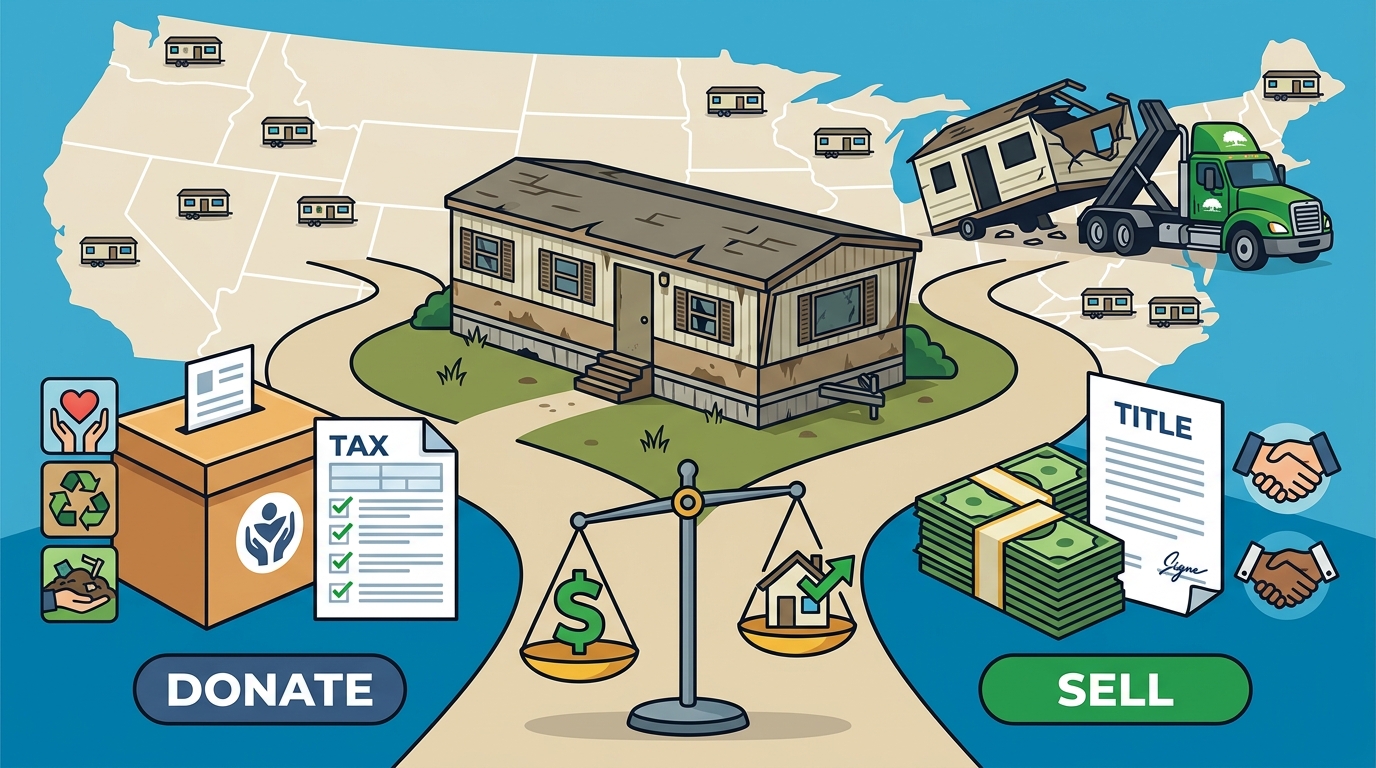
When a mobile home reaches the end of its useful life on a specific property, the owner must choose a disposal method. The two primary avenues are donating the home to a qualified nonprofit or selling it to a private buyer. Each path serves different needs and offers distinct advantages.
Donation is a charitable act where the property owner transfers ownership of the mobile home to a registered 501(c)(3) organization. In this scenario, the nonprofit typically handles the removal, dismantling, or resale of the home. The homeowner receives no direct cash payment but gains a tax deduction and avoids removal costs. This option is ideal for homes that are no longer habitable or for owners who want to support affordable housing initiatives.
Selling involves listing the mobile home on the open market. This can be done through private listings, mobile home dealers, or auction sites. The goal is to recoup as much of the original investment as possible. However, selling a mobile home can be challenging due to depreciation, condition issues, and the logistical difficulty of finding a buyer willing to transport the structure. This option is best suited for homes in good condition that still hold significant market value.
Financial Implications and Tax Benefits
The financial impact of choosing between donation and sale is the most critical factor for most homeowners. While selling offers immediate cash, donation provides long-term tax advantages and cost savings.
The Cost of Removal
One of the most significant financial burdens of owning an unwanted mobile home is the cost of removal. If you choose to sell the home yourself, you may still need to pay for disconnecting utilities, removing skirting, and arranging for a professional mover. These costs can range from $1,500 to $10,000 or more, depending on the size of the home and the distance to the new location. When you donate your mobile home, these removal costs are covered entirely by the nonprofit organization. This effectively increases the net value of your donation by eliminating the expense you would otherwise incur.
Tax Deduction Opportunities
Donating a mobile home to an accredited nonprofit like Banyan Mobile Home Removal can result in a substantial charitable tax deduction. The IRS allows taxpayers to deduct the fair market value of the donated property. For a mobile home, this value is often determined by an appraisal or the price at which the nonprofit sells the home. According to IRS guidelines, if the property is sold by the charity, the deduction is limited to the gross proceeds from the sale. However, this still provides a significant financial benefit that can offset the loss of the asset's value.
In contrast, selling a mobile home privately generates taxable income if the sale price exceeds the home's adjusted basis. While you avoid the removal cost if the buyer handles it, you do not receive a tax deduction. For many homeowners, the combination of zero removal costs and a tax deduction makes donation the more financially savvy choice, especially for older or less valuable units.
The Logistical Process of Removal
The ease of the disposal process is another major differentiator between donation and sale. The logistics of moving a mobile home are complex and require specialized knowledge.
The Donation Process
Donating a mobile home is designed to be a stress-free experience for the homeowner. The process typically begins with a qualification review where the nonprofit assesses the home's condition and eligibility. If the home qualifies, the organization coordinates with licensed and insured local mobile home movers to schedule the removal. The homeowner does not need to find a buyer, negotiate prices, or manage the moving logistics. The nonprofit handles all aspects of the transaction, from advertising the home to potential buyers to executing the physical move. This streamlined process ensures that the property is cleared quickly and efficiently.
The Selling Process
Selling a mobile home privately requires significant effort from the homeowner. You must market the property, screen potential buyers, negotiate terms, and ensure the buyer has the means to transport the home. Finding a buyer willing to take on the responsibility of moving a mobile home can be difficult. Many buyers are hesitant due to the high cost and complexity of the move. Additionally, you must ensure that the title is clear and that the home meets local zoning and building codes in the new location. This process can take weeks or even months to complete, during which the home continues to depreciate and potentially incur property taxes.
Eligibility and Qualification Requirements
Not all mobile homes are eligible for donation. Nonprofits have specific criteria to ensure that the homes they accept can be safely transported and repurposed. Understanding these requirements is essential before deciding to donate.
Typically, nonprofits accept mobile homes that are 1980 or newer. This requirement is based on federal building codes that were implemented in 1976, with stricter standards enforced in 1980. Homes built before this date may not meet current safety standards for transport and habitation. Additionally, the home must be in a condition that allows for safe removal. Severe structural damage, extensive mold infestation, or missing critical components may disqualify a home from donation.
For those considering selling, the eligibility is primarily determined by market demand. Even if a home is in poor condition, it may still have value to a buyer looking for a project or for parts. However, the lower the condition, the lower the sale price. It is important to be realistic about the market value of your home. If the home is older or in poor condition, the sale price may be minimal, and the removal costs may outweigh the proceeds. In such cases, donation becomes the more practical option.
Comparison Summary
The following table summarizes the key differences between donating and selling a mobile home. This comparison highlights the financial, logistical, and emotional aspects of each option.
| Factor | Donate to Nonprofit | Sell Privately |
|---|---|---|
| Removal Cost | Free (Covered by nonprofit) | Variable (Often paid by buyer, but may be negotiated) |
| Financial Gain | Tax deduction based on fair market value | Cash proceeds from sale price |
| Effort Required | Low (Minimal homeowner involvement) | High (Marketing, negotiations, coordination) |
| Time to Clear | Fast (Typically within weeks) | Slow (Depends on market demand) |
| Eligibility | Must meet nonprofit criteria (e.g., age, condition) | Open to all, but value varies by condition |
| Impact | Supports affordable housing initiatives | Personal financial gain |
Key Takeaways
- Cost Savings: Donating a mobile home eliminates the high costs of removal, which can range from $1,500 to $10,000 or more.
- Tax Benefits: Homeowners can receive a charitable tax deduction for the fair market value of the donated home, providing significant financial relief.
- Simplified Process: Nonprofits like Banyan Mobile Home Removal handle all logistics, including coordination with licensed movers, reducing stress for the homeowner.
- Eligibility Criteria: Homes must typically be 1980 or newer and in a condition that allows for safe transport and repurposing.
- Market Reality: Older or damaged mobile homes often have low market value, making donation a more financially viable option than selling.
- Community Impact: Donating your home contributes to the creation of affordable housing for families in need across the United States.
- Speed of Removal: Donation programs often guarantee removal within a specific timeframe, such as 8 weeks, providing peace of mind.
Frequently Asked Questions
Can I donate a mobile home that is in poor condition?
Yes, many nonprofits accept mobile homes in various conditions, provided they meet basic safety and transport requirements. Homes that are no longer habitable can often be dismantled for materials, contributing to the nonprofit's mission.
How is the tax deduction amount determined?
The tax deduction is based on the fair market value of the home at the time of donation. This value is often determined by an appraisal or the price at which the nonprofit sells the home. Consult a tax professional for specific advice.
What is the age requirement for donating a mobile home?
Most accredited nonprofits, including Banyan Mobile Home Removal, require mobile homes to be 1980 or newer. This ensures the home meets federal building codes and is safe for transport.
Do I need to clear the land before the home is removed?
No, the nonprofit and their team of movers handle the removal process, including disconnecting utilities and removing skirting. You do not need to prepare the land yourself.
How long does the removal process take?
The timeline varies, but many nonprofits aim to remove the home within 8 weeks of qualification. This ensures that your property is cleared in a timely manner.
Can I sell my mobile home if I want more money?
You can sell your mobile home privately, but the sale price may be low, especially for older or damaged units. Additionally, you may still incur removal costs. It is important to compare the net proceeds of selling versus the tax benefits of donating.
Is the donation process complicated?
No, the process is designed to be simple. You contact the nonprofit, undergo a qualification review, and they handle the rest. The nonprofit manages the advertising, buyer coordination, and physical removal.
What happens to the mobile home after donation?
The nonprofit may resell the home to a family in need of affordable housing, dismantle it for materials, or repurpose it for community projects. The goal is to benefit the community and reduce waste.
Next Steps
If you are considering disposing of an unwanted mobile home, it is essential to weigh the financial and logistical benefits of donation versus sale. For many homeowners, donating to a reputable nonprofit offers a superior outcome through cost savings, tax advantages, and a simplified process. Banyan Mobile Home Removal is dedicated to helping property owners remove unwanted homes at no cost while supporting affordable housing initiatives. If you believe your mobile home may qualify, contact us today to start the process. Visit our contact page or call us to learn more about how we can help you clear your property and make a positive impact.