

Property owners facing the burden of an unwanted mobile home often find themselves at a crossroads. The decision to donate a mobile home or pursue traditional removal options fundamentally changes the financial and logistical outcome of the project. According to recent industry data, over 20 million manufactured homes exist in the United States, yet a significant percentage sit vacant or deteriorating on private land. This creates a unique opportunity for homeowners to convert a liability into a community asset through charitable donation.
Understanding the Donation Pathway
Donating a mobile home is a structured process designed to benefit both the property owner and the recipient. The core mechanism involves transferring ownership of the structure to an accredited nonprofit organization. This organization then facilitates the sale or relocation of the home to a family in need of affordable housing.
Mobile home donation is a formalized charitable act that requires specific documentation and condition assessments. The process begins with a qualification review where the nonprofit evaluates the home's structural integrity and transportability. If the home meets the criteria, the organization coordinates with licensed, insured local mobile home movers to handle the physical removal.
This pathway eliminates the need for the homeowner to find a buyer or hire a demolition crew. Instead, the nonprofit manages the entire lifecycle of the home, from inspection to final transport. The homeowner receives a tax deduction for the fair market value of the donated property, provided they follow IRS guidelines for charitable contributions.
The impact of this model extends beyond simple waste reduction. By repurposing existing structures, the program supports the development of affordable housing stock. This is particularly critical in regions where land costs are high and traditional housing options are limited. The nonprofit acts as a bridge, connecting unused assets with individuals who require stable, low-cost living environments.
Traditional Removal Options
For homeowners who do not qualify for donation or prefer a different approach, traditional removal options remain available. These methods typically involve hiring private contractors to either demolish the structure or sell it for scrap value.
Traditional removal is often necessary when the mobile home is severely damaged or outdated. In these cases, the cost of repair and transport exceeds the potential resale value. Homeowners must then pay out-of-pocket for demolition services, which can range significantly based on local labor rates and disposal fees.
Selling a mobile home privately is another alternative. This requires the owner to market the property, conduct showings, and negotiate with potential buyers. While this can yield a higher immediate return than donation, it is time-consuming and requires significant effort. Many homeowners find that the net profit is diminished by the costs of staging, repairs, and realtor commissions.
Scrap value recovery is a third option for non-functional homes. Metal recyclers may purchase the structure for its raw materials. However, this option often yields minimal financial return and does not provide the tax benefits associated with charitable giving. Additionally, improper disposal of mobile homes can lead to environmental hazards if hazardous materials like asbestos or lead are not handled correctly.
Eligibility and Qualifications
Not all mobile homes are eligible for donation. The qualification process is rigorous to ensure that only viable structures are repurposed. The primary factor is the age and condition of the home. Most accredited nonprofits accept homes built in 1980 or newer. This cutoff aligns with federal building codes that improved safety standards for manufactured housing.
Structural integrity is the second critical criterion. The home must be capable of being moved without collapsing or causing safety hazards during transport. Inspectors evaluate the foundation, skirting, tie-downs, and internal systems. Homes with severe mold, pest infestation, or water damage may be disqualified.
Legal status is also a key component of eligibility. The homeowner must have clear title to the property. If the mobile home has been extinguished from its vehicle title and merged with the real estate, the title must be re-established before donation can proceed. This administrative step is crucial for transferring ownership legally.
Geographic location can influence eligibility as well. Nonprofits often prioritize homes within specific regions to minimize transport costs and logistical complexity. However, some organizations operate with a broader reach, coordinating with movers across state lines to ensure every qualifying home finds a new home.
Financial Implications and Tax Benefits
The financial difference between donation and traditional removal is stark. Donation offers a zero-cost removal service, whereas traditional methods require significant out-of-pocket expenses. For homeowners facing financial strain, this distinction is often the deciding factor.
Tax deductions are a major benefit of the donation pathway. The IRS allows taxpayers to deduct the fair market value of donated property. This value is determined by an independent appraisal and the eventual sale price of the home. Homeowners must retain proper documentation, including a written acknowledgment from the nonprofit, to substantiate their claim.
Conversely, traditional removal generates no tax benefits. Homeowners pay for demolition or disposal services, which are generally considered personal expenses and are not deductible. Selling the home privately may generate capital gains, but the net profit is often reduced by the costs of preparation and transaction fees.
Reducing property taxes is another indirect benefit of donation. Removing an unwanted mobile home can increase the usable land area, potentially lowering the assessed value of the property if the home was previously contributing to the tax burden. This is particularly relevant for landowners looking to sell their lot or develop the property further.
Comparing the Process
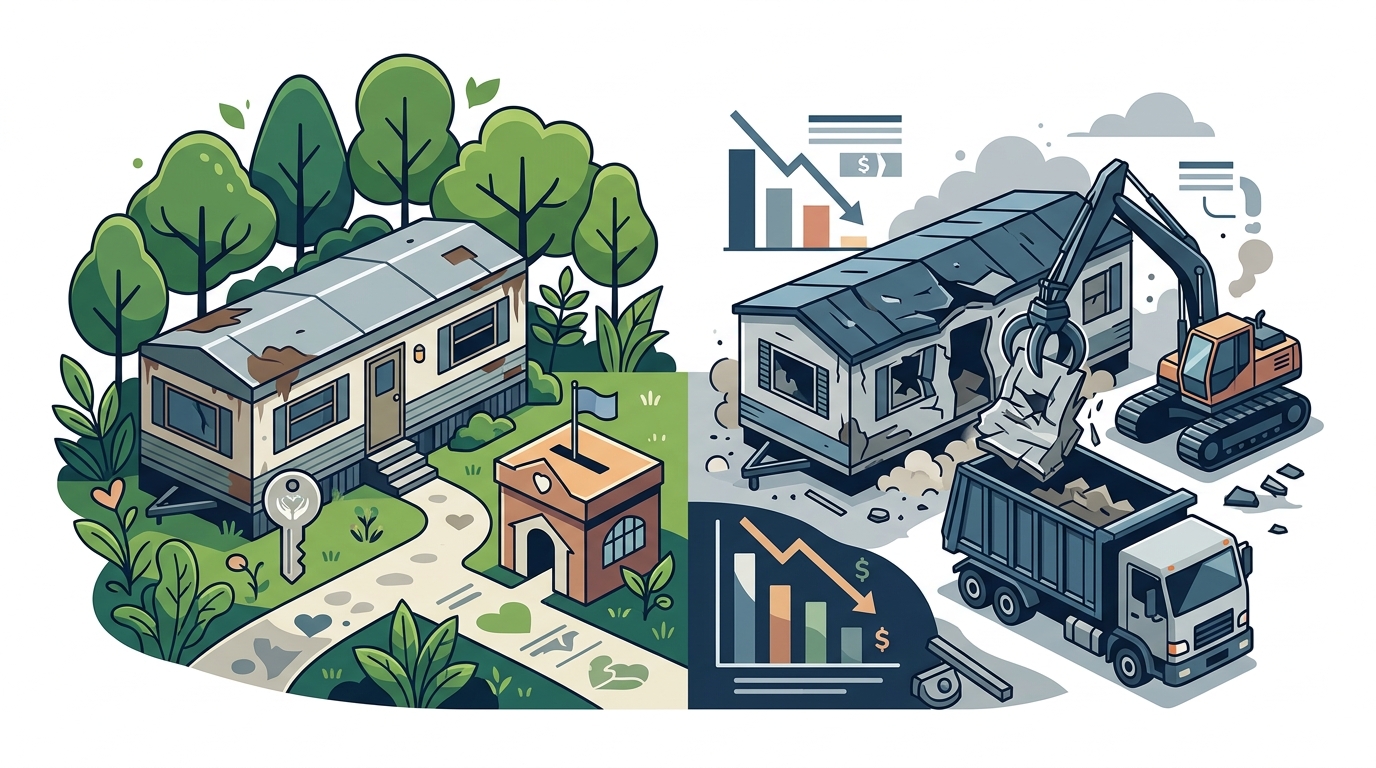
Understanding the step-by-step differences between donation and removal helps homeowners make informed decisions. The table below summarizes the key operational distinctions.
| Feature | Donation Pathway | Traditional Removal |
|---|---|---|
| Cost to Owner | Zero cost for removal | High cost for demolition or sale |
| Timeframe | Typically 4 to 8 weeks | Variable, often longer for sales |
| Tax Benefits | Eligible for charitable deduction | No tax benefits |
| Effort Required | Minimal, coordinator handles logistics | High, owner manages buyers or contractors |
| Eligibility | Strict condition and age requirements | Open to all properties |
The donation process is streamlined for the homeowner. Once qualified, the nonprofit handles all communications, inspections, and mover coordination. The homeowner simply provides access to the property and necessary documents. This reduces stress and eliminates the uncertainty of finding reliable contractors.
Traditional removal places the burden of logistics on the homeowner. Finding a reputable demolition company requires research and vetting. Negotiating with buyers for a private sale involves marketing, showings, and legal paperwork. Both options demand more time and energy from the property owner.
Key Takeaways
- Zero-Cost Removal: Accredited nonprofits cover all moving expenses for qualifying homes, eliminating financial barriers for homeowners.
- Tax Deduction Eligibility: Donors may receive a tax deduction for the fair market value of the donated mobile home, subject to IRS regulations.
- Age Requirement: Most programs accept mobile homes built in 1980 or newer to ensure compliance with modern safety standards.
- Structural Integrity: Homes must be transportable and free of severe damage to qualify for repurposing.
- Title Status: The mobile home must have a clear, re-establishable vehicle title separate from the real estate.
- Community Impact: Donated homes are often sold to low-income families, providing affordable housing options.
- Professional Coordination: Nonprofits manage the entire process, from inspection to final transport, reducing homeowner stress.
Frequently Asked Questions
Can I donate a mobile home with back taxes or liens?
Yes, it is possible to donate a mobile home with back taxes or liens, but the process requires careful handling. The nonprofit organization will typically work with the county to clear the lien or deduct the owed amount from the eventual sale proceeds. Homeowners must disclose all financial encumbrances during the initial qualification review to ensure transparency.
How long does the donation process take?
The timeline for donation varies based on location and logistics, but most homeowners can expect the process to take between 4 to 8 weeks. This includes the time for inspection, title verification, advertising the home for sale, and coordinating with the moving crew. Clear communication with the nonprofit coordinator helps manage expectations throughout this period.
What happens to my mobile home after I donate it?
After donation, the nonprofit organization takes ownership of the structure. They then market the home to potential buyers, often through local brokers or online platforms. If the home is sold, the proceeds fund further affordable housing initiatives. If the home is relocated, it is moved to a new site where it serves as a residence for a qualifying family.
Do I need to clean the mobile home before donation?
Extensive cleaning is not required, but the home should be in a safe condition. The nonprofit will send an inspector to assess the state of the property. Minor debris removal is helpful, but major cleaning or repair costs are not expected from the donor. The focus is on structural viability rather than cosmetic appearance.
Is the mobile home removal really free?
Yes, for qualifying homes, the removal is completely free to the homeowner. The nonprofit covers the costs of the inspector, the mover, and any necessary preparations like removing skirting or tie-downs. This is made possible through the revenue generated from the eventual sale or relocation of the donated home.
Can I donate a double-wide mobile home?
Yes, double-wide mobile homes are eligible for donation if they meet the condition and age requirements. The process for double-wides is similar to single-wides, though the logistics of moving a larger structure may require specialized equipment. The nonprofit will coordinate with movers experienced in handling double-wide transports.
Next Steps
If you are ready to explore your options, start by reviewing the eligibility criteria. Determine if your mobile home meets the age and condition standards. If you qualify, contact the nonprofit team to begin the qualification process. They will guide you through the necessary steps, from title verification to final removal.
For those who do not qualify for donation, consider consulting with local demolition experts or real estate agents to explore traditional removal or sale options. Each path has its own advantages, and the right choice depends on your specific property condition and financial goals.
Take action today to clear your property and potentially benefit your community. Visit the Donate Your Mobile Home page to learn more about the program. You can also contact the team directly for personalized assistance. Explore the blog for additional insights on mobile home management. Read more about the mission and impact of the organization. Check the locations served to see if your area is included. Review customer testimonials to hear from other donors. For privacy information, see the CCPA Privacy Policy. For more on the donation process, visit the Donate vs Sale guide.