

Removing an unwanted mobile home from your property can feel like an insurmountable financial burden, but there is a powerful alternative that benefits both your wallet and your community. According to recent industry data, donating your mobile home allows property owners to avoid removal costs while potentially receiving a significant tax deduction. This guide walks you through the exact process of partnering with accredited nonprofits to clear your land and support affordable housing initiatives. (About Us Banyan Mobile)
What Is Mobile Home Donation?
Donating a mobile home is a strategic method of property disposal that transforms a liability into a charitable asset. Mobile home donation is the act of transferring ownership of a manufactured home to a qualified nonprofit organization in exchange for a potential tax deduction. Unlike traditional demolition or private sales, this method removes the burden of logistics and disposal fees from the property owner.
Nonprofits like Banyan Mobile Home Removal specialize in this exact process. They coordinate with licensed, insured local movers to transport the home to a new location. The home is then either resold to a family in need or repurposed for affordable housing projects. This creates a circular economy where unwanted structures become vital community resources.
Eligibility Requirements for Your Home
Not every manufactured home qualifies for donation programs. Nonprofits have strict criteria to ensure the home can be safely transported and repurposed. Understanding these requirements early in the process prevents wasted time and sets realistic expectations.
Age and Construction Standards
Most accredited organizations only accept homes built after 1976, which is when the federal HUD Code was established. However, many programs have tightened their criteria further. For instance, Banyan Mobile Home Removal typically accepts homes built in 1980 or newer. Homes older than this may not meet current safety standards for transport or resale.
Structural Integrity
The home must be structurally sound enough to be moved without collapsing. This includes the roof, walls, and undercarriage. While cosmetic issues like peeling paint or worn flooring are acceptable, severe structural damage, such as a collapsed roof or extensive rot, will disqualify the property. Structural integrity is the primary factor in determining if a home can be moved.
Title and Ownership Status
You must have clear title to the mobile home. If the home is considered real property because it was permanently affixed to the land, you may need to take steps to re-establish its status as a vehicle. This involves contacting your local Department of Licensing to "un-extinguish" the title. Without a valid pink slip or title document, the nonprofit cannot legally take ownership.
The Donation Process Explained
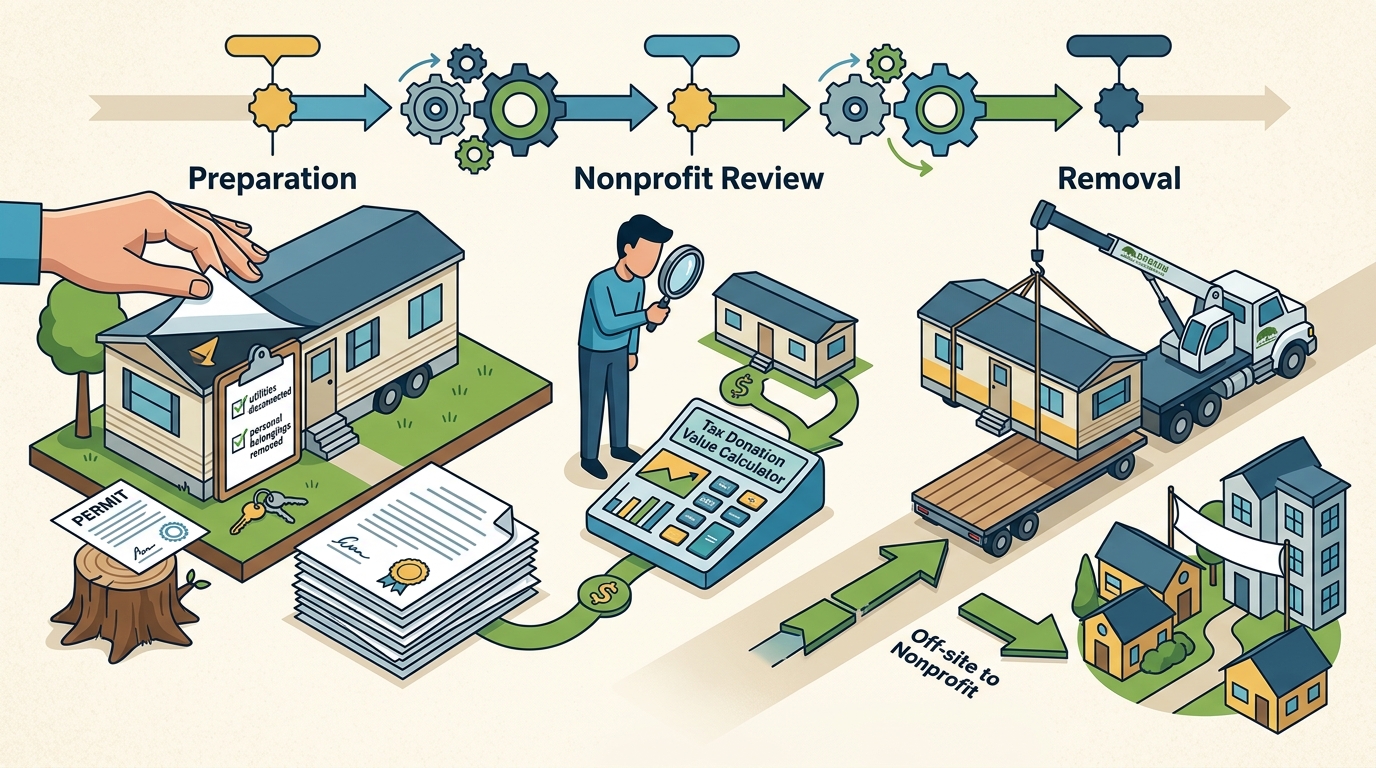
The journey from decision to removal is streamlined when you work with an experienced team. Here is the standard workflow for donating your mobile home.
Step 1: Initial Qualification
Start by contacting a reputable nonprofit. You will need to provide details about your home, including its age, size (single-wide or double-wide), and current condition. High-quality photos are often required to help the organization assess eligibility remotely. This step is crucial for determining if the home can be safely transported.
Step 2: Title Verification
Once your home is deemed eligible, the organization will guide you through the title transfer process. If your home is tied to the land, you must separate it legally. This involves submitting forms to your state’s Department of Licensing. The nonprofit may send you a lockbox or specific instructions for handling the paperwork. Accurate title documentation is essential for a smooth transfer.
Step 3: Inspection and Scheduling
After the title is secured, a field inspector may visit your property to verify the condition matches your description. This on-site check ensures that the home is safe for movers to approach. Once verified, the nonprofit schedules the removal. They coordinate with local moving companies to ensure the transport happens efficiently.
Step 4: Removal and Closing
On the scheduled day, professional movers arrive to detach the home from its foundation, remove skirting and tie-downs, and attach wheels and a tongue. The home is then transported to its new location. You will receive a donation receipt and a formal letter of appraisal from the nonprofit, which is necessary for your tax records.
Understanding Tax Benefits
One of the most significant advantages of donating a mobile home is the potential for a charitable tax deduction. The IRS allows deductions for the fair market value of donated property, provided you have proper documentation.
Determining the Deduction Amount
The value of your deduction is not necessarily the original purchase price or the cost of removal. It is based on the fair market value of the home at the time of donation. This value is often determined by the price at which the nonprofit resells the home or by an independent appraisal.
Documentation Requirements
To claim the deduction, you must file Form 8283 with your tax return if the value exceeds $5,000. The nonprofit will provide a written acknowledgment of the donation. Proper documentation is required to substantiate your tax deduction. Consult with a tax professional to ensure you maximize your benefits while remaining compliant with IRS regulations.
Donate vs. Sell: Which Is Better?
Property owners often debate whether to donate their mobile home or sell it privately. Both options have distinct advantages and disadvantages depending on your goals and the home’s condition.
| Factor | Donate to Nonprofit | Sell Privately |
|---|---|---|
| Cost | Free removal | Owner pays for prep and moving |
| Effort | Minimal coordination | High effort (showings, negotiations) |
| Tax Impact | Charitable deduction | Potential capital gains tax |
| Timeline | Weeks to months | Variable, often longer |
| Condition Required | Must be movable | Can be sold as-is |
Donating is generally faster and less stressful, especially for homes that are in poor condition. Selling privately may yield higher cash returns if the home is in excellent condition and located in a high-demand area. However, the costs of staging, advertising, and moving can quickly erode those profits.
Key Takeaways
- Eligibility: Homes must typically be built in 1980 or newer and be structurally sound for transport.
- Title Status: You must have a clear title; if the home is tied to the land, you must re-establish its vehicle status.
- Cost: Accredited nonprofits cover the full cost of removal, saving you thousands in hauling fees.
- Tax Deduction: You may receive a tax deduction based on the fair market value of the donated home.
- Impact: Donated homes are repurposed for affordable housing, supporting community stability.
- Process: The process involves qualification, title transfer, inspection, and professional removal.
- Documentation: Keep all receipts and appraisal letters for your tax records.
Frequently Asked Questions
Can I donate a mobile home with back taxes or liens?
Yes, you can donate a mobile home with back taxes or liens, but the process is more complex. The nonprofit will need to clear the liens before taking ownership, which may reduce the value of your tax deduction. It is essential to disclose any existing debts during the initial qualification phase.
How long does the removal process take?
The timeline varies based on location and logistics, but most nonprofits aim to complete removal within 8 to 12 weeks of qualification. This includes time for title verification, scheduling, and the actual move. Timely removal helps clear your property for future use.
What happens to my mobile home after donation?
After removal, the home is typically resold to a family in need of affordable housing or repurposed for community projects. The nonprofit handles all logistics, including finding a buyer and arranging transport. This ensures the home continues to serve a purpose rather than ending up in a landfill.
Do I need to clean the home before donation?
No, you do not need to clean or repair the home before donation. Nonprofits accept homes in various conditions, provided they are structurally sound. Removing personal belongings is recommended, but deep cleaning is not required.
Is the donation process really free?
Yes, accredited nonprofits cover all costs associated with the removal, including towing, labor, and administrative fees. You do not pay anything out of pocket. This makes donation a financially viable option for property owners looking to clear land.
How do I get a tax appraisal for my donated home?
The nonprofit organization will provide a formal letter of appraisal or a donation receipt stating the fair market value. For homes valued over $5,000, you may need a qualified appraiser to complete IRS Form 8283. Always consult a tax professional for specific advice.
Start Your Donation Today
Clearing your land and supporting affordable housing has never been easier. By donating your mobile home, you eliminate removal costs and potentially gain a tax benefit while helping families in need. If your home meets the eligibility criteria, you can start the process immediately.
Contact Banyan Mobile Home Removal today to schedule your qualification review. Their team is ready to guide you through every step, from title verification to final removal. Visit their donation page to learn more about how you can make a difference.