
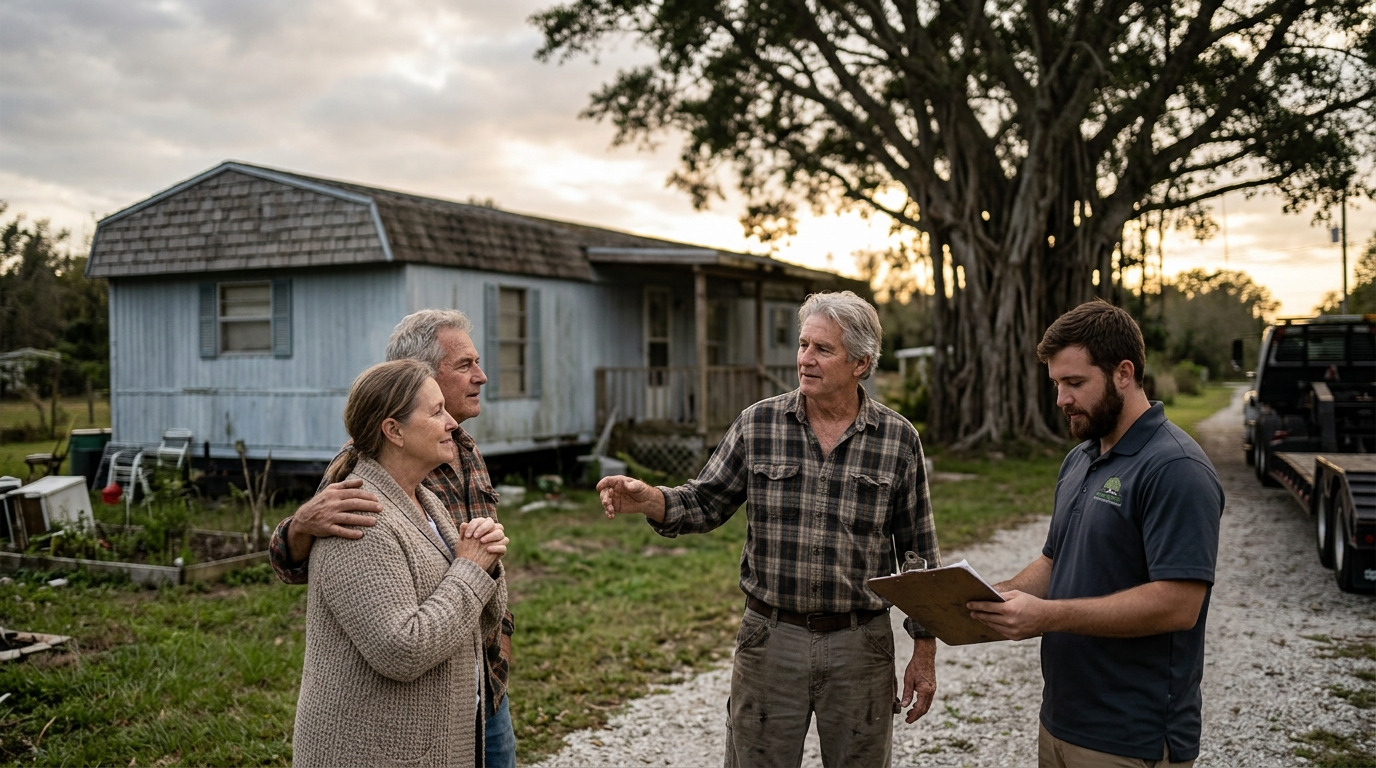
Property owners facing the burden of an unwanted mobile home often face a critical financial decision that extends far beyond simple logistics. The average cost to hire a professional mover for a single-wide unit ranges from $8,000 to $15,000, while double-wide structures can exceed $20,000 in transport and setup fees. This significant capital outlay is why many homeowners are turning to charitable donation programs as a strategic alternative. According to data from the Internal Revenue Service, donating a qualified vehicle or property can yield substantial tax deductions that offset the perceived loss of asset value. This article compares the direct costs of traditional removal against the financial incentives of donation to help you make the most profitable choice for your property. (Contact Us Banyan Mobile)
Direct Costs of Traditional Removal
When you choose to remove a mobile home through traditional means, you are responsible for every aspect of the dismantling, hauling, and disposal process. This method is often viewed as a pure expense with no return on investment. The financial burden begins with the initial assessment and planning phases. (About Us Banyan Mobile)
Transportation and Labor Fees
The largest component of removal costs is transportation. Mobile homes are massive structures that require specialized heavy-haul trucks, permits, and escort vehicles. For a standard single-wide home, the distance from your property to the nearest landfill or resale site dictates the final price. If the home is located in a rural area with difficult access, these costs increase due to the need for additional equipment like cranes or winches. Labor costs for the crew, which typically includes a driver, a spotter, and riggers, add significantly to the hourly rate. (Free Mobile Home Removal)
Permitting and Regulatory Fees
Before a mobile home can be moved, you must secure permits from local and state transportation departments. These permits are not merely bureaucratic hurdles; they are expensive. Each state has different fee structures, and crossing state lines requires additional interstate permits. Furthermore, if the home is being demolished rather than moved, you may need demolition permits and environmental compliance checks for hazardous materials like asbestos or lead paint. (Free Mobile Home Removal)
Disposal and Landfill Tipping Fees
Once the home reaches its destination, you must pay tipping fees to the landfill. These fees are charged by weight or volume and can range from $50 to $100 per ton. Given that a mobile home can weigh tens of thousands of pounds, the disposal cost alone can reach several thousand dollars. Additionally, if the home contains hazardous materials, specialized handling fees apply, further inflating the total bill. (Insights amp Advice for)
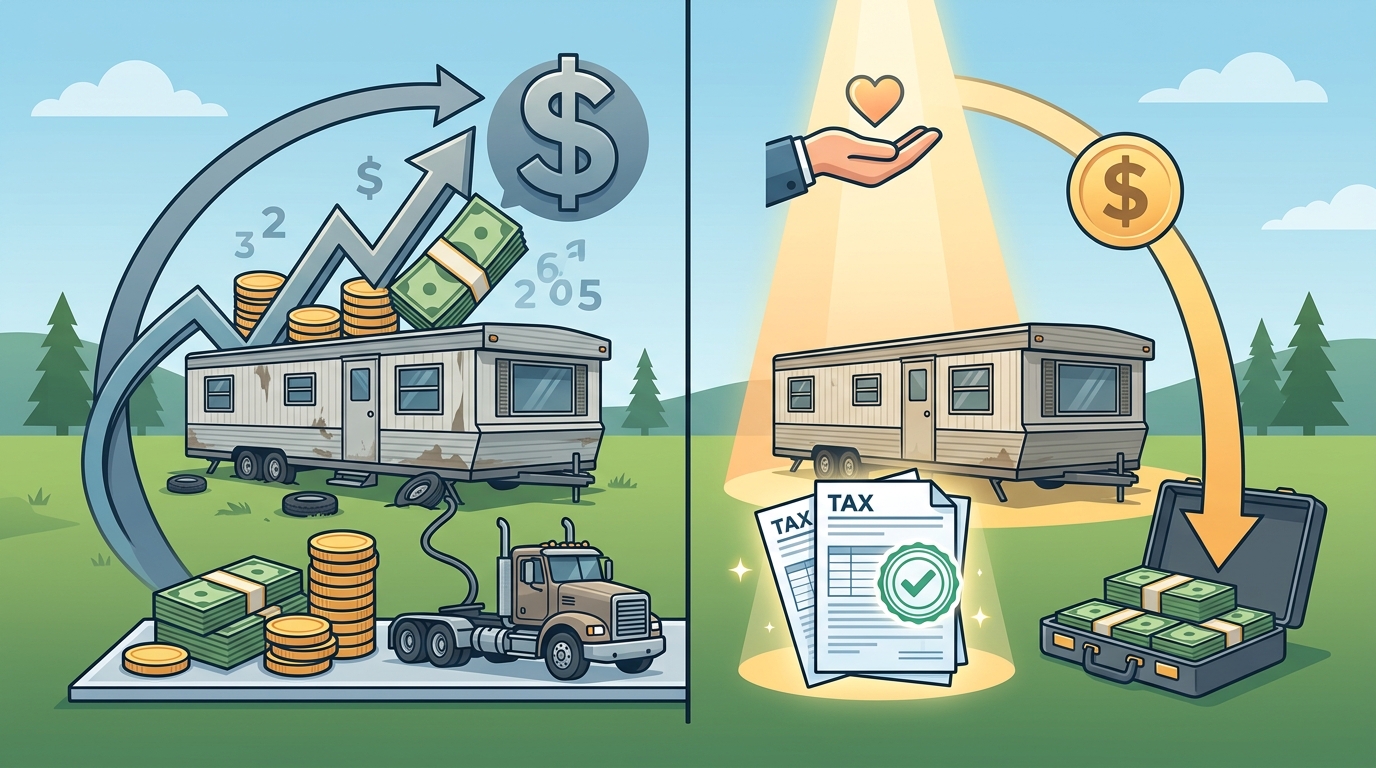
Financial Benefits of Donation
Donating your mobile home to a qualified nonprofit organization transforms a financial liability into a potential asset. This approach is particularly effective for homeowners who no longer have a use for the structure but wish to avoid the high costs of removal. The primary financial benefits include tax deductions and the elimination of removal fees.
Tax Deduction Opportunities
One of the most compelling reasons to donate a mobile home is the potential for a charitable tax deduction. When you donate a qualified manufactured home to a 501(c)(3) organization, you may deduct the fair market value of the home at the time of donation. This value is determined by an independent appraisal and the condition of the structure. For older homes, the value may be lower, but it still represents a significant financial benefit compared to paying for removal.
Elimination of Removal Costs
Nonprofit organizations like Banyan Mobile Home Removal offer free removal services for qualified homes. This means you do not pay for transportation, labor, permits, or disposal. The organization covers these costs as part of their mission to provide affordable housing. By donating, you effectively save the entire cost of the removal process, which can be tens of thousands of dollars.
Property Tax Reduction
In some jurisdictions, the presence of a mobile home on your property can increase your property tax assessment. By removing the home through donation, you may be able to reduce your property taxes. This is because the land is no longer considered to have a depreciating asset on it, which can lower the overall assessed value of your real estate.
Eligibility and Qualification Criteria
Not all mobile homes are eligible for donation. Organizations have strict criteria to ensure that the homes they accept can be safely transported and repurposed. Understanding these criteria is essential before initiating the donation process.
Age and Condition Requirements
Most reputable organizations, including Banyan Mobile Home Removal, require that the mobile home be built in 1980 or later. This is because homes built before 1980 may not meet modern HUD (Department of Housing and Urban Development) standards for safety and construction quality. Additionally, the home must be in relatively good condition. Significant structural damage, severe mold infestation, or missing major components like roofs or walls can disqualify a home from donation.
Title and Ownership Verification
To donate a mobile home, you must have clear title to the structure. This means the home must be titled as a vehicle, separate from the land it sits on. If the title has been extinguished because the home was permanently affixed to the land, you may need to take steps to re-establish the title before donation. This process involves contacting your state's Department of Licensing or equivalent agency.
Geographic Accessibility
The location of your mobile home also plays a role in its eligibility. The home must be accessible to large moving trucks and equipment. If the property is located in a remote area with narrow roads, low-hanging trees, or difficult terrain, the organization may decline the donation due to the high risk and cost of removal.
Cost Comparison Analysis
Understanding the financial difference between removal and donation is crucial for making an informed decision. The table below summarizes the key cost factors for each option.
| Cost Factor | Traditional Removal | Donation to Nonprofit |
|---|---|---|
| Transportation Fees | $8,000 - $20,000+ | $0 (Covered by Nonprofit) |
| Permitting Costs | $500 - $2,000+ | $0 (Covered by Nonprofit) |
| Disposal/Tipping Fees | $1,000 - $5,000+ | $0 (Covered by Nonprofit) |
| Tax Deduction Potential | None | Fair Market Value (Appraised) |
| Property Tax Impact | Asset remains on land | Potential reduction in assessment |
| Administrative Burden | High (Hiring movers, permits) | Low (Coordination with nonprofit) |
As shown in the table, donation offers a clear financial advantage. While traditional removal involves significant out-of-pocket expenses, donation eliminates these costs and potentially provides a tax benefit. This makes donation the superior option for homeowners who want to clear their land without incurring debt.
The Donation Process Explained
The process of donating a mobile home is straightforward and designed to be stress-free for the donor. Organizations like Banyan Mobile Home Removal handle the majority of the logistical heavy lifting.
Step 1: Initial Contact and Qualification
The first step is to contact the nonprofit organization with details about your mobile home. You will need to provide information such as the year of manufacture, dimensions, condition, and location. The organization will then assess whether the home qualifies for their program. This step is critical to ensure that the home can be safely transported and repurposed.
Step 2: Title Verification and Documentation
If the home qualifies, you will need to provide documentation proving your ownership. This includes the vehicle title or other proof of ownership. If the title has been extinguished, you will need to work with your state's Department of Licensing to re-establish it. The organization may also send an inspector to verify the condition of the home.
Step 3: Scheduling and Removal
Once all documentation is in order, the organization will schedule a removal date. They will coordinate with licensed and insured local movers to transport the home. You do not need to be present for the entire process, but you will be kept informed of the progress. The movers will remove the skirting, tie-downs, and any attached appliances before transporting the home.
Step 4: Tax Deduction and Closure
After the home is removed, the organization will provide you with a letter of acknowledgment for your tax records. This letter will include the fair market value of the donated home as determined by their appraisal. You can then use this value to claim a charitable deduction on your tax return. The process is complete, and your land is free of the unwanted structure.
Key Takeaways
- Cost Savings: Donating a mobile home eliminates removal costs that typically range from $8,000 to $20,000 or more.
- Tax Benefits: Donors may receive a tax deduction based on the fair market value of the home, as verified by an independent appraisal.
- Eligibility: Homes must be built in 1980 or later and be in relatively good condition to qualify for donation.
- Title Requirements: Clear title to the mobile home is required; if extinguished, it must be re-established through the state.
- Nonprofit Status: Banyan Mobile Home Removal is an accredited 501(c)(3) nonprofit, ensuring that donations are handled with integrity and transparency.
- Property Value: Removing a mobile home can reduce property tax assessments and increase the marketability of the land.
- Community Impact: Donated homes are often repurposed to provide affordable housing for families in need, creating a positive social impact.
Frequently Asked Questions
Can I donate a mobile home with back taxes or liens?
Generally, you must have clear title to the mobile home to donate it. If there are liens or back taxes associated with the home, you may need to resolve these issues before the donation can proceed. However, some organizations may have specific programs or partnerships to help with these complications. It is best to contact the nonprofit directly to discuss your specific situation.
How is the fair market value of a donated mobile home determined?
The fair market value is determined by an independent appraisal conducted by a qualified appraiser. The appraiser considers factors such as the age, condition, size, and location of the home, as well as current market trends for used manufactured homes. This value is then used to calculate your potential tax deduction.
What happens to the mobile home after it is donated?
After donation, the mobile home is typically sold to a buyer who needs affordable housing. The nonprofit organization handles the sale and uses the proceeds to fund their mission of providing housing assistance. In some cases, the home may be renovated and donated directly to a family in need.
Do I need to clean the mobile home before donation?
While it is not always required, it is helpful to remove any personal belongings and debris from the home before the movers arrive. This makes the removal process safer and more efficient. However, the nonprofit organization will handle the cleaning and preparation of the home for its next use.
Is the donation process free for the homeowner?
Yes, the donation process is free for the homeowner. The nonprofit organization covers all costs associated with the removal, transportation, and processing of the mobile home. You do not pay any fees for this service.
How long does the donation process take?
The timeline for the donation process varies depending on the complexity of the case. Typically, the process can take anywhere from a few weeks to a few months. This includes the time for qualification, title verification, scheduling, and removal. The nonprofit organization will keep you informed of the progress throughout the process.
Can I donate a double-wide mobile home?
Yes, double-wide mobile homes can be donated if they meet the eligibility criteria. The process is similar to that of a single-wide home, but the removal costs are higher. The nonprofit organization will cover these costs as part of the donation program.
Ready to Clear Your Land?
If you are burdened by an unwanted mobile home, do not let the high costs of removal deter you from taking action. By choosing to donate your home to a qualified nonprofit organization, you can eliminate these costs and potentially receive a tax deduction. Banyan Mobile Home Removal is dedicated to helping property owners like you clear their land while supporting affordable housing initiatives. Contact us today to learn more about our free removal program and see if your mobile home qualifies.