

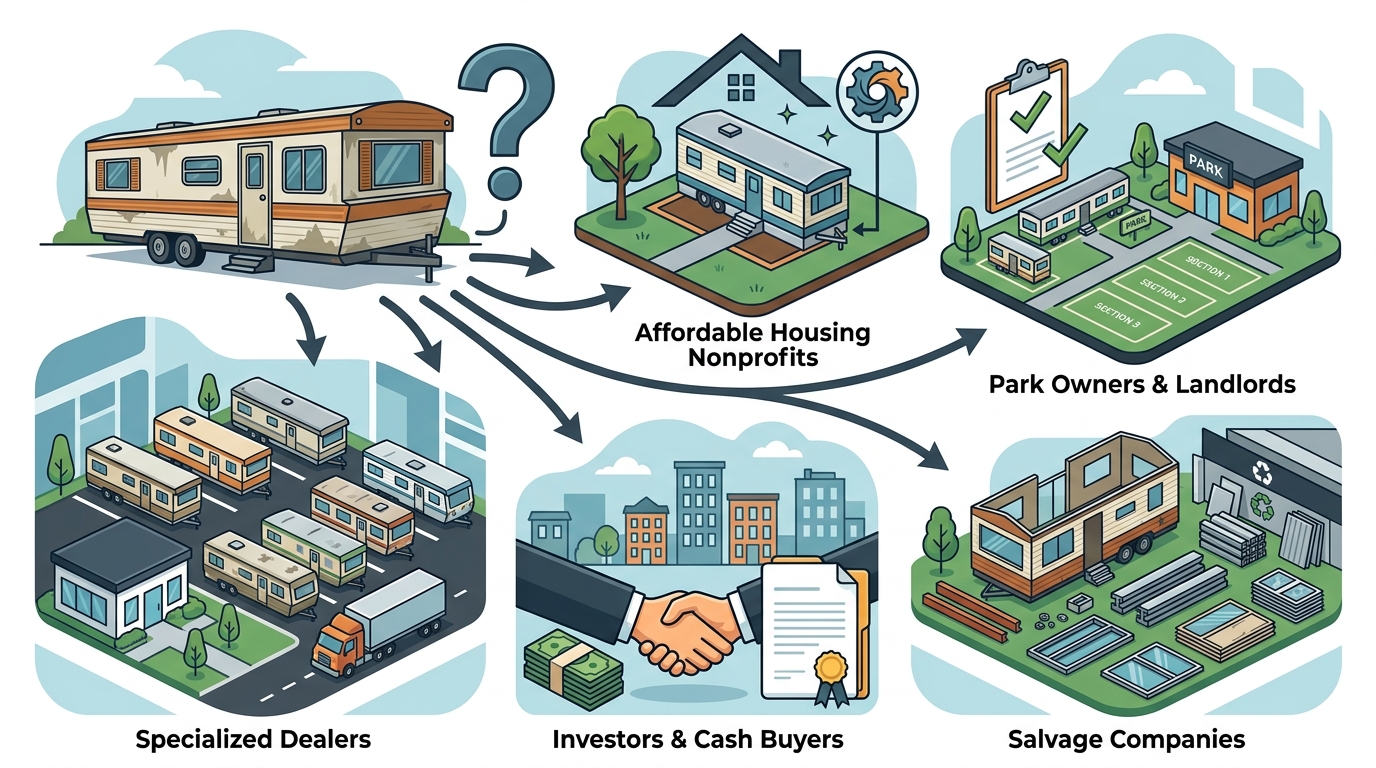
Old mobile homes are purchased by affordable housing nonprofits, park owners, landlords, salvage companies, investors, cash buyers, and specialized dealers. Each buyer type offers different financial outcomes, timelines, and logistical requirements for the seller. This guide details the specific motivations, capabilities, and benefits of each buyer category to help you make an informed decision.
Affordable Housing Demand
The demand for affordable housing in the United States has reached critical levels, creating a robust market for older manufactured homes. In December 2022, HUD calculated that homelessness in the United States affected 582,462 people, highlighting the urgent need for safe and accessible housing solutions. This demographic pressure drives a specific segment of buyers who seek older mobile homes not for luxury, but for basic shelter and stability. These buyers are often driven by a mission to provide housing for individuals and families who cannot afford market-rate properties.
Older mobile homes, particularly those from the 1980s and earlier, often meet the structural requirements for basic habitation. When these homes are removed from private land and repurposed, they directly address the housing shortage. The financial incentive for the seller in this scenario is often a tax deduction rather than a cash payout. Donating a home to a qualified nonprofit can result in significant tax benefits, as the donor can claim the fair market value of the property as a charitable contribution.
Park Owners
Mobile home park owners are a primary buyer of older units, particularly when a park is undergoing redevelopment or when a tenant vacates a lot. Park owners often purchase homes to maintain occupancy rates or to resell the units to new tenants. For a park owner, an older mobile home is an asset that can be refurbished and leased out, generating steady income. They are often willing to purchase homes in various conditions, provided the structure is sound enough to be moved and placed on a lot.
When a park owner buys a home, they typically handle the logistics of moving the unit to their property. This can be a streamlined process for the seller, as the buyer manages the permits and transportation. However, the purchase price may be lower than what a private investor might offer, as the park owner must account for the costs of moving and potential repairs. Despite the lower price, the transaction is often faster and more reliable than selling to a private individual.
Landlords
Independent landlords and small-scale rental property investors frequently purchase older mobile homes to add to their rental portfolios. These buyers are motivated by the lower entry cost of manufactured homes compared to site-built houses. An older mobile home can be purchased for a fraction of the cost of a new construction home, allowing landlords to acquire multiple units with a single investment. They often target homes in good structural condition that require only cosmetic updates to become rentable.
Landlords are typically cash buyers, which can expedite the closing process. They are also more flexible regarding the condition of the home, as they can budget for repairs and renovations. For the seller, dealing with a landlord can mean a quicker sale and less hassle regarding repairs. However, landlords may negotiate the price down based on the estimated cost of repairs, so sellers should be prepared to justify the value of the home based on its structural integrity.
Salvage Companies
Salvage companies purchase older mobile homes primarily for their materials rather than for habitation. These buyers are interested in the high-value components of a home, such as windows, doors, appliances, and structural lumber. When a mobile home is beyond repair or too old to be moved economically, a salvage company may purchase it for the purpose of dismantling and reselling the parts. This is often the best option for homes in poor condition that cannot be sold as whole units.
The financial return from a salvage company is typically lower than selling to a housing nonprofit or a private investor. However, the process is often simpler, as the buyer handles the demolition and removal. For sellers who do not want to deal with the costs and logistics of demolition, a salvage company provides a clean and efficient solution. The buyer will usually pay for the home based on the estimated value of the salvageable materials, which can vary depending on the age and condition of the unit. according to Affordable Housing Action
Mobile Home Investors
Mobile home investors are a specialized group of buyers who focus exclusively on the manufactured housing market. These investors have the expertise to assess the value of older homes and the resources to move and refurbish them. They often purchase homes in bulk or target specific markets where demand for affordable housing is high. Their motivation is to flip the homes for a profit or to hold them as long-term rental assets.
Investors are often willing to pay a fair market price for homes in good condition, as they can add value through renovations and resale. They are also experienced in navigating the complexities of mobile home titles and permits, which can be a significant advantage for the seller. Working with an investor can result in a higher sale price than selling to a general public buyer, but it may require more time to find the right match. Investors are typically professional and can provide a smooth transaction experience.
Cash Buyers
Cash buyers are individuals or entities that purchase mobile homes with immediate funds, bypassing the need for financing. This category includes investors, landlords, and private individuals who have the liquidity to make a quick purchase. For the seller, a cash offer is often the most attractive option because it eliminates the risk of the deal falling through due to financing issues. Cash buyers can close quickly, often within a few days, which is ideal for sellers who need to move on quickly.
The trade-off for a cash sale is often a lower price. Cash buyers may offer less than the appraised value of the home to account for the speed of the transaction and the convenience they provide. However, for many sellers, the certainty and speed of a cash offer outweigh the potential for a higher price from a financed buyer. Cash buyers are particularly common in the mobile home market, where financing can be difficult to obtain for older units.
Specialized Dealers
Specialized dealers in the mobile home industry purchase older units to resell them to end consumers. These dealers often have established networks of buyers who are looking for affordable housing options. They may purchase homes in various conditions, refurbish them, and then sell them at a markup. For the seller, a specialized dealer can provide a reliable sale, as the dealer has the infrastructure to move and sell the home.
Dealers may offer a competitive price for homes that are in good condition and have desirable features. They are also experienced in the logistics of moving mobile homes, which can be a complex process involving permits and specialized equipment. Working with a dealer can be a good option for sellers who want to ensure their home is sold to a responsible buyer. However, dealers may have specific preferences regarding the age and condition of the homes they purchase, so not all older units may be a fit.
Scrap and Salvage Companies
Scrap and salvage companies are similar to salvage companies but focus more on the raw materials of a mobile home. These buyers purchase homes for the metal, wood, and other materials that can be recycled or resold. This is typically the last resort for sellers who have a home that is in poor condition and cannot be sold as a whole unit. The financial return from a scrap company is usually the lowest of all buyer types, but it provides a way to remove the home from the property without incurring the cost of demolition.
For sellers who are facing the cost of demolition, a scrap company can be a viable option. The buyer will usually pay for the home based on the weight and type of materials it contains. This can be a quick and easy way to clear the property, although the financial benefit is minimal. Sellers should be aware that the value of a home to a scrap company is determined by the current market prices for raw materials, which can fluctuate.
Mobile Home Dealers
Mobile home dealers are businesses that sell new and used mobile homes. They often purchase older units to add to their inventory or to use as parts for other homes. Dealers may purchase homes in good condition to resell them as used units, or they may purchase homes in poor condition to harvest parts. For the seller, a dealer can provide a reliable sale, as the dealer has the resources to move and sell the home.
Dealers may offer a competitive price for homes that are in good condition and have desirable features. They are also experienced in the logistics of moving mobile homes, which can be a complex process involving permits and specialized equipment. Working with a dealer can be a good option for sellers who want to ensure their home is sold to a responsible buyer. However, dealers may have specific preferences regarding the age and condition of the homes they purchase, so not all older units may be a fit.
Affordable Housing Buyers
Affordable housing buyers are a specific subset of buyers who are motivated by the desire to provide housing for low-income individuals and families. These buyers include nonprofits, government agencies, and private investors who focus on the affordable housing sector. They are often willing to purchase older mobile homes at a fair price, as they can add value through renovations and resale or rental. For the seller, an affordable housing buyer can provide a reliable sale, as the buyer has the resources and motivation to complete the transaction.
One of the most significant benefits of selling to an affordable housing buyer is the potential for a tax deduction. When a home is donated to a qualified 501(c)(3) nonprofit, the donor can claim the fair market value of the property as a charitable contribution. This can result in significant tax savings, often exceeding the cash value of the home. For example, some donors have received tax benefits of $77,000 and $54,000 by donating an old mobile home. This makes donation a financially attractive option for many sellers.
Buyer Comparison Table
| Affordable Housing Nonprofit | Providing housing for low-income families | Tax deduction (no cash) | Medium | Sellers seeking tax benefits and community impact |
| Park Owner | Maintaining occupancy or reselling | Fair market value | Medium | Homes in good condition suitable for rental |
| Landlord | Adding to rental portfolio | Cash (slightly below market) | Fast | Sellers who want a quick cash sale |
| Salvage Company | Reselling materials | Low (based on materials) | Fast | Homes in poor condition |
| Mobile Home Investor | Flipping or long-term rental | Fair to high market value | Medium | Homes in good condition with potential for value-add |
| Cash Buyer | Quick acquisition | Below market (for speed) | Very Fast | Sellers who need to close immediately |
| Specialized Dealer | Reselling to end consumers | Fair market value | Medium | Homes in good condition with desirable features |
| Scrap Company | Recycling raw materials | Very Low | Fast | Homes that are beyond repair |
Key Takeaways
- Affordable housing nonprofits are a primary buyer of older mobile homes, offering tax deductions instead of cash.
- Park owners and landlords often purchase homes for rental or resale, providing a reliable cash sale.
- Salvage and scrap companies are the best option for homes in poor condition, offering a quick removal solution.
- Mobile home investors and specialized dealers can offer fair market prices for homes in good condition.
- Cash buyers provide the fastest closing but may offer a lower price to account for the speed.
- Donating a home to a qualified 501(c)(3) nonprofit can result in significant tax savings, often exceeding the cash value of the home.
- The condition of the home is the primary factor in determining which buyer type is the best fit.
- Working with a professional removal service can simplify the process, regardless of the buyer type.
Frequently Asked Questions
Who buys old mobile homes?
Can I donate my mobile home for a tax deduction?
Yes, donating your mobile home to a qualified 501(c)(3) nonprofit can result in a tax deduction for the fair market value of the property. This can be a significant financial benefit, often exceeding the cash value of the home.
What is the best buyer for a mobile home in poor condition?
For a mobile home in poor condition, a salvage or scrap company is often the best buyer. These companies purchase homes for their materials and can handle the demolition and removal process.
How much can I sell my mobile home for?
The price of a mobile home varies widely depending on its age, condition, location, and the local market. Sellers should consider getting an appraisal to determine the fair market value of their home.
Do I need to pay for removal if I sell my mobile home?
It depends on the buyer. Some buyers, such as park owners and investors, may handle the removal as part of the purchase. Others, such as salvage companies, may pay for the home but require the seller to handle removal. Donating to a nonprofit like Banyan Mobile Home Removal can provide free removal.
What is a 501(c)(3) nonprofit?
A 501(c)(3) nonprofit is an organization that the IRS recognizes as tax-exempt because it exists for charitable, educational, religious, or scientific purposes. Donations to these organizations are tax-deductible.
How long does it take to sell a mobile home?
The timeline for selling a mobile home varies depending on the buyer type. Cash buyers can close in a few days, while other buyers may take several weeks to complete the transaction.
Can I sell a mobile home with liens?
It is possible to sell a mobile home with liens, but the liens must be resolved before the title can be transferred. Sellers should consult with a legal professional to understand their options for resolving liens.
Conclusion
Understanding who buys old mobile homes is essential for making an informed decision about your property. Whether you choose to sell to a park owner, landlord, or investor, or donate to an affordable housing nonprofit, each option has its own benefits and considerations. For many sellers, donating to a qualified 501(c)(3) nonprofit like Banyan Mobile Home Removal offers the best combination of financial benefit and community impact. By donating your home, you can receive a significant tax deduction while helping a deserving family gain affordable housing. To explore your options and see if your home qualifies for free removal, today.