

Factors Affecting Cost
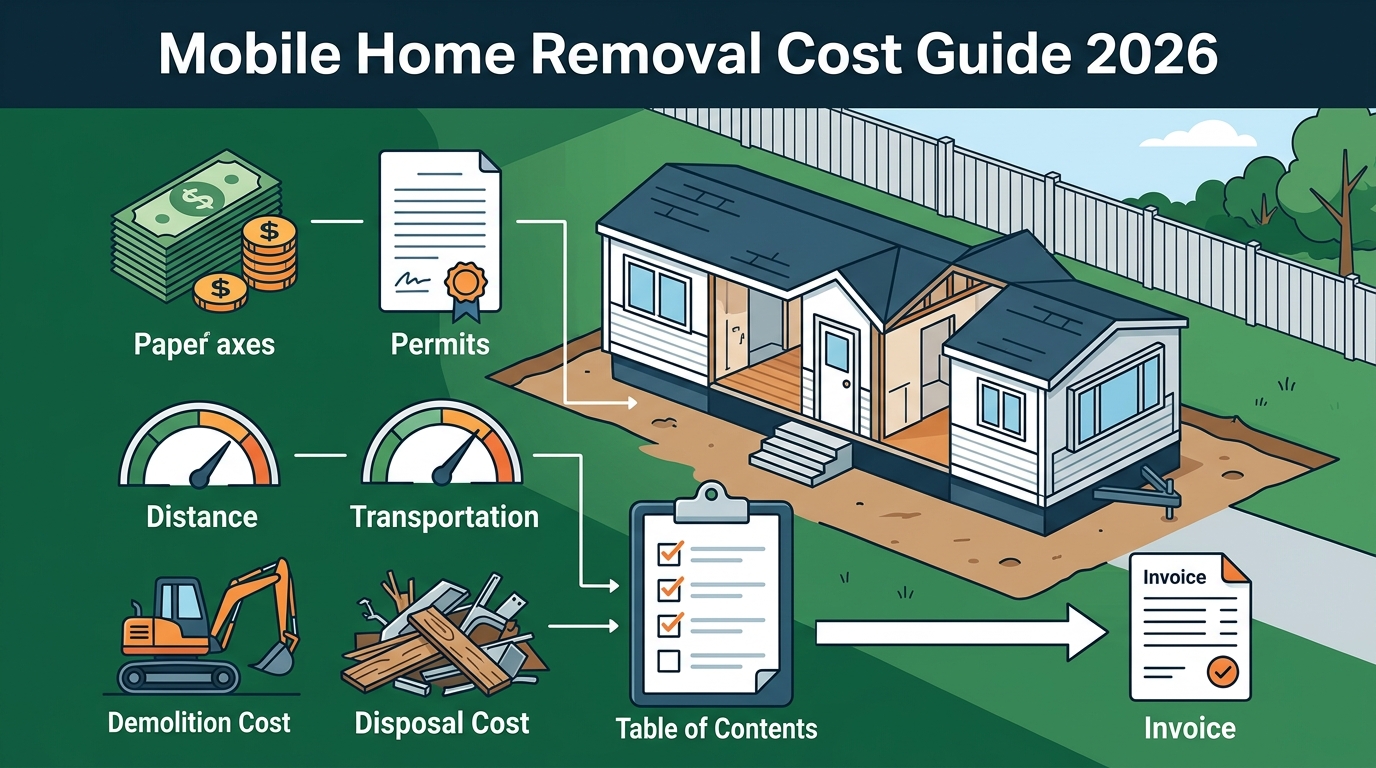
Understanding the variables that influence pricing is the first step in budgeting for mobile home removal. Several critical elements determine the final invoice you receive from a contractor or nonprofit.
Size and Structural Type
The physical dimensions of the home are the primary driver of labor and equipment costs. A double-wide mobile home is a manufactured structure composed of two sections, typically ranging from 24 to 36 feet in width. Because these units are larger and heavier than single-wides, they require more manpower and specialized transport equipment. Moving a double-wide can cost up to twice as much as a single-wide due to the complexity of splitting and reassembling the sections.
Condition and Accessibility
The overall state of the home affects the difficulty of the job. If the structural integrity is compromised, demolition may be the only safe option, which carries different costs than a standard move. Additionally, the location of the home on your property matters. If the unit is situated in a wooded area, on a rocky slope, or far from a main road, crews must charge for the extra time and heavy equipment needed to navigate the site. Accessibility issues can significantly increase the base price of any removal service.
Permits and Regulations
Local governments require permits to ensure that removal processes comply with environmental and safety standards. You must apply for these permits through your local authority, which can cost between $100 and $300 depending on your jurisdiction. These fees are additional to the service provider's charges. In some states, specific forms are required to change the classification of the home from real estate to personal property before it can be moved or sold. For example, Georgia requires Form T-229 for removing a mobile home from its permanent location, as detailed by the Georgia Department of Revenue.
Nonprofit Removal Programs
Many homeowners overlook the option of donating their mobile home to a charitable organization. Nonprofit removal programs are designed to help families in need of affordable housing while providing a free removal service to the donor. This model transforms a disposal expense into a charitable contribution.
How Nonprofit Donation Works
When you donate a mobile home to a verified 501(c)(3) organization, the nonprofit covers the entire cost of removal. The organization then relocates the home to a new site where it can be used by a family in need. This process eliminates the need for you to pay for hauling, permits, or disposal. The home must be in livable condition to qualify for this type of program. If the structure is severely damaged or poses a safety hazard, it may not be accepted for donation.
Tax Deduction Benefits
Donating a mobile home to a qualified nonprofit allows you to claim a charitable tax deduction. The deduction is based on the fair market value of the home at the time of donation. This can result in significant tax savings, potentially offsetting the value of the home entirely. For instance, some donors have reported receiving tax benefits ranging from $54,000 to $77,000 for their donations. To ensure your deduction is valid, you must receive a written acknowledgment from the nonprofit. This document should state the value of the property and confirm that no goods or services were provided in exchange for the donation.
Relocation vs Demolition
Choosing between moving and tearing down a mobile home depends on the condition of the structure and your long-term plans for the land. Each method has distinct advantages and financial implications.
When to Choose Relocation
Relocation is the best option if your mobile home is structurally sound and you wish to move it to a new site. This method preserves the value of the home and allows you to continue using it or sell it at the new location. Relocation involves disconnecting utilities, transporting the home, and reassembling it at the destination. It is a more complex process than demolition but retains the asset's utility. If you are moving within the same state, the costs are generally lower than long-distance moves.
When to Choose Demolition
Demolition is the appropriate choice if the home is beyond repair or if you need to clear the land for new construction. This method involves dismantling the structure and hauling the debris to a landfill or recycling facility. While demolition is faster than relocation, it results in the total loss of the home's value. Materials often end up in landfills, which has environmental implications. However, if the home is severely damaged by fire, flood, or age, demolition is often the only safe and practical option.
Removal Cost Ranges
Costs for mobile home removal vary widely based on the method chosen. The following table provides a general overview of the price ranges you can expect in 2026.
| Removal Method | Typical Cost Range | Key Considerations |
|---|---|---|
| Relocation (Local) | $700 - $3,500 | Transport only; permits and setup extra |
| Relocation (Long Distance) | $10,000 - $13,000 | Full service move; includes permits and setup |
| Demolition | $4,000 - $8,000 | Includes debris removal; permits required |
| Dumpster Removal | $6,000 - $8,000 | For double-wides; requires multiple dumpsters |
These ranges are estimates and can fluctuate based on local market conditions and the specific details of your property. Always obtain multiple quotes before committing to a service provider. according to How to Check
Free Removal Options
There are limited scenarios where you can remove a mobile home at no cost to you. Understanding these options can save you thousands of dollars.
Nonprofit Donation
As mentioned earlier, donating to a 501(c)(3) nonprofit is the most common way to get free removal. Organizations like Banyan Mobile Home Removal specialize in this service. They coordinate with licensed movers to transport the home at no cost to the donor. In exchange, you receive a tax deduction for the value of the home. This is a win-win situation: you clear your land for free, and a family in need gains affordable housing.
Government Assistance After Disasters
If your mobile home has been damaged by a natural disaster such as a hurricane or tornado, you may qualify for assistance from the Federal Emergency Management Agency (FEMA). FEMA may remove the home if it is deemed a public health hazard. This option is only available in declared disaster areas and requires an application process. It is not a general removal service but a specific aid for disaster victims.
Relocation Costs
Relocating a mobile home is a significant investment that requires careful planning. The costs associated with moving a home include transportation, permits, and site preparation.
Transportation Fees
The cost to transport a mobile home depends on the distance and the size of the unit. For a local move, you can expect to pay between $700 and $3,500 for transport only. Longer-distance moves, particularly those over 45 miles, can reach $10,000 or more. Prices vary based on the home's weight, the moving distance (often $5 to $10 per mile), and state permit fees. For double-wide homes, the cost is higher due to the need to split and reassemble the sections.
Permits and Site Preparation
In addition to transportation, you must budget for permits and site preparation. Permits ensure that the move complies with local regulations and can cost between $100 and $300. Site preparation at the new location includes grading, foundation installation, and utility connections. These costs can add several thousand dollars to the total expense. It is essential to factor in all these costs when budgeting for a relocation.
Demolition Costs
Demolition is the most expensive option for removing a mobile home, but it is often necessary for severely damaged structures. The cost of demolition includes labor, equipment, and debris disposal.
Labor and Equipment
Demolishing a mobile home requires specialized equipment and skilled labor. Crews must dismantle the structure safely and efficiently. The cost for this labor typically ranges from $4,000 to $8,000 for an average single-wide home. Double-wide homes may cost more due to their size and complexity. The condition of the home also affects the cost; if hazardous materials such as asbestos are present, additional steps must be taken to remove them safely, increasing the price.
Debris Disposal
After demolition, the debris must be hauled to a landfill or recycling facility. This can require three to six large roll-off dumpsters, depending on the size of the home. The cost of renting and filling these dumpsters is included in the demolition price. If you choose to recycle materials, you may be able to offset some costs by selling scrap metal, but this rarely covers the full expense of removal. Demolition is a final solution that results in the complete loss of the home's value.
Key Takeaways
- Donating to a 501(c)(3) nonprofit offers free removal and a tax deduction.
- Relocation costs vary by distance, with local moves starting at $700 and long-distance moves reaching $13,000.
- Demolition typically costs between $4,000 and $8,000, including debris disposal.
- Permits are required for both relocation and demolition, costing $100 to $300.
- The size and condition of the home significantly impact the final price.
- Accessibility issues, such as wooded or rocky terrain, can increase costs.
- Always obtain multiple quotes and verify the nonprofit's 501(c)(3) status before donating.
Frequently Asked Questions
How much does it cost to demolish a mobile home?
Demolishing a mobile home typically costs between $4,000 and $8,000. This price includes labor, equipment, and debris disposal. The exact cost depends on the size of the home, its condition, and local regulations.
Can I get my mobile home removed for free?
Yes, you can get your mobile home removed for free by donating it to a qualified 501(c)(3) nonprofit. Organizations like Banyan Mobile Home Removal cover the removal costs in exchange for the home, which they then provide to families in need. You may also qualify for a tax deduction.
What is the difference between a mobile home and a manufactured home?
The terms mobile home and manufactured home are often used interchangeably. A mobile home is a structure built in a factory and transported to a site. A manufactured home is a similar structure but built to the HUD code. The titling process for both is generally the same, as noted by the South Carolina DMV.
Do I need a permit to remove a mobile home?
Yes, you typically need a permit to remove a mobile home, whether you are relocating or demolishing it. Permits ensure that the process complies with local safety and environmental regulations. The cost of a permit usually ranges from $100 to $300.
How long does it take to remove a mobile home?
The time required to remove a mobile home depends on the method. Demolition can take one to two weeks, while relocation may take a few days to a few weeks, depending on the distance and complexity. Donating to a nonprofit may take longer due to the need to find a suitable recipient and site.
What happens to the land after a mobile home is removed?
After a mobile home is removed, the land is typically left in its original condition, minus the foundation or pads. If the home was demolished, the debris is hauled away, and the site is cleaned. You may need to repair any damage to the ground or utilities before using the land for other purposes.
Can I sell my mobile home instead of removing it?
Yes, you can sell your mobile home if it is in livable condition. Selling may allow you to recoup some of the home's value. However, finding a buyer can take time, and you may still need to cover removal costs if the buyer does not arrange the move. Donating is often a faster and more tax-efficient option.