

Yes, you can get a free mobile home removal service if you donate your property to a qualified 501(c)(3) nonprofit. This guide explains how to qualify, the tax benefits involved, and the specific steps to clear your land at no cost.
Tax Deduction Benefits
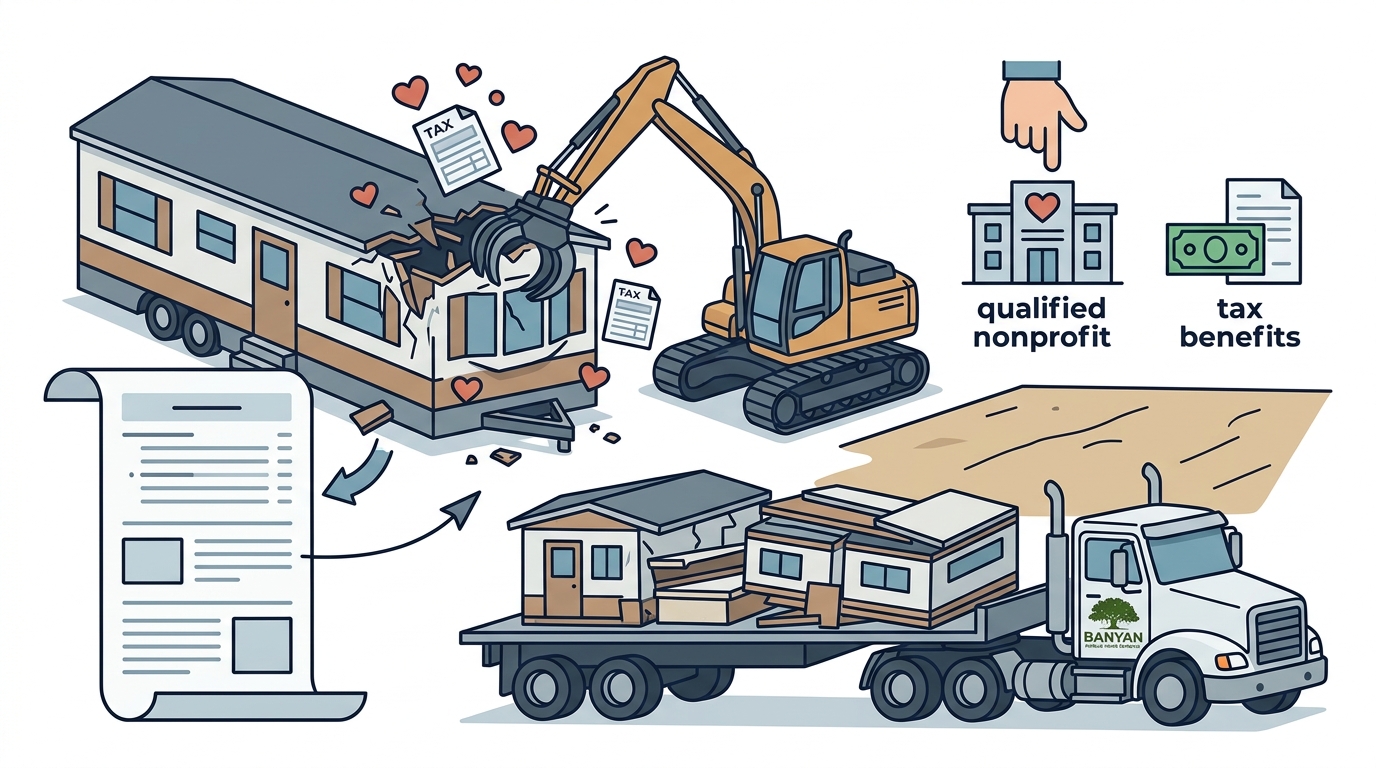
Donating a mobile home to a registered charity provides significant financial relief beyond just removing the structure. A charitable deduction is a tax benefit that allows you to reduce your taxable income by the fair market value of the donated property. When you give a manufactured home to a 501(c)(3) organization, the IRS generally allows you to deduct the home's value, provided you have held it for more than one year.
Documentation and Valuation
To claim the deduction, you must obtain a written acknowledgment from the nonprofit. This receipt should state the value of the home and confirm that no goods or services were provided in exchange for the donation. Accurate valuation is critical, as the IRS may audit high-value donations. Working with a professional appraiser or using comparable sales data helps ensure your deduction is defensible and maximized.
Nonprofit Donation Programs
Nonprofit donation programs are charitable initiatives that accept unwanted manufactured homes to provide affordable housing to families in need. These organizations operate under strict federal guidelines to ensure that donated assets are used for public benefit. By partnering with a verified nonprofit, you ensure your home is repurposed rather than sent to a landfill, creating a positive social impact while solving your property issue.
Organizations like Banyan Mobile Home Removal specialize in this model. They facilitate the transfer of ownership and coordinate the physical move, ensuring the process is legally sound and logistically smooth. This approach benefits both the donor, who receives a tax receipt, and the recipient, who gains a place to live.
Why Choose a Nonprofit Over a Demolition Company
Demolition companies charge for labor, equipment, and disposal fees, which can range from several thousand to over ten thousand dollars. In contrast, nonprofit programs cover these costs in exchange for the donation. This model eliminates the financial burden on the property owner while addressing a critical housing shortage. It is a win-win scenario that aligns financial prudence with community responsibility.
Eligibility Requirements
Not every mobile home qualifies for free removal through a donation program. Eligibility requirements are the specific criteria a structure must meet to be accepted by a charitable organization. These criteria typically focus on the home's age, physical condition, and legal title status. Understanding these requirements helps you determine if your property is a good candidate for donation.
Age and Condition
Most programs accept homes built in 1980 or newer. The structure must be structurally sound, meaning it has a stable roof, intact walls, and a functional foundation. Homes that are severely damaged by fire, flood, or rot may not be accepted because they cannot be safely transported or repurposed. If your home is in poor condition, it may be better suited for paid demolition.
Title and Legal Ownership
You must hold clear title to the mobile home. If the home is titled as personal property (a vehicle), you need the certificate of title. If it has been converted to real estate, you need to ensure there are no outstanding liens or mortgages. A clean title transfer is essential for the donation to be legally valid and for you to receive the tax deduction.
Removal Service Scope
Removal service scope defines the specific tasks included in the free removal process. For a comprehensive program, this includes site preparation, permitting, transportation, and final placement. You do not need to hire separate movers or obtain local permits yourself. The nonprofit coordinates with licensed and insured movers to handle the entire logistics chain.
What is Included in the Service
The service typically covers the cost of the moving truck, the crew, and any necessary permits for transport. It also includes the preparation of the home for the move, such as disconnecting utilities and securing loose items. The goal is to leave your property clean and ready for its next use, whether that is building a new structure or selling the land.
What is Not Included
While the removal is free, you are generally responsible for the cost of any repairs needed to make the home habitable for the recipient. You should also remove any personal belongings from the home before the move date. The nonprofit focuses on the structure itself, not the contents inside.
| Option | Cost to Owner | Tax Benefit | Environmental Impact |
|---|---|---|---|
| Sale | Time and Effort | Capital Gains Tax | Low (Repurposed) |
Key Takeaways
- Free removal is available through donation to a 501(c)(3) nonprofit.
- You can claim a tax deduction for the fair market value of the home. according to Publication 523 2025
- Homes built in 1980 or newer are generally the most likely to qualify.
- You must hold clear title to the property to complete the donation.
- The nonprofit handles all moving costs, permits, and logistics.
- Donation is more cost-effective than paid demolition or sale.
- The process helps provide affordable housing to families in need.
- Always verify the nonprofit's status with the IRS before donating.
Frequently Asked Questions
Is mobile home removal really free?
Yes, if you donate the home to a qualified 501(c)(3) nonprofit. The organization covers the cost of moving and disposal in exchange for the donation, which you can then deduct from your taxes.
What is the tax deduction for donating a mobile home?
The deduction is based on the fair market value of the home at the time of donation. You should consult a tax professional to determine the exact value and ensure you meet all IRS requirements for the deduction.
Can I donate a mobile home with a lien?
No, you must clear any liens or mortgages before donating. The title must be clean for the transfer to be legally valid. You can pay off the lien or work with the lender to release it before proceeding.
How long does the removal process take?
The timeline varies, but it typically takes a few weeks to coordinate the move. This includes the time needed to verify eligibility, obtain permits, and schedule the movers. The actual move usually takes one to two days.
Do I need to remove my belongings before the move?
Yes, you should remove all personal items from the home before the movers arrive. The donation covers the structure only, not the contents. Leaving items behind may complicate the transfer or result in them being discarded.
What if my home is in poor condition?
If the home is structurally unsound, it may not qualify for donation. In this case, you may need to pay for demolition. However, some nonprofits may still accept homes for parts or salvage, so it is worth asking.