
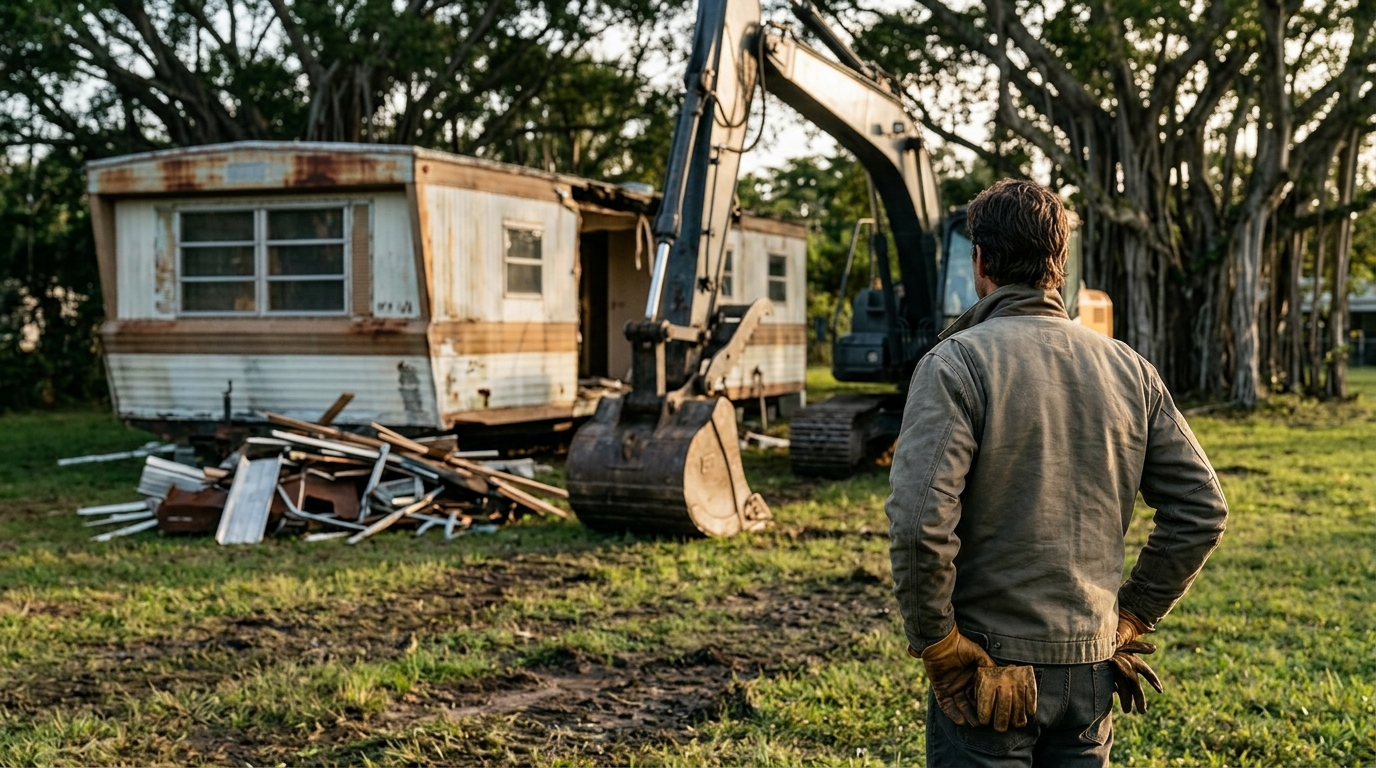
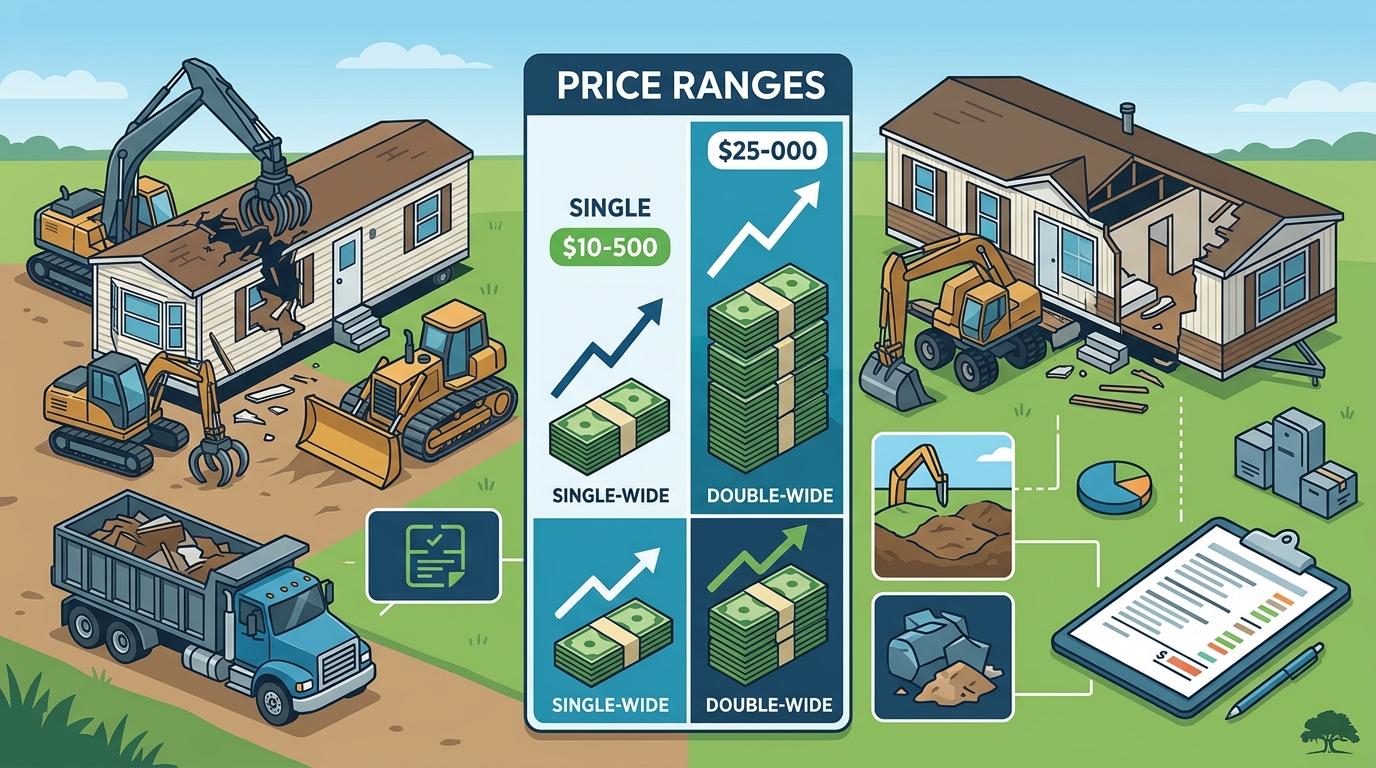
Removing an unwanted mobile home is rarely a simple DIY project. The financial reality involves heavy machinery, specialized labor, and complex regulatory compliance. According to industry data, the average cost to remove a single-wide mobile home ranges from $5,000 to $15,000, while double-wide units can cost between $10,000 and $30,000 or more depending on location and accessibility. These figures do not always include the critical expense of land remediation or debris disposal, which can significantly inflate the final bill. Understanding these costs is the first step in deciding whether to pay for removal or explore alternative disposal methods.
Understanding the Cost Breakdown
When property owners ask how much it costs to remove a mobile home, they are often surprised by the wide variance in pricing. The base cost typically covers the labor and equipment required to detach the home from its foundation and transport it away. However, this is just the beginning of the financial equation.
Mobile home removal is a specialized service that requires heavy machinery, such as tracked loaders and cranes, to navigate tight obstacles and uneven terrain. Banyan Mobile Home Removal works with licensed and insured movers who understand the complexities of these operations. The cost is not merely for moving the structure but for ensuring it does not damage your remaining property during the extraction process.
Additionally, permits are a mandatory component of the removal process. Local municipalities often require specific permits to move a structure off a lot, especially if it involves public roads. These fees vary by county and state but are essential for legal compliance. Ignoring these requirements can lead to hefty fines and legal liabilities for the property owner.
Key Factors Influencing Removal Prices
Several dynamic variables determine the final quote for mobile home removal. Understanding these factors helps you anticipate costs and negotiate more effectively with service providers.
1. Size and Type of the Home
The most obvious factor is the size of the mobile home. Single-wide homes are smaller and lighter, making them easier and cheaper to move. Double-wide or triple-wide homes require more complex logistics, including multiple transport vehicles and specialized rigging. The weight of the structure directly correlates with the equipment needed and the fuel consumption involved in the haul.
2. Location and Accessibility
Geography plays a massive role in pricing. If your property is located in a remote area with difficult access, movers may need to bring in additional equipment, such as tracked loaders that can overcome challenging obstacles. Regional service availability also impacts cost, as travel fees for crews can be significant if they must travel long distances to reach your site.
3. Condition of the Home
A home in good condition might be eligible for relocation to a new site. However, if the home is dilapidated, condemned, or contains hazardous materials like asbestos, the cost increases due to the need for specialized handling and disposal. Structural integrity assessments are often required before a final price can be quoted.
4. Land Remediation
Once the home is removed, the land is rarely left in a pristine state. The foundation, piers, and tie-downs must be removed. The ground often needs to be graded and filled to match the surrounding landscape. This remediation work is often quoted separately and can add thousands to the total cost.
Demolition vs. Full Removal
It is crucial to distinguish between removing a mobile home and demolishing it. These are two distinct processes with different cost structures and outcomes.
Full Removal involves detaching the home from its foundation and transporting it intact to a new location or a salvage yard. This option is viable only if the home is structurally sound enough to withstand the journey. If the home has value, it might even offset some of the removal costs through salvage rights.
Demolition, on the other hand, involves destroying the home on-site. This is typically done when the home is too damaged to be moved or when the owner prefers to clear the land quickly. Demolition costs can range from $2,000 to $10,000 for a single-wide, depending on the method used (mechanical crushing vs. manual deconstruction). However, demolition leaves behind a significant amount of debris that must be hauled away and disposed of in a landfill, adding to the final bill.
According to environmental data, mobile home demolition generates a substantial amount of waste. The EPA highlights the importance of proper waste management for construction and demolition debris. This makes demolition a less environmentally friendly option compared to removal and salvage.
The Tax Deduction Alternative
For many property owners, the high cost of removal or demolition is a significant barrier. This is where the donation model offers a compelling financial alternative. Donating your mobile home to a qualified nonprofit organization can result in a tax deduction for the fair market value of the home.
Banyan Mobile Home Removal is an accredited 501(c)(3) nonprofit organization. When you donate your home, they handle the entire removal process at no cost to you. In return, you receive a tax deduction. This effectively turns a negative expense into a potential financial gain.
Recent donation values illustrate the potential savings. For example, a mobile home in Washougal, WA, resulted in a tax deduction value of $72,266.29. Similarly, a donation in Austin, TX, yielded a value of $73,791.19. These figures demonstrate that the value of a mobile home can be substantial, even if it is no longer in use.
To qualify for this benefit, the home must generally be 1980 or newer and meet certain safety standards. IRS guidelines for charitable contributions outline the specific requirements for claiming these deductions. It is essential to consult with a tax professional to understand how this applies to your specific situation.
Cost Comparison: Removal, Demolition, and Donation
Comparing the costs of different disposal methods helps clarify the best path forward for your property.
| Method | Estimated Cost Range | Financial Benefit | Best For |
|---|---|---|---|
| Full Removal | $5,000 - $30,000+ | None (Expense) | Relocating the home to a new site |
| Demolition | $2,000 - $10,000+ | None (Expense) | Clearing land quickly for new construction |
| Donation | $0 (Free Removal) | Tax Deduction | Property owners seeking financial relief |
As the table shows, donation is the only option that eliminates upfront costs and potentially provides a financial return. This makes it an attractive choice for inherited properties, abandoned units, or homes that are no longer needed.
Key Takeaways
- Cost Variance: Removal costs range from $5,000 to $30,000+ depending on size and location.
- Hidden Fees: Permits, land remediation, and debris disposal often add significant costs to the base quote.
- Demolition Waste: Demolition creates more environmental waste and does not offer financial incentives.
- Tax Benefits: Donating to a 501(c)(3) nonprofit can provide a substantial tax deduction.
- Eligibility: Homes must typically be 1980 or newer to qualify for donation programs.
- Free Service: Nonprofits like Banyan cover all removal and insurance costs for qualifying donations.
- Professional Handling: Licensed and insured movers are required for safe and legal removal.
Frequently Asked Questions
How much does it cost to remove a single-wide mobile home?
The average cost to remove a single-wide mobile home ranges from $5,000 to $15,000. This price includes labor, equipment, and basic permits. However, land remediation and debris removal can increase the total cost.
Can I get a tax deduction for donating my mobile home?
Yes, if you donate your mobile home to a qualified 501(c)(3) nonprofit organization, you may be eligible for a charitable tax deduction. The value is based on the fair market value of the home at the time of donation.
What is the difference between removal and demolition?
Removal involves taking the home off its foundation and transporting it intact. Demolition involves destroying the home on-site and hauling away the debris. Removal is generally more expensive but preserves the structure, while demolition is faster but creates more waste.
Are there any free mobile home removal services?
Yes, nonprofit organizations like Banyan Mobile Home Removal offer free removal services for qualifying homes. In exchange, you receive a tax deduction. The home must typically be 1980 or newer and in a condition suitable for transport.
Do I need permits to remove a mobile home?
Yes, most local municipalities require permits to remove a mobile home from a property. These permits ensure that the removal is done safely and legally. Nonprofit removal services often handle the permitting process as part of their service.
How long does the removal process take?
The removal process typically takes one to two days. This includes the time required for setup, detachment, transport, and initial site cleanup. Complex sites or large double-wide homes may take longer.
What happens to the mobile home after donation?
After donation, the mobile home is repaired and refurbished. It is then paired with a low-income family or individual in need of affordable housing. This process helps provide a path to homeownership for those who might otherwise struggle to find safe housing.
Get Your Free Removal Quote
Do not let the high cost of removal or demolition deter you from clearing your property. If your mobile home qualifies, you can have it removed for free and potentially receive a tax deduction. Contact Banyan Mobile Home Removal today to start the qualification process. Our team is ready to help you navigate the removal process with ease and efficiency.