

The manufactured housing sector represents a critical component of the national affordable housing infrastructure. According to the Manufactured Housing Institute, more than 22 million people in the United States currently reside in manufactured homes. This massive demographic creates a diverse ecosystem of potential buyers, each with unique financial motivations and operational requirements. Understanding these distinct buyer profiles is essential for property owners looking to maximize the value of their assets or navigate the donation process effectively. (Research Data MHI) (Free Mobile Home Removal)
Analyzing Key Mobile Home Buyer Profiles
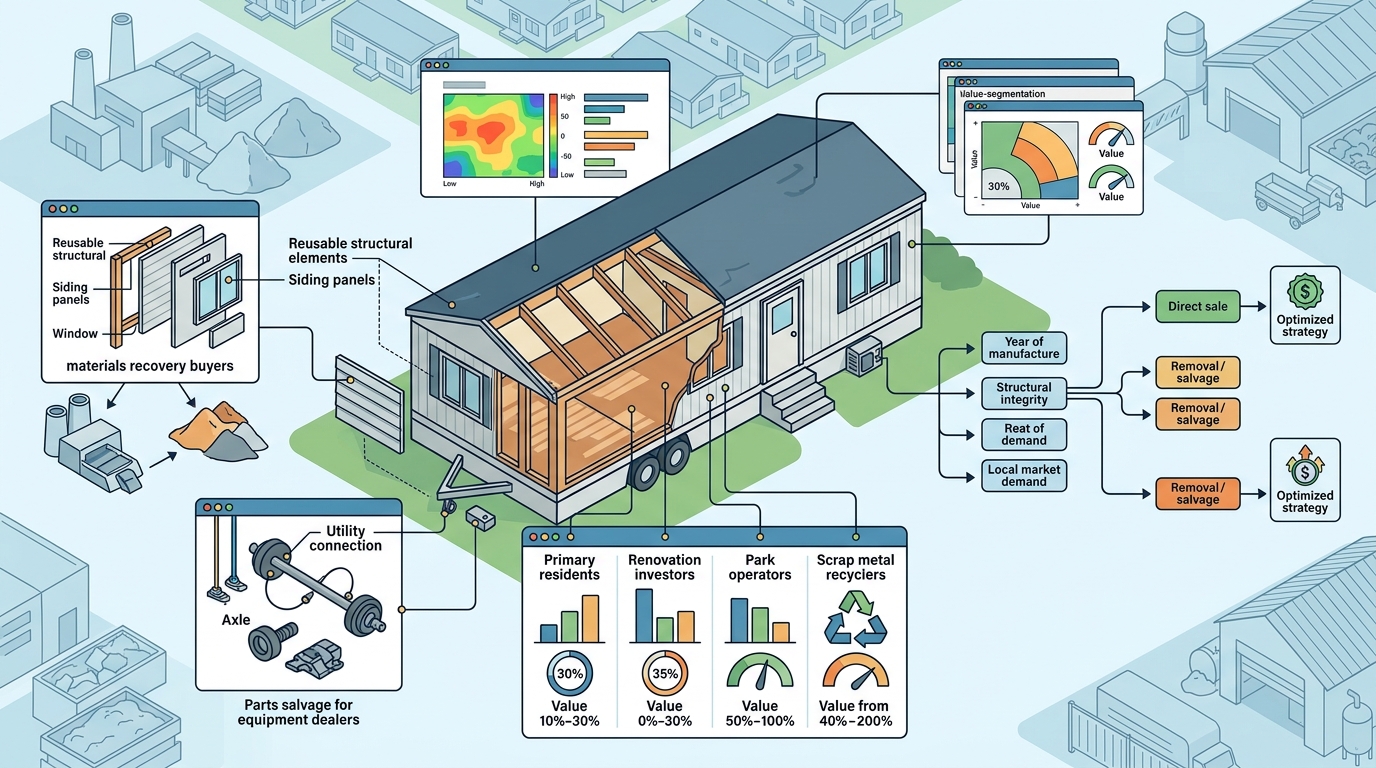
Not all buyers operate with the same objectives. The market is segmented into several primary categories, each influencing the final transaction dynamics. Recognizing who is buying and why allows sellers to tailor their approach for optimal outcomes.
Individual Homebuyers Seeking Affordability
For many families, manufactured homes offer the most accessible path to homeownership. These buyers are often first-time homebuyers or individuals seeking lower monthly payments compared to traditional site-built homes. They typically look for homes that are move-in ready or require minimal cosmetic updates. Their primary motivation is financial stability and the ability to secure a property without the burden of excessive debt. When a home is well-maintained, these buyers are willing to pay a premium for convenience and immediate habitability.
Real Estate Investors and Flippers
Investors view mobile homes as tangible assets with potential for appreciation or rental income. They often seek properties with solid structural integrity but may be willing to take on cosmetic repairs. Their pricing strategy is driven by the After Repair Value (ARV) minus the cost of renovations and holding periods. Investors look for deals that offer a clear margin of safety. They are less concerned with the aesthetic appeal and more focused on the mechanical systems, foundation condition, and land lease terms if applicable.
Nonprofit Organizations and Donation Programs
Organizations like Banyan Mobile Home Removal operate with a mission-driven approach. They accept donations of unwanted manufactured homes to repurpose them for affordable housing initiatives. For property owners, this option provides a cost-free removal service and potential tax benefits. These entities do not pay market value for the structure itself. Instead, they provide value through the elimination of liability, the removal of the physical asset, and the charitable deduction associated with the gift. This pathway is ideal for homes that are no longer viable for traditional sale but remain structurally sound enough for relocation.
Developing Effective Pricing Strategies
Pricing a mobile home requires a nuanced understanding of depreciation, location, and condition. Unlike traditional real estate, which often appreciates over time, manufactured homes typically depreciate similarly to vehicles. However, this trend can be reversed in high-demand markets or for high-quality units.
The Depreciation Curve
Understanding the age of the home is the first step in valuation. Homes built before 1976 are subject to different standards than post-1976 HUD-code homes. For modern manufactured homes, the depreciation curve flattens significantly after the first few years. A home that is five years old will retain a much higher percentage of its value than one that is twenty years old, assuming comparable condition. Sellers must be realistic about the age of the structure when setting expectations.
Location and Land Ownership
The location of the mobile home is a decisive factor in pricing. A home situated in a desirable community with low lot rents or one where the owner owns the land outright commands a higher price. Conversely, homes in parks with high fees or restrictive covenants may face a smaller pool of buyers. The local market dynamics also play a role. In regions with housing shortages, prices remain robust. In areas with oversupply, pricing must be competitive to attract attention.
Condition and Upgrades
Recent upgrades can significantly influence the perceived value. New roofs, updated HVAC systems, and modernized kitchens are high-impact features that justify a higher asking price. However, sellers should avoid over-improving a property beyond the neighborhood standard. The goal is to appeal to the average buyer, not the most discerning one. A balanced approach to renovations ensures that the investment is recouped without inflating the price to a point where the home sits on the market indefinitely.
Donation Versus Sale: A Strategic Comparison
Property owners often face the dilemma of whether to sell their mobile home or donate it. The decision depends on the condition of the home, the urgency of removal, and the owner's financial goals.
| Factor | Selling to a Private Buyer | Donating to a Nonprofit |
|---|---|---|
| Financial Return | Potential for market value payment | Tax deduction based on fair market value |
| Removal Cost | Often borne by the seller or negotiated | Completely free of charge |
| Timeline | Variable, depends on market conditions | Predictable, typically within weeks |
| Condition Requirements | Must be habitable or repairable | Must meet basic safety standards |
| Complexity | High, requires marketing and negotiation | Low, streamlined process |
When a home is in poor condition or located in a difficult-to-access area, the costs of selling can outweigh the potential proceeds. In such cases, donation becomes a financially prudent choice. The tax deduction can offset the loss of the asset's monetary value, while the free removal eliminates the burden of disposal fees. For more details on this process, you can explore the donation versus sale resources available on our site.
Current Market Trends and Valuation Factors
The manufactured housing market is evolving rapidly. Several factors are currently influencing pricing and buyer behavior across the United States. (Research Data MHI)
Affordability Crisis Driving Demand
As traditional housing costs continue to rise, the demand for manufactured homes has surged. This trend is particularly evident in states with strong affordable housing initiatives. Buyers are increasingly turning to manufactured homes as a viable alternative to site-built construction. This shift has stabilized prices in many regions, even for older units. The scarcity of affordable inventory has created a seller's market in certain areas, allowing owners to command better prices.
Financing Innovations
Access to financing is a critical component of the mobile home market. Traditional mortgages are often difficult to secure for manufactured homes, especially those on leased land. However, new lending products and government-backed loans are expanding the pool of eligible buyers. Sellers who can provide clear titles and documentation of property ownership facilitate faster transactions. Understanding the financing landscape helps sellers anticipate buyer capabilities and adjust pricing accordingly.
Regulatory and Safety Standards
Compliance with local and federal regulations is non-negotiable. Homes must meet current safety standards to be legally transported and occupied. This includes tie-down requirements, skirting regulations, and electrical code compliance. Properties that are up to code are more attractive to buyers and easier to sell. Non-compliant homes may require costly upgrades before they can be marketed, impacting the net return for the seller.
Key Takeaways
- Buyer Diversity: The market includes individual families, investors, and nonprofits, each with distinct motivations.
- Depreciation Reality: Mobile homes depreciate over time, but condition and location can mitigate this trend.
- Donation Benefits: Donating to an accredited 501(c)(3) nonprofit offers free removal and potential tax deductions.
- Market Demand: The national housing shortage is driving increased demand for affordable manufactured housing options.
- Valuation Factors: Age, land ownership, and recent upgrades are the primary drivers of market price.
- Process Efficiency: Donation provides a faster, less complex alternative to traditional selling methods.
- Regulatory Compliance: Adhering to safety and transport regulations is essential for successful transactions.
Frequently Asked Questions
How is the value of a mobile home determined?
The value is determined by a combination of age, condition, location, and comparable sales in the area. Professional appraisals can provide a precise figure, but general market trends offer a reliable baseline.
Can I donate a mobile home that is in poor condition?
Yes, many nonprofit organizations accept homes that require significant repairs, provided they meet basic safety standards for transport. Banyan Mobile Home Removal accepts homes built in 1980 or newer that qualify for their program.
What is the difference between a single-wide and a double-wide?
A single-wide is a single section of a manufactured home, typically up to 900 square feet. A double-wide consists of two sections joined together, offering more space and often higher market value.
Do I need to clean the home before selling or donating?
While a clean home is more appealing to buyers, it is not strictly required for donation. For sales, a clean and decluttered home can significantly speed up the process and increase the final offer.
How long does the donation process take?
The timeline varies based on logistics and buyer availability, but many organizations aim to complete the removal within a few weeks of qualification. Banyan Mobile Home Removal strives to coordinate removal efficiently to minimize disruption.
Is there a tax deduction for donating a mobile home?
Yes, if the organization is a registered 501(c)(3) nonprofit, donors may be eligible for a tax deduction based on the fair market value of the home. Consult a tax professional for specific advice.
What documents are needed to sell a mobile home?
Typically, you will need the vehicle title, proof of ownership, and any relevant inspection reports. If the home is affixed to land, additional real estate documents may be required.
Next Steps for Property Owners
Whether you are looking to sell your mobile home for maximum value or donate it for a charitable cause, understanding the market is crucial. If your home is no longer serving your needs, consider the benefits of our free removal program. We provide a streamlined, stress-free process for property owners across the nation. Contact us today to discuss your options and take the first step toward a solution that works for you. Visit our contact page to get started.