

Removing an unwanted mobile home from your property is often viewed as a costly logistical nightmare. However, donating your structure to a qualified nonprofit organization transforms a heavy burden into a financial opportunity. According to recent industry data on charitable contributions, property owners can receive significant tax deductions while eliminating the need for expensive hauling services. This guide details how to navigate the donation process, understand eligibility requirements, and maximize your financial benefits through Banyan Mobile Home Removal. (Free Mobile Home Removal)
Eligibility Requirements and Age Restrictions
Not every manufactured home qualifies for free removal and donation. The primary constraint is the age of the structure. Organizations like Banyan Mobile Home Removal typically accept homes built in 1980 or newer. This cutoff exists because the Department of Housing and Urban Development (HUD) implemented strict federal construction and energy efficiency standards in June 1976, with full enforcement following in 1980. Homes built before this era often lack the structural integrity required for safe transport and resale. (Insights amp Advice for)
Beyond age, the physical condition of the home matters. The structure must be intact enough to be moved without collapsing. This means the roof, walls, and floor must be largely sound. While cosmetic issues like worn carpet or outdated fixtures are acceptable, severe structural damage, extensive mold infestation, or missing major components can disqualify a property. The nonprofit must be able to sell the home to a family in need, so it must be habitable after minor repairs.
Additionally, the legal status of the home is critical. The mobile home must have a clear title or be eligible for title transfer. If the home has been permanently affixed to the land and the title extinguished, the process becomes more complex. You may need to work with local government offices to re-establish the vehicle title before donation. Banyan Mobile Home Removal provides guidance on navigating these bureaucratic hurdles to ensure a smooth transition.
Step-by-Step Donation Process
The journey from an unwanted mobile home to a tax deduction involves several coordinated steps. Understanding this workflow helps property owners prepare their documents and manage expectations regarding timelines.
1. Initial Qualification and Inspection
The process begins with a consultation. You contact the nonprofit organization to provide details about your mobile home, including its age, size, and current condition. Photos are often required to assess eligibility remotely. If the home passes the initial screening, a qualified inspector may visit your property to verify the condition matches your description. This step ensures that the organization does not incur unexpected costs during the moving phase.
2. Title Verification and Documentation
Once the home is approved, the focus shifts to legal documentation. You must provide the vehicle title, which serves as proof of ownership. If the title is lost, the organization will guide you through the process of obtaining a duplicate from your state’s Department of Licensing. This document is essential for transferring ownership from your property to the nonprofit.
3. Professional Removal and Transport
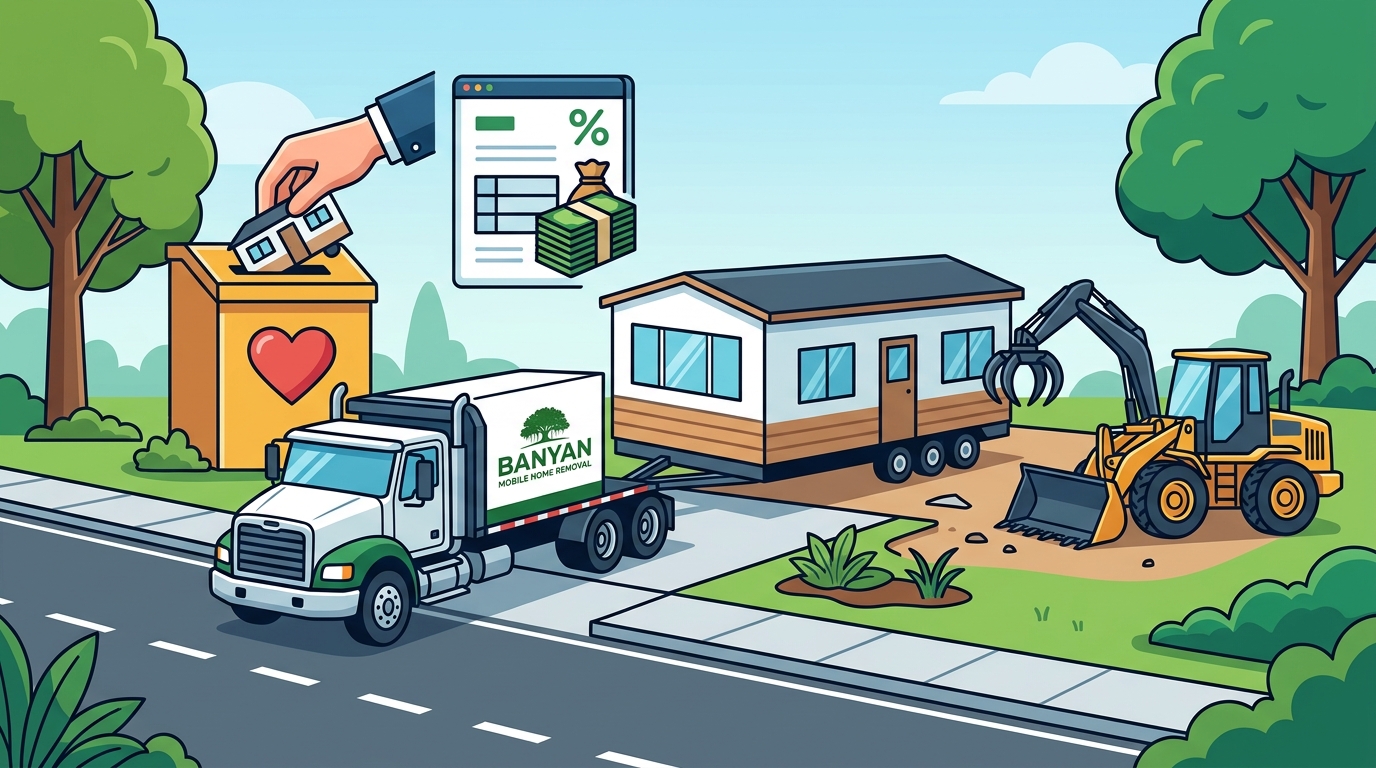
After the paperwork is complete, the nonprofit coordinates with licensed and insured local mobile home movers. These professionals remove the skirting, disconnect utilities, and secure the home for transport. The home is then attached to a moving truck and transported to a storage facility or directly to a buyer. This service is provided at no cost to you, saving thousands of dollars in traditional hauling fees.
4. Sale and Tax Deduction
The nonprofit sells the donated home to a family in need. The sale price determines the value of your charitable contribution. You will receive a formal letter of acknowledgment from the organization, which is required by the IRS to claim the deduction on your tax return. The amount you can deduct is typically the fair market value of the home at the time of donation, as determined by the sale.
Understanding Tax Deduction Benefits
One of the most compelling reasons to donate your mobile home is the potential for a substantial tax deduction. The Internal Revenue Service (IRS) allows taxpayers to deduct the fair market value of donated property if they itemize deductions on their tax returns.
For mobile homes, the deduction is capped at the amount the nonprofit receives from the sale of the home. This means if your home sells for $10,000, your deduction is limited to that amount, not the original purchase price or the cost of construction. It is crucial to understand that the deduction is based on the resale value, not the sentimental or replacement value.
To claim this deduction, you must obtain a written acknowledgment from the nonprofit organization. This letter must state that no goods or services were provided in exchange for the donation. If the organization sells the home, they will provide a statement indicating the gross proceeds from the sale. Keep these documents with your tax records for at least three years in case of an audit.
Consulting with a tax professional is highly recommended. They can help you determine if itemizing deductions is beneficial for your specific financial situation and ensure that the donation is reported correctly on your tax return. The financial relief from eliminating removal costs combined with the tax deduction can significantly offset the burden of an unwanted property.
Donating vs. Selling Your Mobile Home
Property owners often debate whether to donate their mobile home or sell it privately. Both options have distinct advantages and disadvantages depending on the condition of the home and your immediate needs.
| Factor | Donating to Nonprofit | Selling Privately |
|---|---|---|
| Cost | Free removal and hauling | Owner pays for prep, repairs, and marketing |
| Timeline | Typically 4 to 8 weeks | Variable, often months to find a buyer |
| Tax Benefits | Eligible for charitable deduction | No tax deduction; potential capital gains tax |
| Effort | Minimal; organization handles logistics | High; requires showings, negotiations, and paperwork |
| Condition Required | Must be structurally sound and moveable | Can sell as-is, but value is lower |
Donating is generally the superior option for homes that are in decent condition but have little resale value on the open market. Private sales often yield low returns due to the stigma associated with used mobile homes and the high cost of moving them. By donating, you avoid the hassle of dealing with buyers and instead contribute to a charitable cause while receiving financial relief.
However, if your mobile home is in pristine condition and located in a high-demand area, a private sale might yield a higher immediate cash payout. In such cases, the lack of a tax deduction and the effort required to sell may still make donation a more attractive option for those seeking simplicity and community impact.
Key Takeaways
- Eligibility: Homes must be built in 1980 or newer to meet federal safety standards.
- Cost: Donation programs cover all removal and moving expenses at no cost to the owner.
- Tax Benefits: Donors can claim a tax deduction equal to the fair market value of the sold home.
- Process: The process involves qualification, title verification, professional removal, and sale.
- Impact: Donated homes provide affordable housing solutions for families in need.
- Documentation: Proper title transfer and IRS acknowledgment letters are critical for tax claims.
- Timeline: Removal typically occurs within 8 weeks of qualification.
Frequently Asked Questions
Can I donate a mobile home with back taxes or liens?
Yes, but the lien must be cleared before the title can be transferred. You may need to pay off the lien or negotiate with the creditor to release it. Banyan Mobile Home Removal can provide guidance on navigating these financial obstacles.
What happens to my mobile home after I donate it?
The nonprofit organization sells the home to a qualified family in need. The proceeds from the sale help fund their mission to provide affordable housing and support community development programs.
Do I need to clean the mobile home before removal?
While a clean home is appreciated, it is not a strict requirement. The primary concern is the structural integrity of the home. However, removing personal belongings and hazardous materials is necessary for the movers to work safely.
How is the tax deduction amount determined?
The deduction is based on the fair market value of the home, which is typically the price it sells for. You will receive a written statement from the nonprofit indicating the sale price to use for your tax filing.
Is the removal process really free?
Yes, for qualifying homes, the nonprofit covers the costs of inspection, title transfer assistance, and professional moving services. You do not pay for the removal.
What if my mobile home is older than 1980?
Homes built before 1980 generally do not qualify for donation due to outdated construction standards. In such cases, you may need to explore traditional demolition and disposal services, which can be costly.
How long does the donation process take?
The timeline varies based on title verification and mover availability. Typically, the home is removed within 4 to 8 weeks after the initial qualification and documentation are complete.
Get Started with Free Removal
Transform your unwanted mobile home into a financial and community asset today. Banyan Mobile Home Removal offers a streamlined, no-cost solution for property owners looking to clear their land while supporting affordable housing initiatives. Contact us to schedule your qualification review and begin the process toward a tax-deductible donation.
Click here to contact Banyan Mobile Home Removal and schedule your free consultation.