

Step-by-Step Guide to Safely Removing and Disposing of Your Mobile Home
Mobile homes represent a significant portion of the American housing stock, yet many sit abandoned or deteriorating on private land. According to recent industry data, millions of manufactured homes are left unused annually, creating liability issues for property owners. This guide outlines the safe, legal, and financially smart methods for removing these structures from your property.
Step 1: Assessing Eligibility and Condition
Before contacting any removal service, you must determine if your mobile home qualifies for donation or standard disposal. The primary constraint is age. Most charitable organizations, including Banyan Mobile Home Removal, only accept homes built in 1980 or newer. This is because the U.S. Department of Housing and Urban Development (HUD) implemented strict federal construction and safety standards in June 1976, with full enforcement by 1980. Homes built before this era often lack the structural integrity required for safe transport.
Next, evaluate the physical condition. The home must be structurally sound enough to be moved without collapsing. Key indicators include a solid frame, intact tie-downs, and minimal severe damage to the roof or undercarriage. If the home is severely damaged, it may not qualify for donation and will require traditional demolition services.
Step 2: Navigating Legal and Title Requirements
One of the most critical steps in the removal process is establishing clear ownership. Unlike site-built houses, mobile homes are often classified as personal property or vehicles, requiring a title. If your home is still titled, the process is straightforward. You simply transfer the title to the removal organization or buyer.
However, many property owners face a more complex scenario. If the mobile home was previously attached to the land and the title was extinguished, it is legally considered real estate. In this case, you must reverse the extinguishment process. This involves contacting your local Department of Licensing to re-establish the vehicle title. Without this "pink slip," the removal organization cannot legally take possession of the home.
Ensure all liens are cleared before initiating removal. If there are outstanding loans or back taxes associated with the property, these must be resolved to transfer clear ownership. Consulting with a local real estate attorney can help navigate these legal hurdles efficiently.
Step 3: Choosing Your Disposal Path
Once eligibility is confirmed, you have two primary options for disposal: donation for removal or traditional demolition. Each path offers distinct financial and logistical advantages.
| Method | Cost to Owner | Financial Benefit | Best For |
|---|---|---|---|
| Donation for Removal | Free | Tax Deduction | Structurally sound homes (1980+) |
| Traditional Demolition | $3,000 - $10,000+ | None | Severely damaged or pre-1980 homes |
| Sale to Private Buyer | Variable | Sale Proceeds | High-value, moveable homes |
Step 4: The Donation and Removal Process
Donating your mobile home is often the most efficient and rewarding removal method. As an accredited 501(c)(3) nonprofit organization, Banyan Mobile Home Removal facilitates the free removal of unwanted homes. Here is the step-by-step workflow:
1. Initial Qualification
Contact the removal team via phone or their online form. Provide details including the home's age, dimensions, and current condition. They will conduct a preliminary review to confirm eligibility.
2. Documentation and Inspection
If the home qualifies, you will send the vehicle title to the organization. They will then schedule an on-site inspection by a certified inspector. This professional verifies that the home's condition matches your description and confirms it is safe for transport.
3. Scheduling and Preparation
Once approved, the organization will send a lockbox to your property. This secure container is used to hold keys and important documents. The team will then coordinate with licensed and insured local mobile home movers to schedule the removal. This process typically takes about eight weeks from initial contact.
4. The Removal Day
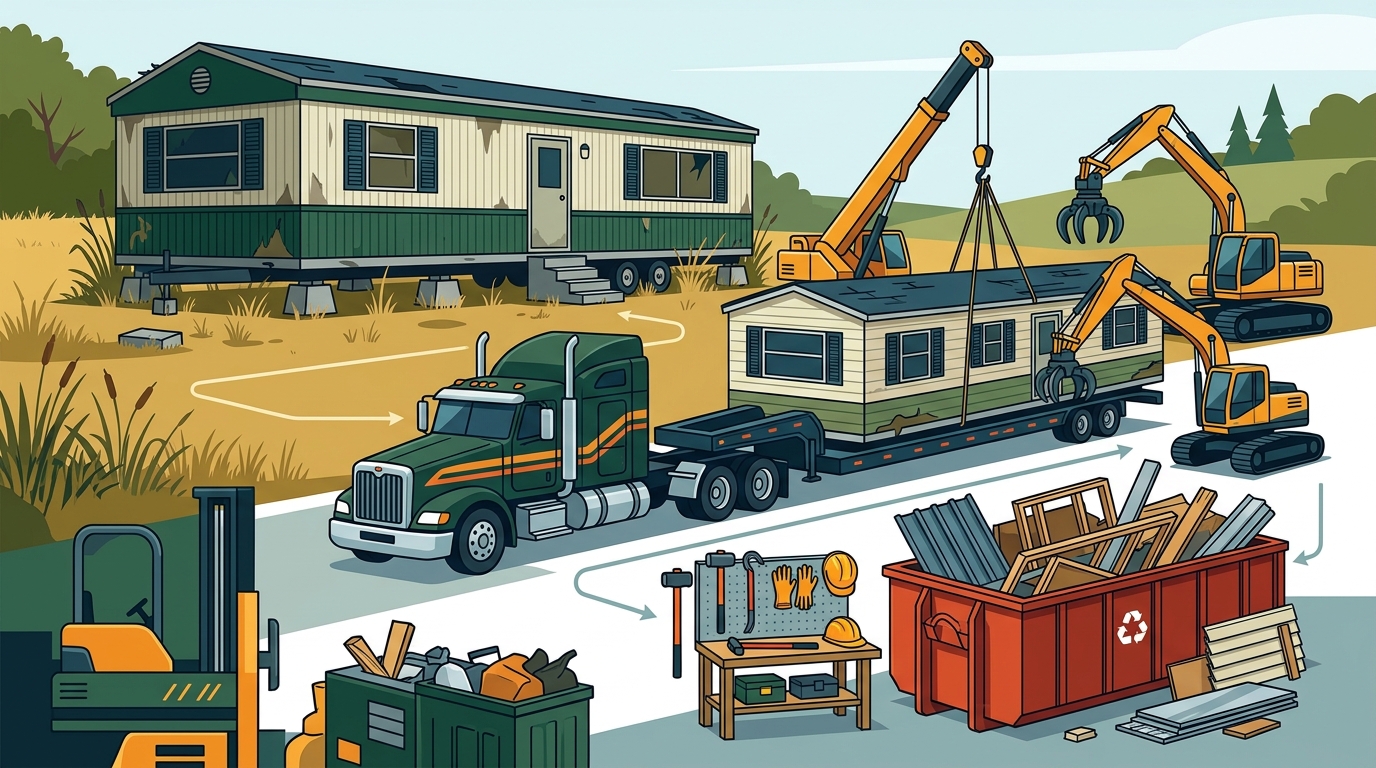
On the scheduled day, the moving crew arrives to remove skirting, disconnect utilities, and secure the home. They attach wheels and a tongue to the frame, allowing the home to be transported to its new location. This service is provided at no cost to you.
Step 5: Safety and Liability Considerations
Attempting to remove a mobile home without professional assistance is extremely dangerous. These structures are heavy and complex, requiring specialized equipment and expertise. Improper removal can lead to severe property damage, personal injury, or environmental hazards from leaking appliances or asbestos-containing materials.
Always ensure that the removal company is fully insured. This protects you from liability in case of accidents during the transport process. Additionally, verify that the movers are licensed in your state. Regulations vary significantly by region, and compliance is essential for a smooth transaction.
For more information on the benefits of donation versus sale, review our comprehensive comparison guide. Understanding your options ensures you make the best decision for your property and financial situation.
Frequently Asked Questions
Can I donate a mobile home with back taxes?
Yes, but you must resolve the liens or back taxes before the title can be transferred. The removal organization cannot accept a home with outstanding legal claims against it.
What is the age requirement for mobile home donation?
Most reputable removal organizations, including Banyan, require the home to be built in 1980 or newer to meet federal safety standards for transport.
How long does the removal process take?
The process typically takes about eight weeks from the initial contact to the actual removal day, depending on scheduling and inspection availability.
Do I need to disconnect utilities before removal?
Yes, you are responsible for disconnecting all utilities (electric, water, gas) before the movers arrive. The removal team will handle the physical detachment of the home from the foundation.
Is the removal really free?
Yes, for qualifying homes, the removal organization covers all moving expenses. In exchange, you donate the home, which may qualify you for a charitable tax deduction.
What happens to the mobile home after removal?
The home is typically sold to a family in need of affordable housing. The proceeds help fund the organization's mission to provide safe, low-cost housing solutions.
Ready to Remove Your Mobile Home?
Do not let an unwanted mobile home become a liability on your property. Take the first step toward a cleaner, more valuable lot by exploring your free removal options today. Contact Banyan Mobile Home Removal to schedule your qualification review and discover how you can benefit from our mission-driven service.