

Removing an unwanted mobile home is rarely a simple demolition project. It is a logistical, financial, and regulatory challenge that varies significantly based on the structure's condition and your local zoning laws. According to recent industry data, over 22 million manufactured homes exist in the United States, creating a massive market for both removal and repurposing services. Understanding the distinct pathways available to you is critical to avoiding costly mistakes and maximizing your property's value. (Free Mobile Home Removal)
Donation vs. Private Sale: The Core Difference
The most common point of confusion for property owners is the distinction between donating a mobile home and selling it privately. While both options result in the removal of the structure, the financial and operational outcomes are vastly different.
Donation is a process where you transfer ownership of the home to a qualified nonprofit organization. In exchange, you receive a tax deduction based on the appraised value of the home, provided it is in usable condition. This option is ideal for homeowners who want to clear their land quickly without the hassle of marketing, showings, or negotiations.
Private Sale involves listing the home on the open market. This can yield a higher immediate cash payout if the home is in excellent condition and located in a high-demand area. However, it requires significant effort, including staging, advertising, and managing buyer interactions. If the home is dilapidated, private sale options are often limited to scrap value, which rarely covers removal costs.
For many property owners, the convenience of a no-cost removal program outweighs the potential upside of a private sale. Organizations like Banyan Mobile Home Removal specialize in facilitating this transition, ensuring the home is repurposed for affordable housing rather than sent to a landfill.
Demolition and Hauling: The Traditional Route
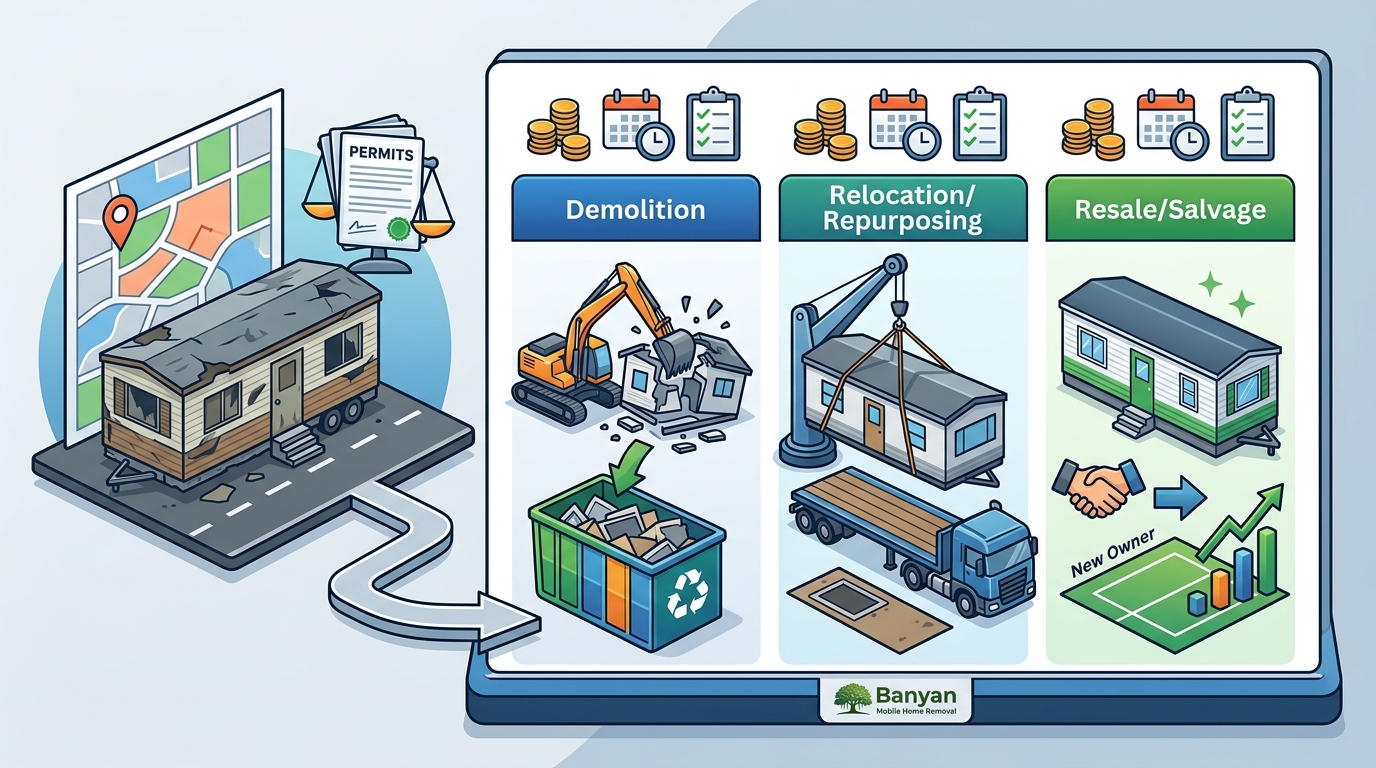
When a mobile home is beyond repair or located in a zone that prohibits relocation, demolition becomes the necessary path. This method involves tearing down the structure on-site and hauling away the debris. It is the most expensive option, often costing thousands of dollars depending on the size of the home and local disposal fees.
Before choosing demolition, it is vital to assess the structural integrity of the home. Demolition is defined as the systematic dismantling or destruction of a building. If the home contains hazardous materials like asbestos or lead paint, specialized abatement is required before demolition can begin, further increasing costs.
Many homeowners overlook the regulatory hurdles involved in demolition. Local building departments often require permits, and failure to comply can result in significant fines. Additionally, the environmental impact of sending a manufactured home to a landfill is substantial, contributing to waste that could otherwise be recycled or repurposed.
Key Selection Criteria for Homeowners
Selecting the right removal option requires evaluating several critical factors. Your decision should not be based solely on cost but also on timeline, legal compliance, and long-term property goals.
Condition of the Structure
The physical state of the mobile home is the primary determinant of your options. Homes built in 1980 or newer that are structurally sound are prime candidates for donation or relocation. Homes with severe foundation issues, extensive water damage, or mold infestation may only be suitable for demolition.
Location and Zoning Laws
Local zoning regulations dictate whether a mobile home can be moved or must be demolished. Some municipalities have strict rules regarding the transport of manufactured homes, while others prohibit their placement entirely. Understanding these local constraints is essential before engaging any service provider.
Financial Goals and Tax Benefits
Are you looking for immediate cash or a tax deduction? A private sale offers immediate liquidity, while a donation provides a tax benefit that can be realized during your annual filing. For high-value homes, the tax deduction can be substantial, especially when working with an accredited 501(c)(3) nonprofit.
Timeline and Convenience
Demolition and private sales can take weeks or months to complete. Donation programs often offer faster turnaround times, with removal scheduled within a few weeks of qualification. If you need to clear your land for a new construction project, speed is a critical factor.
Comparison of Removal Methods
The following table summarizes the key differences between the primary mobile home removal options available to homeowners.
| Criteria | Donation | Private Sale | Demolition |
|---|---|---|---|
| Cost to Owner | Free (No-cost removal) | Variable (Agent fees, repairs) | High (Thousands of dollars) |
| Financial Benefit | Tax Deduction | Cash Payout | None (Pure expense) |
| Timeline | 2-8 Weeks | 1-6 Months | 1-4 Weeks |
| Effort Required | Low (Qualification process) | High (Marketing, showings) | Medium (Permits, coordination) |
| Environmental Impact | Low (Repurposing) | Low (Reuse) | High (Landfill waste) |
Tax Implications and Financial Benefits
One of the most significant advantages of donating a mobile home is the potential for a charitable tax deduction. The IRS allows taxpayers to deduct the fair market value of donated property, including manufactured homes, provided they itemize deductions on their tax returns.
To claim this deduction, you must obtain a qualified appraisal from a certified appraiser. The appraiser will assess the home's condition, age, and location to determine its value. This value is then reported on IRS Form 8283. It is crucial to keep all documentation related to the donation, including the appraisal and the nonprofit's acknowledgment letter.
For homeowners in high tax brackets, the value of this deduction can be substantial. For example, if your home is appraised at $20,000 and you are in the 24% tax bracket, the deduction could reduce your tax liability by $4,800. This financial incentive, combined with the removal of a blight from your property, makes donation a compelling option for many.
Key Takeaways
- Donation is Free: Accredited nonprofits cover all moving and removal costs for qualifying homes.
- Tax Benefits: Donors can receive a tax deduction based on the appraised value of the home.
- Eligibility: Homes must typically be built in 1980 or newer and meet safety standards.
- Speed: Donation programs often remove homes within 8 weeks, faster than private sales.
- Environmental Impact: Donating repurposes materials, reducing landfill waste significantly.
- Professional Handling: Licensed and insured movers ensure safe transport and minimal property damage.
- Community Impact: Donated homes are often used to provide affordable housing for families in need.
Frequently Asked Questions
Can I donate a mobile home with back taxes or liens?
Yes, but the lien must be cleared before the transfer of ownership. Banyan Mobile Home Removal can guide you through the process of resolving liens to ensure a smooth donation.
What is the age requirement for mobile home donations?
Most reputable removal programs, including Banyan, require mobile homes to be built in 1980 or newer to meet current safety and building codes.
How is the tax deduction value determined?
The value is determined by a qualified, independent appraiser who assesses the home's condition, age, and market value. You cannot simply guess the value.
Do I need to clean the mobile home before donation?
While a deep clean is not required, removing personal belongings and hazardous materials is necessary. The removal team will handle the rest.
How long does the removal process take?
Once qualified, removal typically occurs within 2 to 8 weeks, depending on the mover's schedule and logistical factors.
Can I sell my mobile home privately instead of donating?
Yes, but private sales involve marketing costs, agent fees, and a longer timeline. Donation offers a faster, no-cost alternative with tax benefits.
Is the removal process stressful?
Not with a professional team. Organizations like Banyan handle all paperwork, coordination, and logistics, making the process stress-free for the homeowner.
Start Your Free Removal Process
Don't let an unwanted mobile home sit on your property and drain your resources. Whether you choose donation or another removal method, taking action is the first step toward clearing your land and maximizing your financial benefits. Contact Banyan Mobile Home Removal today to schedule a free consultation and see if your home qualifies for our no-cost removal program.