

What Should I Do With a Mobile Home I Inherited?
Inheriting a mobile home is a complex legal and financial event that requires immediate action to protect your assets. You must determine the home's condition, resolve title issues, and choose a disposition strategy such as keeping, renting, selling, or removing it. This guide covers the essential steps for managing an inherited manufactured home, from probate requirements to final disposal options.
Lot Rent Obligations
Lot rent is the monthly fee paid to a mobile home park or landowner for the right to occupy a specific site. When a mobile home is inherited, the obligation to pay this rent does not automatically disappear. The new owner or estate administrator must determine if the lot is owned by the deceased or leased from a third party. If the lot is leased, the lease agreement typically continues, and the new owner assumes the financial responsibility for the monthly payments. Failure to pay lot rent can result in eviction or the removal of the home by the park management. It is critical to review the original lease documents to understand the terms, including any clauses regarding transfer of occupancy or termination upon the death of the original tenant.
Title Transfer
Mobile home title transfer is the legal process of moving ownership from the deceased to the heir or estate. Unlike site-built homes, mobile homes are often titled as personal property, similar to a vehicle, unless they have been converted to real estate. This distinction is vital because it dictates how the title is transferred. If the home is titled as personal property, the transfer usually involves the state Department of Motor Vehicles (DMV) or a similar agency. If the home has been affixed to the land and titled as real estate, the transfer follows standard real estate procedures, including recording a deed with the county recorder. Understanding this distinction is the first step in legally securing the asset.
Probate Requirements
Probate is the legal process through which a deceased person's estate is settled. Whether probate is required for an inherited mobile home depends on the state's laws and the value of the estate. In many jurisdictions, if the estate's total value is below a certain threshold, a simplified probate or small estate affidavit may be used. However, if the estate is larger, full probate may be necessary. The probate court grants authority to the executor or administrator to manage, sell, or distribute the assets, including the mobile home. Navigating probate ensures that the transfer of the mobile home is legally valid and protected from future claims by other heirs or creditors.
Condition Assessment
Condition assessment is the evaluation of the physical state of the mobile home to determine its value and usability. Before making any decisions, you should conduct a thorough inspection of the structure. Look for signs of water damage, mold, structural integrity issues, and the condition of the roof and siding. The age of the home is also a significant factor, as older units may have outdated systems that are costly to repair. A professional inspection can provide an objective view of the home's condition, which is essential for deciding whether to keep, repair, or remove the unit. This assessment directly impacts the financial viability of your chosen disposition strategy.
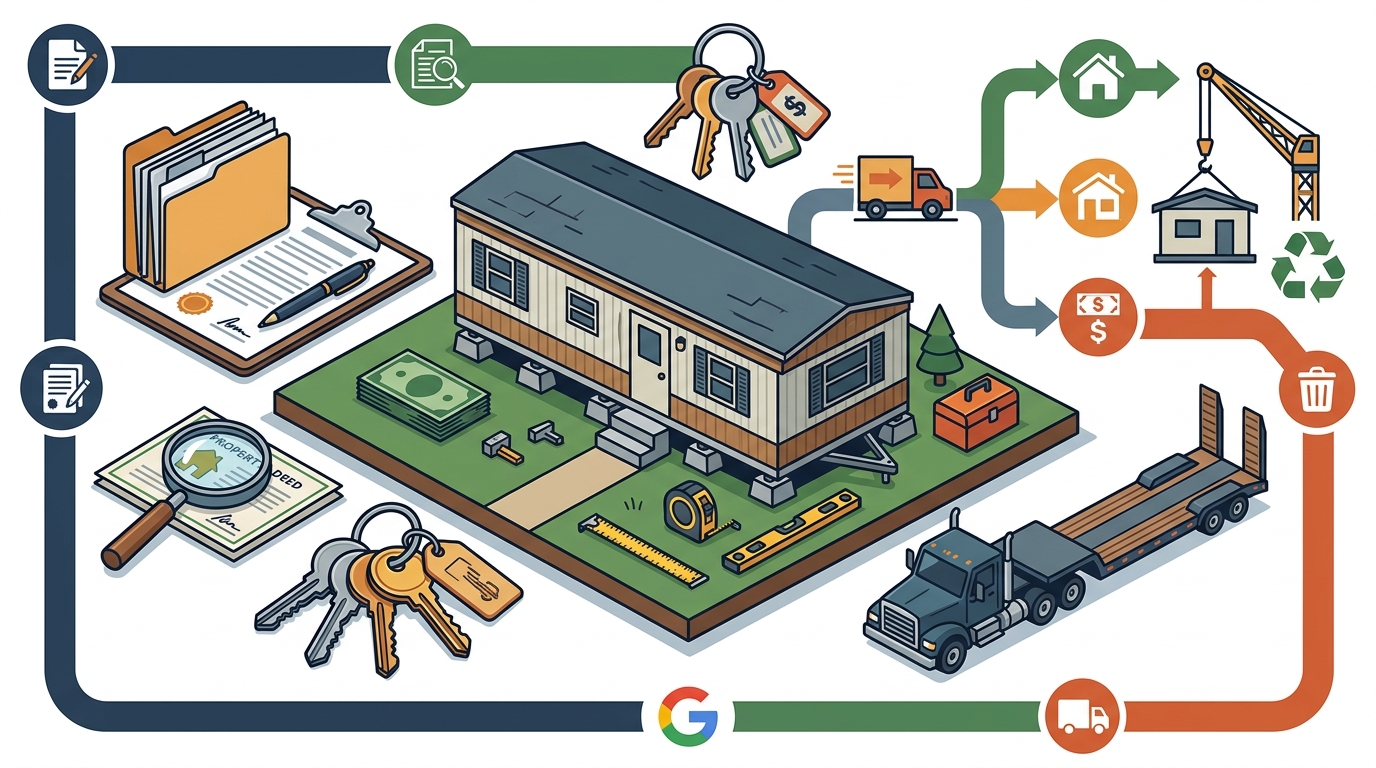
Disposal Options: Keep, Rent, Sell, or Remove
Once you have assessed the home's condition and legal status, you must choose a disposal option. Each option has distinct financial and logistical implications. The following table summarizes the primary choices available to an heir of a mobile home.
| Option | Primary Benefit | Primary Risk | Best For |
|---|---|---|---|
| Keep | Immediate housing or asset retention | Ongoing maintenance and lot rent costs | Heirs who need housing or want to live in the home |
| Rent | Steady income stream | Tenant management and vacancy risk | Heirs who want to monetize the asset without selling |
| Sell | Liquidity and asset conversion | Market fluctuations and time to sell according to Publication 523 2025 | Heirs who want to cash out the asset |
| Remove | Elimination of liability and costs | Loss of potential asset value | Heirs who do not want the home or if it is unsalvageable |
Choosing the right option depends on your personal circumstances, the home's condition, and your financial goals. For many heirs, the most practical solution is to remove the home if it is in poor condition or if they do not wish to manage the property. Banyan Mobile Home Removal offers a free removal service for qualifying homes, which can be an excellent way to clear the lot without incurring demolition costs.
Inheritance Title Transfer
Inheritance title transfer involves specific documentation to prove your right to the asset. You will typically need a certified copy of the death certificate, the original title or deed, and a letter of testamentary or letters of administration issued by the probate court. If the home is titled as personal property, you will need to complete a title transfer application with the relevant state agency. If it is real estate, you will need to record a new deed in your name. It is important to ensure that all documents are properly notarized and filed to avoid future legal complications. This process formalizes your ownership and allows you to take action on the property.
State Regulatory Requirements
State regulatory requirements vary significantly across the United States. Each state has its own laws governing the transfer of mobile homes, probate procedures, and property taxes. For example, some states require mobile homes to be titled through the DMV, while others treat them as real estate if they are on a permanent foundation. Additionally, local zoning laws may restrict where a mobile home can be placed or removed. It is essential to research the specific regulations in your state and county to ensure compliance. Consulting with a local attorney or real estate professional can help you navigate these complex legal landscapes.
Legal Ownership Transfer
Legal ownership transfer is the final step in securing the mobile home. This involves updating all records to reflect the new owner. For personal property titles, this means receiving a new title in your name. For real estate, it means recording the deed. You should also update your insurance policies to cover the home under your name. If you plan to rent or sell the home, having clear legal ownership is crucial for any transactions. Ensure that all liens or encumbrances are resolved before completing the transfer to avoid transferring debt along with the asset.
Financial Assessment: Liens, Taxes, and Costs
Financial assessment is the analysis of all costs and debts associated with the mobile home. You must identify any existing liens, such as mortgages or loans, that are secured by the home. You should also review any outstanding property taxes or lot rent arrears. These financial obligations must be settled before the home can be sold or transferred cleanly. Additionally, consider the ongoing costs of ownership, including insurance, maintenance, and utilities. A comprehensive financial assessment will help you determine the net value of the home and whether it is worth keeping or if it is better to remove it. Understanding how to handle liens and back taxes is a critical part of this assessment.
Options: Keep, Rent, Sell, or Remove
When deciding between keeping, renting, selling, or removing an inherited mobile home, consider the long-term implications of each choice. Keeping the home provides stability but requires ongoing financial commitment. Renting can generate income but involves the responsibilities of being a landlord. Selling offers immediate liquidity but may be limited by the home's condition and market demand. Removing the home eliminates all future costs and liabilities, making it an attractive option for heirs who do not want to deal with the property. If you choose to remove the home, Banyan Mobile Home Removal provides a free, no-cost removal service that handles the entire process, from permits to transport, allowing you to clear the lot efficiently. according to Publication 530 2025
Key Takeaways
- Lot rent obligations continue after inheritance and must be managed to avoid eviction.
- Mobile home title transfer depends on whether the home is titled as personal property or real estate.
- Probate requirements vary by state and estate value, affecting how quickly you can act.
- A thorough condition assessment is essential for determining the home's value and usability.
- Disposal options include keeping, renting, selling, or removing the home, each with distinct pros and cons.
- Inheritance title transfer requires specific documentation, including death certificates and probate letters.
- State regulatory requirements can significantly impact the transfer and disposal process.
- Financial assessment must account for liens, taxes, and ongoing costs to determine net value.
Frequently Asked Questions
Do I have to pay lot rent if I inherit a mobile home?
Yes, if the lot is leased, the obligation to pay lot rent typically continues. You must review the lease agreement to understand the terms and ensure payments are made to avoid eviction.
How do I transfer the title of an inherited mobile home?
You need to complete a title transfer application with the relevant state agency, providing a death certificate, original title, and probate documents. The process varies depending on whether the home is titled as personal property or real estate.
Is probate always required for an inherited mobile home?
Not always. If the estate's value is below a certain threshold, a simplified probate or small estate affidavit may be used. However, for larger estates, full probate may be necessary to legally transfer the asset.
What should I check during a condition assessment?
Look for water damage, mold, structural issues, and the condition of the roof and siding. The age of the home and the state of its systems are also important factors to consider.
Can I sell an inherited mobile home with liens?
You can sell the home, but the liens must be settled from the sale proceeds. It is important to disclose any existing liens to potential buyers and ensure they are resolved at closing.
What are the benefits of removing an inherited mobile home?
Removing the home eliminates ongoing costs, such as lot rent and maintenance, and clears the lot for other uses. It is a practical option if the home is in poor condition or if you do not wish to manage the property.
How does Banyan Mobile Home Removal help with inherited homes?
Banyan Mobile Home Removal offers free removal services for qualifying homes. They handle the entire process, including permits, transport, and paperwork, allowing you to clear the lot without incurring demolition costs.