
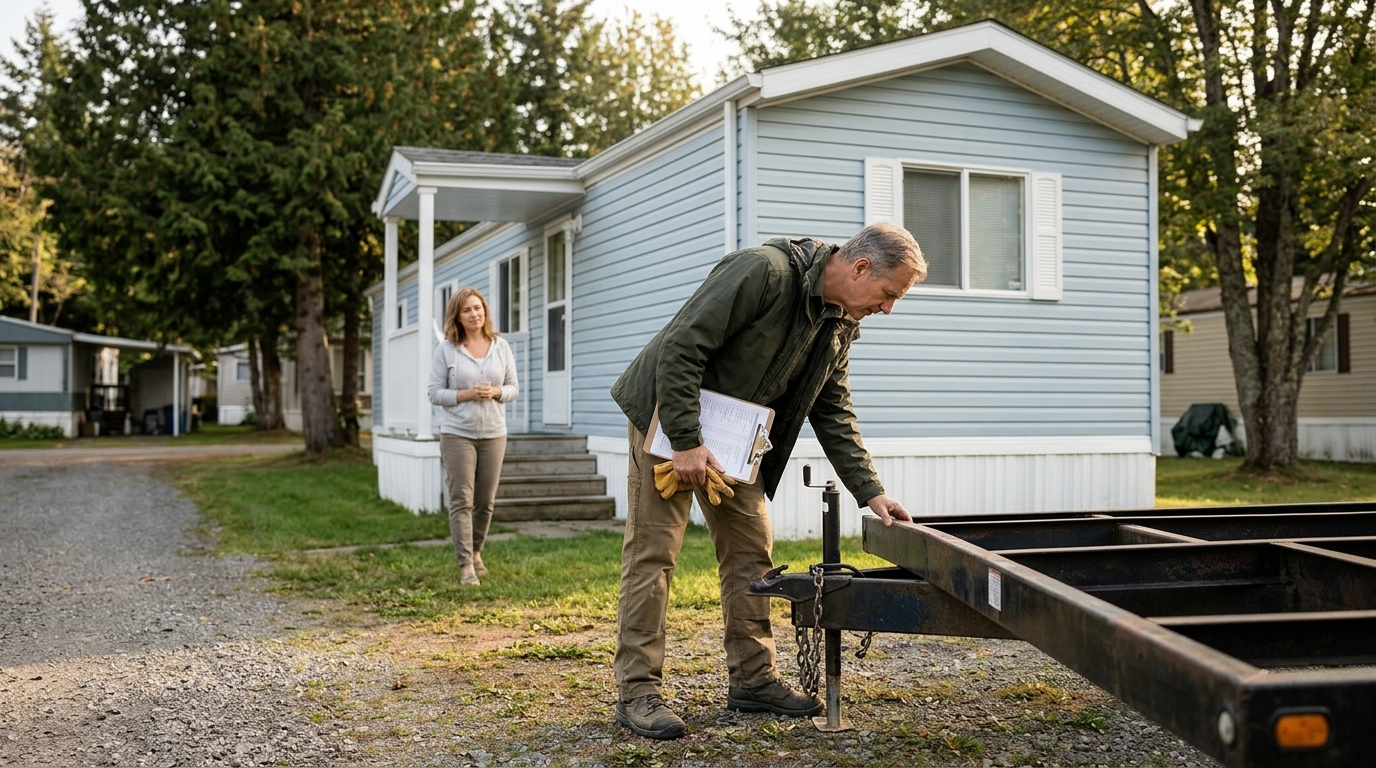
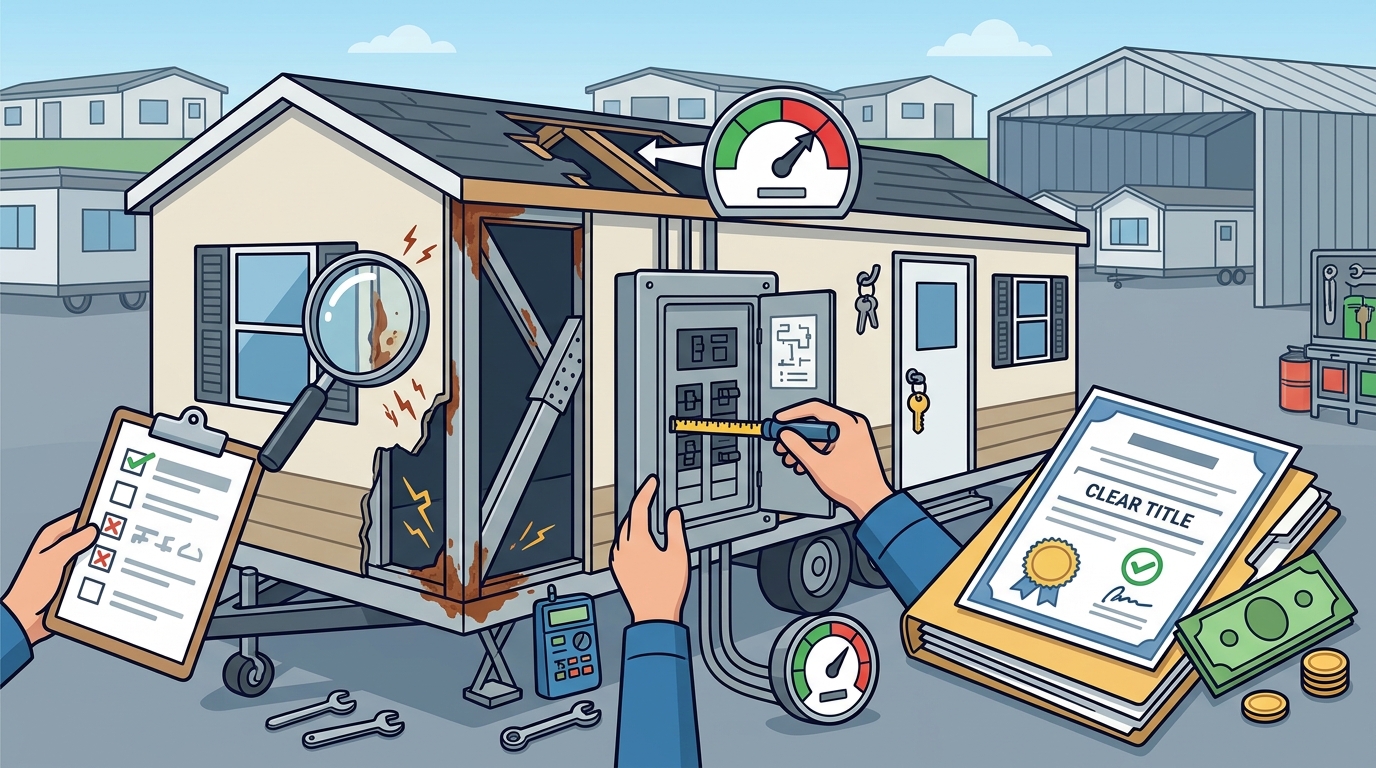
Mobile home dealers prioritize structural integrity, clear title documentation, and functional mechanical systems when purchasing used units. They inspect the frame, roof, and electrical panels to ensure the home is safe to resell. A clean title without liens is the single most critical factor, as it allows the dealer to legally transfer ownership. If a unit fails these basic checks, dealers will typically decline the purchase or offer a significantly reduced price.
Structural Integrity and Frame Condition
The steel frame is the backbone of any manufactured home, and dealers inspect it with extreme scrutiny. A mobile home frame is the structural skeleton that supports the entire unit, and any signs of rust, bending, or corrosion can disqualify a unit from purchase. Dealers look for a frame that is straight and free from significant damage, as repairing a compromised frame is often more expensive than the home's value.
Dealers also examine the floor system and subflooring for soft spots or water damage. A soft floor indicates rot or moisture intrusion, which can lead to costly repairs. If the frame is intact but the floor needs replacement, a dealer might still consider the unit, but the offer will reflect the cost of that repair. Structural soundness is the first hurdle a used unit must clear to be considered for resale.
Clear Title and Legal Documentation
Legal ownership is the second most important factor in a dealer's evaluation. A mobile home title is the legal document that proves ownership of the unit, and dealers require a clear, marketable title before closing any deal. If the title has liens, judgments, or is missing entirely, the dealer cannot legally take possession of the home. This is why many owners struggle to sell their units; without a clean title, the home is essentially unmarketable.
Dealers also verify that the home is properly registered with the state. If the home was previously attached to real estate and the title was extinguished, the dealer will need to reverse that process to re-establish the title. This administrative step can take time and money, so dealers prefer units with active, clear titles. For owners who cannot provide a clear title, donating the home to a nonprofit is often a better alternative than a failed sale.
Age, Model, and Market Demand
Dealers assess the age and model of the home to determine its resale potential. A mobile home model is the specific design and manufacturer of the unit, and some models hold their value better than others. Homes built after 1976 are subject to federal safety and energy standards, making them more desirable to buyers. Dealers prefer units from the 1990s and 2000s, as they are modern enough to attract buyers but old enough to be priced affordably.
Market demand in the dealer's region also plays a role. A double-wide home in a high-demand area might fetch a higher price than a single-wide in a rural location. Dealers consider the local housing market when making an offer. If a unit is too old or in poor condition, it may not meet the minimum standards for resale, regardless of its location. This is where Banyan Mobile Home Removal steps in, accepting homes that dealers might reject due to age or condition.
Functional Systems and Interior Condition
Dealers inspect the electrical, plumbing, and HVAC systems to ensure they are functional. A mobile home's electrical system is the network of wiring and panels that powers the unit, and dealers check for outdated or unsafe wiring. Homes with knob-and-tube wiring or aluminum wiring may require expensive upgrades, which dealers will factor into their offer. The HVAC system must also be in working order, as a non-functional air conditioner or furnace is a major red flag.
Interior condition matters, but it is less critical than structural and mechanical issues. Dealers understand that cosmetic updates are cheaper than structural repairs. A home with dated carpet or paint is still a viable purchase if the frame and systems are sound. However, significant water damage or mold in the interior can be a deal-breaker. Dealers look for a home that is clean and livable, with minimal cosmetic issues that can be fixed quickly.
Site Access and Removal Logistics
Dealers also consider the logistics of removing the home from its current location. Site access is the ease with which a moving crew can reach and transport the unit, and difficult access can increase the cost of removal. Tight spaces, steep driveways, or overhead power lines can make a move more complex and expensive. Dealers will inspect the site before making a final offer to ensure the home can be moved safely and efficiently.
If the site is difficult to access, the dealer may lower their offer to account for the extra moving costs. In some cases, the site access may be so poor that the dealer will decline the purchase entirely. For owners in challenging locations, Banyan's nationwide network of licensed movers can handle complex removals that dealers might avoid. This ensures the home is removed safely, regardless of the site's difficulties.
Key Takeaways
- Dealers prioritize a clear, marketable title above all other factors.
- Structural integrity, particularly the frame and floor, is the primary physical criterion.
- Homes built after 1976 are generally more desirable due to federal safety standards.
- Functional electrical, plumbing, and HVAC systems are essential for resale.
- Site access and removal logistics can significantly impact a dealer's offer.
- Cosmetic issues are less critical than structural or mechanical problems.
- Donating to a nonprofit is a viable alternative if a dealer declines the unit.
Frequently Asked Questions
What is the most important factor for a mobile home dealer?
The most important factor is a clear title. Without a marketable title, a dealer cannot legally purchase or resell the home, regardless of its physical condition.
Do dealers buy homes with minor cosmetic damage?
Yes, dealers often buy homes with minor cosmetic damage. They can repair or update the interior for a relatively low cost, which allows them to resell the home at a higher price.
What happens if a dealer declines my home?
If a dealer declines your home, you can consider donating it to a nonprofit like Banyan Mobile Home Removal. This allows you to remove the home for free and receive a tax deduction.
Do dealers prefer single-wides or double-wides?
Dealers prefer both, but double-wides often have higher resale value. The preference depends on local market demand and the specific model of the home.
How much do dealers typically offer for a used mobile home?
Offers vary widely based on condition, age, and location. Dealers typically offer a percentage of the home's fair market value, minus the cost of repairs and removal.
Can I sell a mobile home without a title?
Selling a mobile home without a title is extremely difficult. Most dealers will not purchase a home without a clear title, and private buyers are often hesitant to buy without legal proof of ownership.
Conclusion
Understanding what mobile home dealers look for can help you prepare your unit for sale or determine if donation is a better option. Dealers focus on structural integrity, clear titles, and functional systems, and they will decline units that do not meet these standards. If your home is too old or damaged for a dealer, contact Banyan Mobile Home Removal to explore free removal and tax deduction opportunities.