

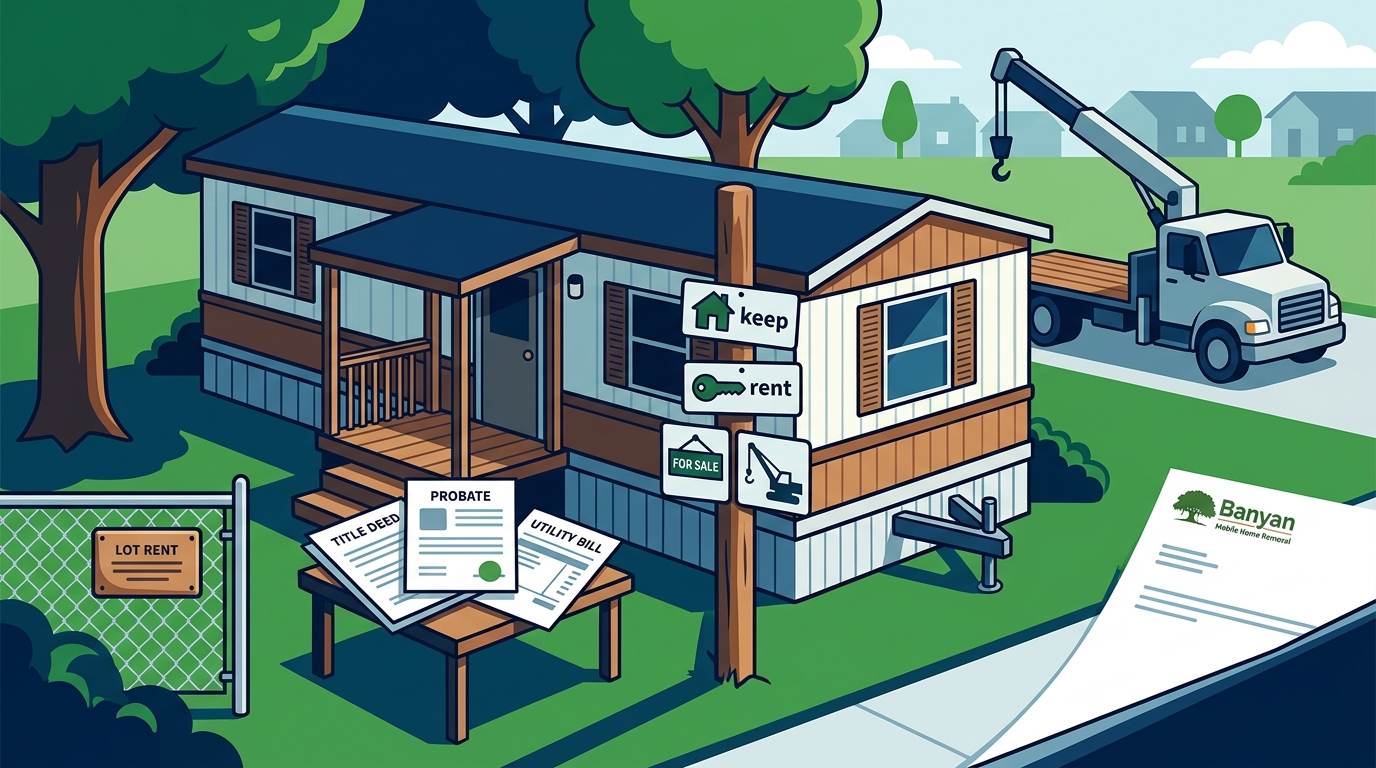
Inheriting a mobile home can feel like a burden rather than a gift. The immediate question is how to handle the property legally and financially without incurring unexpected costs. This guide covers the essential steps for managing an inherited manufactured home, from understanding lot rent obligations to navigating probate and title transfer. We will explore your options for keeping, renting, selling, or removing the unit, ensuring you make an informed decision that aligns with your goals and local regulations.
Lot Rent Obligations
Many mobile homes are situated on leased land within a manufactured home community. Understanding the financial commitments attached to this land is the first critical step. Lot rent is the monthly fee paid to the park owner for the right to occupy a specific site. This obligation typically survives the death of the resident, meaning the estate or the new owner must continue paying these fees to maintain possession of the home.
Reviewing the Park Agreement
The original park agreement dictates the terms of the lease, including rent escalation clauses and maintenance responsibilities. You must review this document to understand if the rent is fixed or subject to annual increases. Some agreements allow for the transfer of the lease to a new owner, while others require the park owner's approval. Failure to pay lot rent can result in eviction or the seizure of the home, so it is vital to address these payments immediately after inheriting the property.
Assessing the Financial Viability
If you intend to keep or rent out the home, you must calculate the total monthly cost, which includes lot rent, utilities, and insurance. Compare this figure against the potential rental income or your personal budget. If the lot rent is significantly higher than the market value of the home, keeping the unit may not be financially sound. In such cases, removing the home and selling the land, if you own it, or simply clearing the site may be a more prudent option.
Title Transfer
Mobile homes are unique because they can be classified as either personal property or real estate, depending on how they are titled and situated. This classification determines the legal process required to transfer ownership. A mobile home title is a document issued by the state's Department of Motor Vehicles (DMV) or equivalent agency, similar to a vehicle title. If the home is permanently affixed to the land and the title has been extinguished, it may be treated as real estate, requiring a deed transfer instead.
Personal Property vs. Real Estate
If the home retains its vehicle title, it is considered personal property. Transferring this type of title involves a different set of forms and fees than a real estate deed. You must determine the current status of the title to know which legal pathway to follow. Misclassifying the property can lead to failed transfers and legal complications, so verifying the title status with the state agency is essential.
Required Documentation
Transferring a mobile home title generally requires the original title, a bill of sale or deed of gift, and a completed transfer form. You will also need proof of identity and, in some cases, a lien release if the home was financed. Gathering these documents early in the process prevents delays. The state agency will inspect the home to verify its condition and serial number before issuing a new title in your name.
Probate Requirements
Probate is the legal process through which a deceased person's estate is settled. Whether you must go through probate depends on the value of the estate and how the property was held. If the mobile home was part of a larger estate, it may need to be probated before it can be legally transferred. However, if the home was held in a living trust or was a small estate, you may be able to bypass formal probate proceedings.
Small Estate Affidavits
Trust Administration
If the deceased owned the home through a revocable living trust, the property passes directly to the beneficiaries named in the trust. This avoids probate entirely. The trustee is responsible for managing the asset and transferring the title according to the trust's terms. This method offers privacy and speed, as trust administration is not a public court process. Consulting with an estate attorney can help you determine if a trust was in place and how to proceed.
Condition Assessment
Before making any financial decisions, you must accurately assess the physical condition of the inherited mobile home. The state of the structure dictates its market value and the cost of potential repairs. A thorough inspection should cover the roof, foundation, plumbing, electrical systems, and interior finishes. Mobile homes are susceptible to moisture damage, which can compromise the structural integrity of the unit.
Structural Integrity and Safety
Look for signs of water intrusion, mold, and rot in the floor joists and subflooring. These issues are common in older units and can be expensive to repair. If the home has been vacant for a long time, check for pests and frozen pipes. A professional inspection can provide a detailed report on the necessary repairs, giving you a realistic estimate of the home's worth. This information is crucial for deciding whether to repair, sell, or remove the unit.
Market Value Estimation
Compare the condition of the home to similar units in the local market. Online listings and local real estate agents can provide insights into current prices. A home in excellent condition may command a higher price, while one in poor condition may be worth more for its scrap value or as a donation. Understanding the market value helps you set realistic expectations for any sale or donation. It also informs your decision on whether the cost of repairs is justified.
Inheritance Title Transfer
Transferring the title of an inherited mobile home requires specific steps to ensure legal ownership. The process involves notifying the state agency of the death and submitting the necessary documentation. You must provide a certified copy of the death certificate, the original title, and a completed transfer application. The state will verify the heir's identity and the validity of the transfer before issuing a new title.
Step-by-Step Transfer Process
First, obtain a certified death certificate from the vital records office. Next, gather the original mobile home title and any lien releases. Then, complete the state's title transfer form, which may require notarization. Submit these documents to the DMV or equivalent agency. Finally, pay the required transfer fees and wait for the new title to be issued. This process can take several weeks, so it is best to start as soon as possible.
Common Pitfalls to Avoid
One common mistake is failing to check for existing liens. If the home was financed, the lender must release the lien before the title can be transferred. Another pitfall is using an expired or damaged title. If the original title is lost, you must apply for a duplicate title, which takes additional time. Ensuring all documents are current and accurate prevents delays and rejections by the state agency.
Disposal Options: Keep, Rent, Sell, or Remove
Once you have assessed the home's condition and completed the title transfer, you must decide what to do with the property. Your options include keeping it, renting it out, selling it, or removing it. Each option has distinct financial and logistical implications. The right choice depends on your personal circumstances, the home's condition, and local market conditions.
Keep or Rent
If the home is in good condition and the lot rent is reasonable, you may choose to keep it for personal use or rent it out. Renting can provide a steady income stream, but it also comes with maintenance responsibilities and landlord regulations. You must ensure the home meets local safety and habitability standards before renting it to a tenant. This option is best if you have the resources to maintain the property and the lot rent is affordable.
Sell or Remove
Selling the home is a viable option if it is in decent condition and there is demand in the local market. You can sell it to a private buyer or a mobile home dealer. However, selling can be time-consuming and may require repairs to attract buyers. Alternatively, you can remove the home entirely. Banyan Mobile Home Removal offers free removal services for qualifying homes, allowing you to clear the site without incurring demolition costs. This option is ideal if the home is in poor condition or if you want to repurpose the land.
| Option | Pros | Cons | Best For |
|---|---|---|---|
| Keep | Personal use, no immediate cost | Ongoing lot rent and maintenance | Good condition, affordable lot rent |
| Rent | Steady income | Landlord responsibilities, vacancy risk | Good condition, rental market demand |
| Sell | One-time cash payout | Time-consuming, may require repairs | Decent condition, local demand |
| Remove | Free removal, clear site | No cash payout | Poor condition, land repurposing |
State Regulatory Requirements
Mobile home regulations vary significantly by state and even by local municipality. Understanding these requirements is crucial for compliance and avoiding fines. Some states have specific rules regarding the transfer of mobile home titles, while others have strict zoning laws that dictate where a home can be placed. You must research the regulations in your specific location to ensure you are following all legal requirements.
Zoning and Placement Laws
If you plan to move the home to a different location, you must ensure the new site is zoned for manufactured housing. Many rural areas have restrictions on where mobile homes can be placed. Additionally, the home must meet the federal HUD code standards for safety and construction. Moving a home that does not meet these standards may be prohibited. Consulting with local zoning officials can help you navigate these complex regulations.
Environmental and Safety Standards
Some states have environmental regulations that affect the disposal of mobile homes. For example, certain materials may need to be recycled or disposed of in specific ways. If you choose to remove the home, ensure that the removal company complies with these environmental standards. Banyan Mobile Home Removal adheres to strict safety and environmental guidelines, ensuring that the removal process is conducted responsibly. This compliance protects you from potential liability and ensures the home is handled properly.
Key Takeaways
- Review the park agreement to understand lot rent obligations and lease transfer terms.
- Determine if the mobile home is titled as personal property or real estate to choose the correct transfer process.
- Check if the estate qualifies for a small estate affidavit to avoid formal probate.
- Conduct a thorough condition assessment to estimate the home's market value and repair costs.
- Complete the title transfer by submitting the death certificate, original title, and transfer forms to the state agency.
- Choose the best disposal option based on the home's condition, lot rent, and local market demand.
- Research state and local zoning laws to ensure compliance if moving or placing the home.
- Consider free removal services like Banyan Mobile Home Removal to clear the site without cost.
Frequently Asked Questions
Do I have to pay lot rent if I inherit a mobile home?
Yes, lot rent obligations typically survive the death of the resident. The estate or the new owner must continue paying the lot rent to maintain possession of the home. Failure to pay can result in eviction or seizure of the unit.
How do I transfer the title of an inherited mobile home?
You must submit a certified death certificate, the original title, and a completed transfer form to the state's DMV or equivalent agency. The state will verify the documents and issue a new title in your name.
Can I avoid probate for an inherited mobile home?
Yes, if the home was held in a living trust or if the estate qualifies for a small estate affidavit. These methods allow for a faster and less expensive transfer of ownership.
What should I do if the mobile home is in poor condition?
If the home is in poor condition, it may be more cost-effective to remove it than to repair it. You can use a free removal service to clear the site and potentially repurpose the land.
Are there state regulations for mobile home removal?
Yes, some states have environmental and safety regulations that affect how mobile homes are removed and disposed of. Ensure that the removal company complies with these standards.
Can I sell an inherited mobile home?
Yes, you can sell the home if it is in decent condition and there is demand in the local market. You must complete the title transfer before selling the property.
How long does the title transfer process take?
The process can take several weeks, depending on the state agency's workload and the completeness of your documentation. It is best to start the process as soon as possible.
What is a small estate affidavit?
A small estate affidavit is a legal document that allows heirs to claim assets without a full court-supervised probate. It is available in many states for estates below a certain value threshold.