

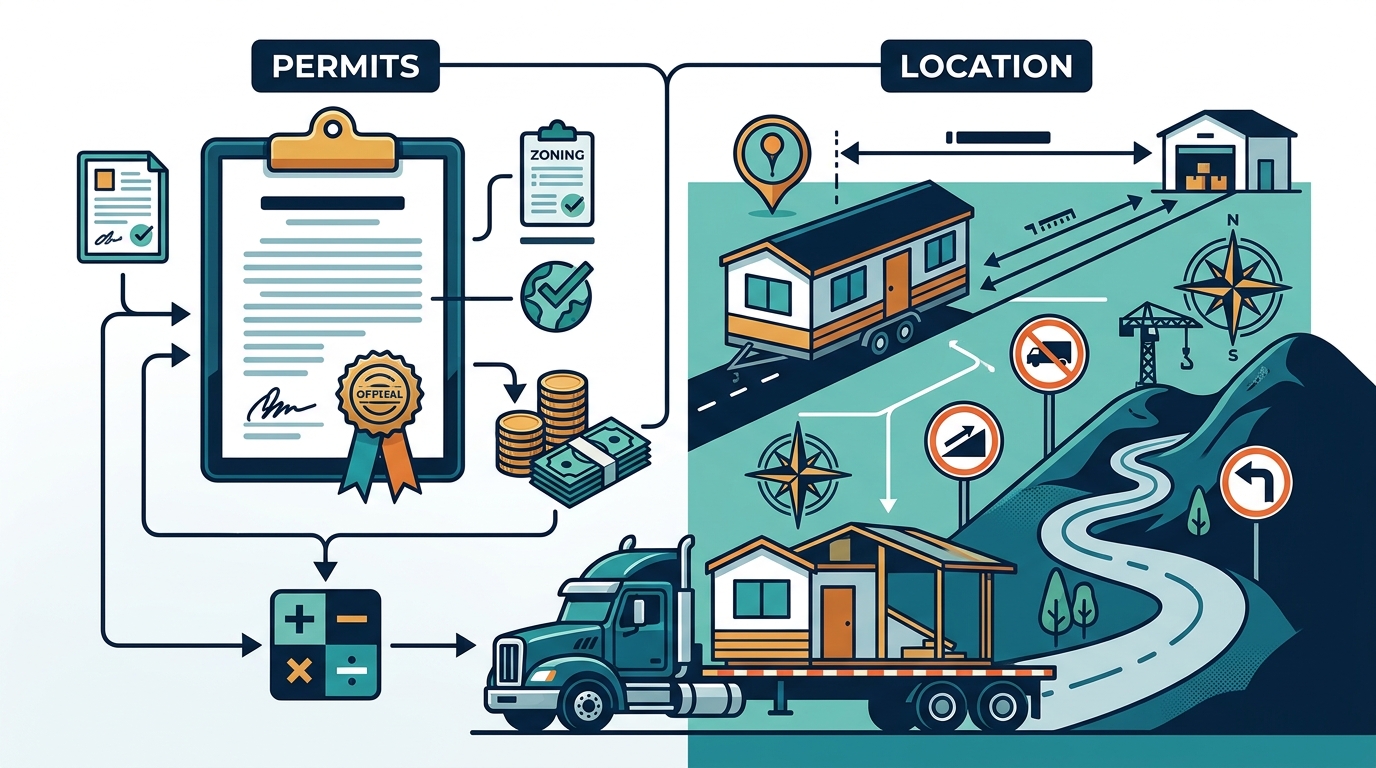
Permits and location are the two most significant variables that drive the total price of mobile home removal. Permit fees typically range from $100 to $350, while location affects costs through travel distance, terrain accessibility, and local zoning regulations. Understanding these factors helps property owners budget accurately and avoid unexpected expenses during the removal process.
Understanding Permit Costs and Requirements
Mobile home removal permits are official authorizations issued by local government agencies that allow the legal transport or demolition of a manufactured home. These permits ensure that the removal process complies with local safety, environmental, and zoning regulations. The cost of these permits varies significantly by jurisdiction, with most counties charging between $100 and $350 for a standard removal or demolition permit.
The type of permit required depends on the method of removal. Demolition permits are generally more expensive than transport permits because they involve stricter environmental oversight and waste disposal requirements. In some states, additional fees apply for hazardous material handling, particularly if the home was built before 1976 and may contain asbestos. Property owners should contact their local building department early in the planning process to determine the exact permit requirements and associated fees for their specific location.
One concrete example of permit cost variation is seen in California, where demolition permits for single-wide mobile homes can cost significantly more than in rural areas of the Midwest. This difference reflects the higher regulatory standards and environmental protections in densely populated regions. By understanding these local variations, homeowners can better anticipate the total financial commitment required for their removal project.
How Location Affects Removal Pricing
Location is a primary driver of mobile home removal costs because it determines travel distance, equipment requirements, and labor intensity. Removal companies typically charge base rates for standard urban or suburban locations, but prices increase substantially for remote, rural, or difficult-to-access properties. The distance between the removal crew's base of operations and the property site directly impacts fuel costs, labor hours, and equipment wear.
Accessibility is another critical location factor. Properties with narrow driveways, steep slopes, or limited clearance for large transport vehicles require specialized equipment and additional labor to safely remove the home. For example, removing a mobile home from a wooded or rocky area can dramatically increase costs due to the need for manual labor and careful maneuvering. In contrast, homes located on flat, accessible lots with wide access roads typically incur lower removal fees.
Zoning Regulations and Local Restrictions
Local zoning regulations impose additional constraints that can affect both the feasibility and cost of mobile home removal. Many municipalities have specific rules governing where mobile homes can be placed, how they must be anchored, and what conditions they must meet before transport. These regulations can require additional inspections, modifications, or documentation that add to the overall project cost.
Some jurisdictions prohibit the relocation of mobile homes that exceed a certain age or do not meet current building codes. In these cases, property owners may be required to demolish the home rather than transport it, which typically involves higher costs due to waste disposal fees and environmental compliance requirements. Additionally, some localities have restrictions on the hours during which large loads can be transported, which may require scheduling removals during off-peak times at a premium rate.
A specific example of zoning impact is seen in certain counties that require mobile homes to be inspected for structural integrity before they can be moved. If the home fails this inspection, the owner must either repair it to code or proceed with demolition, both of which add to the total expense. Understanding these local restrictions early in the planning process helps property owners avoid costly delays and unexpected requirements.
Terrain and Accessibility Challenges
The physical terrain surrounding a mobile home plays a crucial role in determining removal costs. Flat, open lots with clear access paths are the most cost-effective scenarios for removal crews. However, properties with challenging terrain, such as steep hillsides, dense vegetation, or uneven ground, require additional time, equipment, and labor to safely extract and transport the home.
Accessibility challenges also include the presence of obstacles such as power lines, trees, or other structures that limit the movement of large transport vehicles. In these cases, removal crews may need to use specialized equipment like cranes or excavators to carefully maneuver the home, which significantly increases the project cost. For instance, removing a mobile home from a property with limited clearance may require the temporary removal of fencing or landscaping, adding to the overall expense.
Property owners should provide detailed information about their site's terrain and accessibility when requesting removal quotes. This includes information about driveway width, slope, vegetation, and any overhead or ground-level obstacles. By sharing these details upfront, homeowners can ensure that their quotes accurately reflect the true cost of the removal project and avoid surprise charges on the day of service.
Strategies for Minimizing Permit and Location Costs
Property owners can reduce the total cost of mobile home removal by carefully planning their project and understanding the factors that drive pricing. One effective strategy is to obtain multiple quotes from licensed removal companies, ensuring that each quote includes a detailed breakdown of permit fees, travel charges, and labor costs. Comparing these line items helps homeowners identify the most cost-effective option for their specific situation.
Another strategy is to prepare the site for removal before the crew arrives. This includes clearing the area around the home, disconnecting utilities, and ensuring clear access for transport vehicles. By minimizing the labor required on-site, property owners can reduce the overall cost of the removal. Additionally, scheduling removals during off-peak seasons, such as late fall or winter, may result in lower prices due to reduced demand for removal services.
Finally, property owners should verify that any removal company they hire is properly licensed and insured. Working with unlicensed operators may result in lower upfront costs but can lead to significant financial and legal liabilities if the removal is not performed in compliance with local regulations. By choosing a reputable, licensed provider, homeowners can ensure that their project is completed safely and legally, avoiding costly penalties or rework.
Key Takeaways
- Permit fees typically range from $100 to $350, varying by local jurisdiction and the type of removal method chosen.
- Location impacts costs through travel distance, terrain accessibility, and local market conditions for removal services.
- Zoning regulations may require additional inspections, modifications, or documentation that increase project expenses.
- Challenging terrain, such as steep slopes or dense vegetation, requires specialized equipment and labor, raising removal costs.
- Obtaining multiple detailed quotes and preparing the site in advance are effective strategies for minimizing total removal expenses.
- Working with licensed and insured removal companies ensures compliance with local regulations and avoids costly legal liabilities.
Frequently Asked Questions
How much do mobile home removal permits typically cost?
Mobile home removal permits generally cost between $100 and $350, depending on the local jurisdiction and the type of permit required. Demolition permits tend to be more expensive than transport permits due to stricter environmental oversight.
Does the location of my property affect the cost of mobile home removal?
Yes, location significantly affects removal costs. Remote or difficult-to-access properties typically incur higher fees due to increased travel distance, specialized equipment needs, and additional labor requirements.
What zoning regulations should I consider before removing a mobile home?
Property owners should check local zoning regulations for rules on mobile home placement, anchoring, and transport. Some jurisdictions require inspections or prohibit the relocation of homes that do not meet current building codes.
How can I minimize the cost of permits and location-related fees?
To minimize costs, obtain multiple detailed quotes, prepare the site for removal in advance, and schedule the project during off-peak seasons. Working with licensed providers also helps avoid costly penalties or rework.
Do I need a permit to demolish a mobile home?
Yes, a demolition permit is required in most jurisdictions. This permit ensures that the demolition process complies with local safety and environmental regulations, including proper waste disposal and hazardous material handling.
Conclusion
Permits and location are critical factors that influence the total price of mobile home removal. By understanding the specific requirements and costs associated with your property's location, you can budget more accurately and avoid unexpected expenses. Contact Banyan Mobile Home Removal to learn how our team can help you navigate the permit process and provide a cost-effective removal solution tailored to your specific situation.