
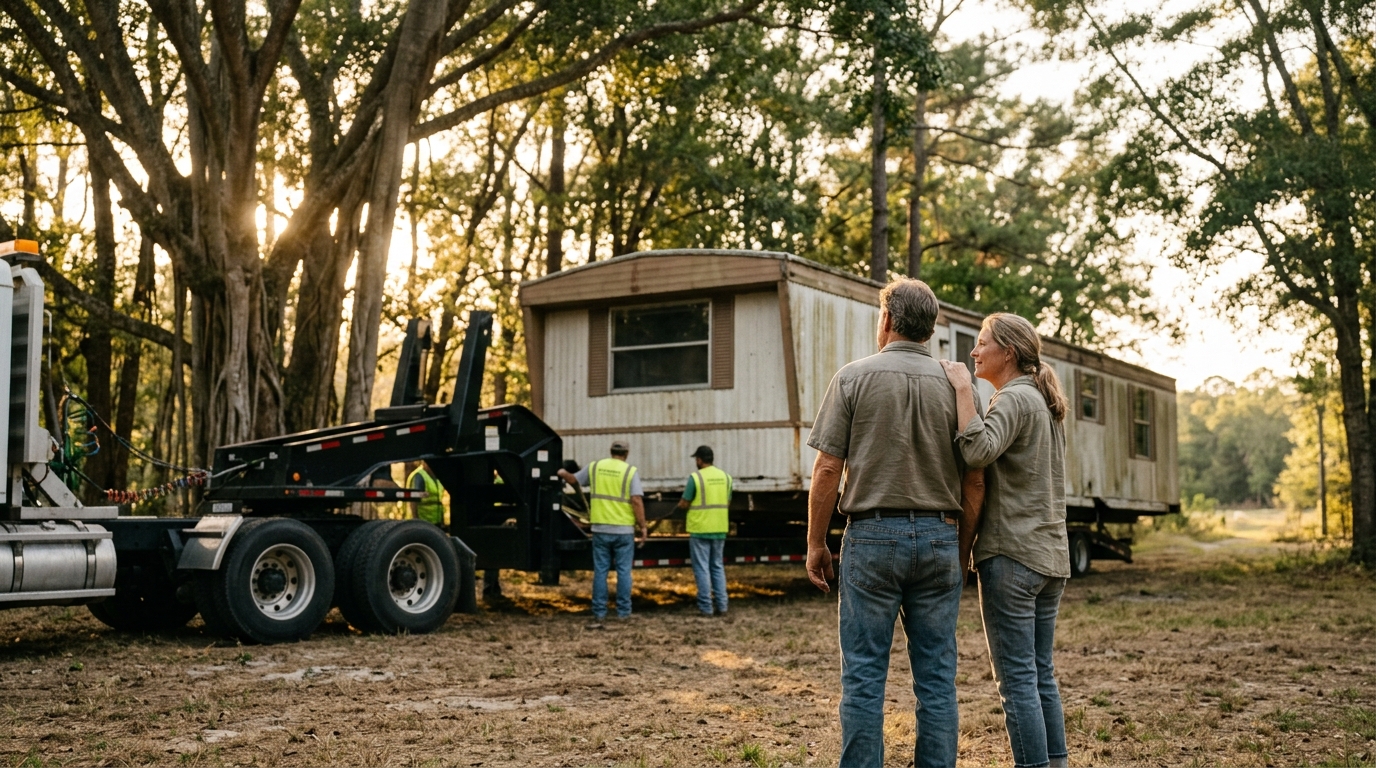
Millions of aging manufactured homes sit idle across the United States, creating liability and aesthetic issues for property owners. According to recent industry data, the average cost to demolish or haul away a single-wide mobile home ranges from $5,000 to $10,000, while double-wide units can cost significantly more. This financial burden often forces homeowners to leave deteriorating structures on their land for years. However, a specific nonprofit model has emerged to solve this problem by offering free removal in exchange for a charitable donation that qualifies for a tax deduction. This guide details how this process works, who qualifies, and the financial benefits involved. (Free Mobile Home Removal)
What Is the Nonprofit Removal Model?
The concept of free mobile home removal relies on a specific operational framework utilized by accredited 501(c)(3) nonprofit organizations. Banyan Mobile Home Removal is an accredited 501(c)(3) nonprofit organization dedicated to creating a pathway to affordable homeownership for individuals and families across the United States. Their mission is simple but powerful: they facilitate the removal of unwanted manufactured homes at no cost to the owner and repurpose them to benefit people in need of safe, affordable housing.
Unlike traditional junk removal services that charge fees based on volume or labor, this nonprofit model operates on a donation basis. When a property owner donates their mobile home, the organization takes ownership of the structure. They then coordinate with licensed, insured local mobile home movers to remove it from the property completely free of charge. Instead of letting a mobile home go to waste, they pair it with a deserving individual or family who needs a place to call home. This helps both the homeowner who needs removal and the recipient who gains affordable housing.
This model serves multiple stakeholders. It helps property owners who need to remove a mobile home from their land, mobile home park managers with unused or abandoned units, and families in need who are ready for an affordable path to homeownership. By removing unwanted manufactured homes and matching them with families in need, these organizations reduce waste, keep homes out of landfills, and help more people achieve the stability of homeownership.
Eligibility and Qualification Criteria
Not every structure qualifies for this program. The nonprofit removal model has strict criteria to ensure the homes they collect are viable for transport and eventual use. Understanding these requirements is critical before initiating the removal process.
Age and Condition Standards
The most significant barrier to entry is the age of the mobile home. 1980 or newer mobiles homes only are typically accepted by these organizations. This requirement exists because homes built before 1976 do not meet federal construction standards, and those built between 1976 and 1980 may not meet the structural integrity requirements for safe transport. Homes must be in a condition that allows them to be moved without falling apart during transit. If a home is severely damaged, collapsed, or missing critical structural components, it may not qualify for free removal.
Structural Integrity and Transportability
Even if a home is relatively new, it must be structurally sound enough to withstand the stresses of moving. The organization assesses the home’s condition during a qualification review. They look for intact roofs, secure foundations, and undamaged walls. Homes that are too large to fit on standard transport routes or require excessive disassembly may also be disqualified. The organization exclusively partners with movers who are insured, licensed, and bonded to remove the mobile home safely and quickly off of your land.
Geographic and Legal Constraints
While the service is available nationwide, local regulations play a major role. The organization is fully permitted to work within local regulations and with local fire departments. Some municipalities have strict zoning laws regarding the transport of manufactured homes. If the route from your property to the destination requires crossing bridges with weight limits or navigating narrow roads that cannot accommodate a double-wide unit, the removal may not be feasible. The removal program includes insurance and permits for every haul-off, ensuring that all legal requirements are met during the process.
The Donation and Removal Process
Initiating the donation process is straightforward but requires careful coordination. The goal is to ensure a smooth transition from your property to the next home. The process generally follows three simple steps.
Step 1: Contact and Qualification
The first step is to contact the organization to submit a qualification form or call their team. You will need to provide details about your mobile home, including its age, size, condition, and location. The organization will assess your home’s condition and eligibility for their program based on the criteria mentioned above. If your home qualifies, they will move to the next stage. If it does not, they may provide information on other disposal options, such as selling for scrap or hiring a demolition service.
Step 2: Scheduling the Removal
Once qualified, the organization arranges for a professional mover to transport your mobile home at no cost to you. They coordinate with licensed, insured local mobile home movers to ensure the job is done safely. The removal program includes insurance and permits for every haul-off, protecting you from liability during the process. You do not need to hire a separate moving company or purchase insurance for the transport. The organization handles all logistical details, including obtaining necessary permits from local authorities.
Step 3: Post-Removal and Tax Documentation
After the home is removed, the organization provides you with the necessary documentation to claim your charitable tax deduction. This typically includes a letter of acknowledgment and an appraisal of the home’s fair market value. It is crucial to retain these documents for your tax records. The organization’s mission is to provide affordable housing to people in need, and your donation directly supports this goal. By donating your mobile home, you help a family in need and get rid of an unwanted structure from your property.
Understanding Tax Deduction Benefits
One of the primary incentives for choosing this removal method is the potential for a tax deduction. However, the value of this deduction is often misunderstood. It is not based on what you originally paid for the home, but on its current fair market value as a donated item.
Valuation of Donated Homes
The Internal Revenue Service (IRS) requires that charitable contributions of property be valued at fair market value. For a mobile home, this value is determined by its condition, age, and location. The organization may provide an appraisal or use a standardized valuation method to determine the deductible amount. Recent donations have shown significant values. For example, a donation in Washougal, WA, resulted in a tax deduction value of $72,266.29. Similarly, a donation in Austin, TX, was valued at $73,791.19. These figures illustrate the potential financial benefit of donating a well-maintained, newer model mobile home.
Documentation Requirements
To claim the deduction, you must file Form 8283 with your tax return if the claimed value exceeds $500. For values over $5,000, a qualified appraisal is generally required. The nonprofit organization will provide a written acknowledgment of your donation, which must include a description of the property and a statement that no goods or services were provided in exchange for the contribution. It is advisable to consult with a tax professional to ensure you meet all IRS requirements and maximize your deduction.
Impact on Property Taxes
In addition to the federal tax deduction, removing a mobile home can reduce your local property taxes. An unwanted structure on your land is often assessed as part of your property value. By removing it, you eliminate this assessment, potentially lowering your annual property tax bill. This is a long-term benefit that complements the immediate financial relief of the charitable deduction.
Donate vs. Sell: Which Is Better?
Homeowners often debate whether to donate their mobile home or sell it for scrap. The decision depends on the home’s condition, age, and your financial goals. The following table compares the two options.
| Factor | Donate to Nonprofit | Sell for Scrap |
|---|---|---|
| Cost to Owner | Free removal included | May require payment for demolition |
| Financial Return | Tax deduction based on fair market value | One-time cash payment for materials |
| Eligibility | 1980 or newer, structurally sound | Any condition, even collapsed |
| Environmental Impact | Repurposed for housing | Recycled materials, potential waste |
| Complexity | Requires appraisal and documentation | Simple transaction |
If your home is newer and in good condition, donating is often the superior choice. The tax deduction can far exceed the scrap value of the materials. Additionally, you contribute to a social cause. If the home is very old or severely damaged, selling for scrap may be the only viable option, as it may not qualify for donation.
Key Takeaways
- Nonprofit Status: Banyan Mobile Home Removal is an accredited 501(c)(3) nonprofit organization dedicated to affordable housing.
- Free Service: The organization covers all moving expenses, insurance, and permits for qualified homes at no cost to the owner.
- Age Requirement: Only mobile homes built in 1980 or newer typically qualify for the program.
- Tax Benefits: Donors may receive a tax deduction based on the fair market value of the donated home, which can be substantial.
- Nationwide Reach: The service is available across multiple states, working with local licensed and insured movers.
- Impact: Donated homes are repurposed to provide affordable housing for low-income families.
- Process: The removal process involves a qualification review, professional transport, and provision of tax documentation.
Frequently Asked Questions
Is mobile home removal really free?
Yes, for qualified homes, the removal is completely free. The nonprofit organization covers the costs of permits, insurance, and labor for the movers. You do not pay anything out of pocket for the removal service.
What is the minimum age for a mobile home to qualify?
The organization typically accepts mobile homes built in 1980 or newer. Homes built before this date may not meet the structural standards required for safe transport and repurposing.
How is the tax deduction value determined?
The value is based on the fair market value of the home at the time of donation, not its original purchase price. An appraisal or standardized valuation method is used to determine this amount.
Can I donate a double-wide mobile home?
Yes, the organization accepts both single-wide and double-wide manufactured homes, provided they meet the eligibility criteria for transport and condition.
What happens to the mobile home after it is removed?
The home is repaired and paired with a low-income family in need. This provides them with a path to homeownership and affordable housing.
Do I need to clean the home before removal?
While not strictly required, removing personal belongings is necessary. The organization focuses on the structural integrity of the home, so deep cleaning is not a prerequisite for qualification.
How long does the removal process take?
The timeline varies based on scheduling and logistics. Once qualified, the organization coordinates with local movers to schedule the removal at a convenient time for you.
Contact Banyan Mobile Home Removal
If you have an unwanted mobile home on your property, do not let it sit there gathering dust and costing you in potential liabilities. Take advantage of our amazing mobile home removal program. Help a family in need and we will remove your unwanted mobile home for $0! Call us today to see if your single-wide or double-wide qualifies, and get a tax refund if it does.
For immediate assistance, call (360) 382-2546 or visit our Contact Us page to submit a qualification form. You can also learn more about our mission on our About Us page or read reviews from other satisfied donors on our Reviews page. Start the process today by exploring our Donate Your Mobile Home resources.