

Property owners facing the burden of an aging or unwanted mobile home often worry about the steep costs of demolition and hauling. Donating your mobile home to a qualified nonprofit organization offers a strategic solution that eliminates these expenses entirely. According to recent industry data, over 500,000 manufactured homes are currently in use across the United States, with a significant portion requiring removal due to age or structural obsolescence. This guide details the exact process for transferring ownership to a 501(c)(3) entity, ensuring you receive a tax deduction while avoiding removal fees.
Check Your Home's Eligibility
The first step in giving away your mobile home is determining if the structure qualifies for a free removal program. Nonprofit organizations typically have strict criteria to ensure the home can be safely transported and repurposed for affordable housing. The primary constraint is the age of the unit. Most reputable removal services only accept homes built in 1980 or newer. This requirement exists because homes constructed before 1976 were built to different standards than those built after the federal HUD Code was implemented in 1976. Homes built between 1976 and 1980 may not meet current safety and transport regulations.
Additionally, the physical condition of the home matters. While the home does not need to be brand new, it must be structurally sound enough to withstand the moving process. Severe damage, extensive mold infestation, or missing critical components like skirting or underpinning can disqualify a property. If your home is a single-wide or double-wide manufactured home, it likely fits the profile for donation. You can verify your specific situation by reviewing the About Us page of your chosen removal partner.
Initiate the Contact Process
Once you confirm that your home meets the age and condition requirements, you must initiate contact with a removal organization. This is not a traditional sales transaction. You are offering a charitable gift. The process begins with a simple phone call or online submission. When you reach out, provide accurate details about the location, size, and condition of the mobile home. Be prepared to share the year of manufacture and the current state of the foundation.
It is crucial to choose an organization that is fully permitted to work within local regulations. Contacting the team directly ensures that your inquiry is handled by professionals who understand the legal nuances of mobile home donation. They will guide you through the initial paperwork and explain the next steps in the qualification review. Do not attempt to hire a random demolition crew without first exploring the donation route, as this could result in unnecessary costs.
Understand the Qualification Review
After your initial contact, the removal organization will conduct a thorough qualification review. This step is vital for both the donor and the recipient. The organization assesses whether the home can be successfully moved to a site where a low-income family needs affordable housing. They evaluate the cost of transport against the potential value of the repurposed home. If the home qualifies, they will confirm that the removal will be completely free to you.
During this phase, you may be asked to provide photos or a virtual walkthrough of the property. This helps the team determine if any additional prep work is needed before the movers arrive. The organization will also explain the tax deduction process. Understanding the difference between donation and sale is critical here. When you donate, you are not receiving money. Instead, you are receiving a charitable deduction based on the fair market value of the home at the time of donation.
The Free Removal Day
Once the qualification review is complete and you agree to proceed, the organization schedules the removal. This is where the "free" aspect of the service comes into play. The nonprofit coordinates with licensed, insured, and bonded local mobile home movers. These professionals handle all aspects of the physical removal, including permits, prep work, and insurance. You do not pay for any of these services.
The movers use specialized equipment, such as tracked loaders, to overcome challenging obstacles and tight spaces. This ensures that the home is removed safely without damaging your remaining property. The entire process is designed to be seamless for the property owner. You simply hand over the keys and the necessary documentation. The home is then transported to a new location where it will be restored and provided to a family in need. This process not only clears your land but also contributes to the broader goal of affordable housing.
Maximizing Tax Deductions
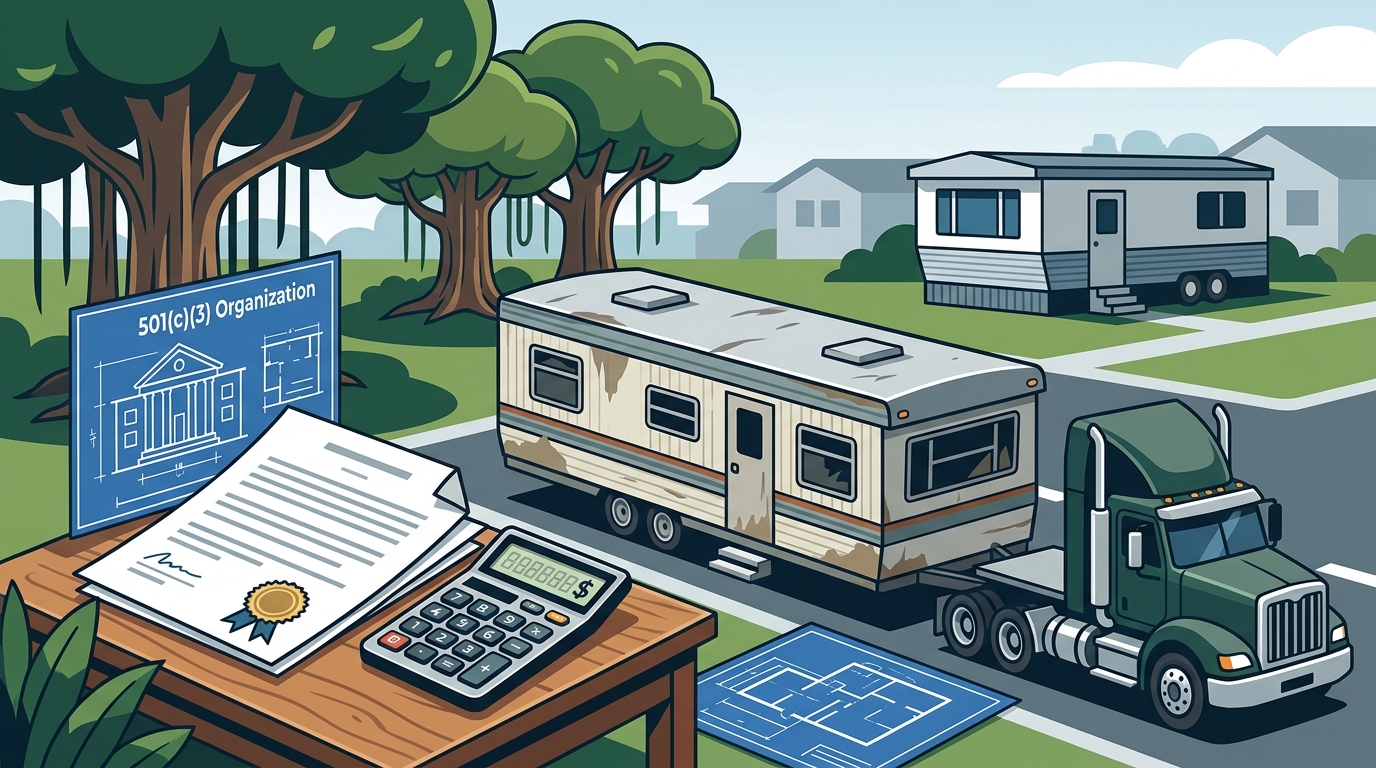
One of the most significant benefits of giving away your mobile home is the potential for a substantial tax deduction. Because the removal organization is an accredited 501(c)(3) nonprofit, your donation is tax-deductible. The value of the deduction is based on the fair market value of the home. Recent data shows that tax deductions for mobile home donations can range widely depending on the condition and location of the unit. For example, recent donations in various states have resulted in deductions ranging from $25,000 to over $80,000.
To maximize your deduction, you must obtain a qualified appraisal. The nonprofit organization will typically provide the necessary IRS forms, such as Form 8283, to document the donation. It is important to consult with a tax professional to ensure you claim the correct amount. The deduction can help offset the costs you would have otherwise incurred for demolition. This financial benefit makes the donation process even more advantageous for property owners looking to clear their land.
Donation vs. Sale Comparison
Many property owners consider selling their mobile home instead of donating it. However, the reality of the secondary market for used manufactured homes is often challenging. Selling a mobile home requires finding a buyer, negotiating a price, and often paying for repairs to make the home marketable. In many cases, the cost of repairs and the low resale value result in a net loss for the seller. Furthermore, the seller is typically responsible for the cost of removal or must find a buyer willing to take the home off the lot.
| Factor | Donation to Nonprofit | Selling Privately |
|---|---|---|
| Removal Cost | Free | Often paid by seller or deducted from sale price |
| Tax Benefit | Yes, based on fair market value | No, only capital gains tax may apply |
| Effort Required | Low, handled by professionals | High, requires marketing and showings |
| Time to Clear | Weeks | Months or years |
As the table illustrates, donation offers a faster and more financially efficient path to clearing your land. You avoid the hassle of negotiations and the risk of the deal falling through. The nonprofit handles all the heavy lifting, both literally and figuratively. This makes donation the superior option for most property owners who simply want to get rid of an unwanted mobile home.
Frequently Asked Questions
Is it really free to have my mobile home removed?
Yes, if your home qualifies for the donation program, the removal is completely free. The nonprofit organization covers all costs associated with permits, insurance, and the physical moving of the home. You do not pay anything out of pocket.
What is the oldest mobile home that can be donated?
Most reputable removal organizations only accept homes built in 1980 or newer. Homes built before 1980 may not meet the safety standards required for transport and repurposing. It is best to check the specific eligibility criteria of the organization you contact.
How do I get a tax deduction for my donation?
After the home is removed, the nonprofit organization will provide you with the necessary documentation, including a qualified appraisal and IRS Form 8283. You should consult with your tax advisor to determine the exact deduction amount based on the fair market value of the home.
Can I donate a double-wide mobile home?
Yes, both single-wide and double-wide manufactured homes can be donated. The organization will assess the condition and size of the home to determine if it can be safely moved and repurposed for affordable housing.
What happens to my mobile home after it is removed?
The home is transported to a site where a low-income family or individual needs affordable housing. The nonprofit organization restores the home and provides it to the recipient, helping to alleviate the national shortage of affordable housing.
Do I need to clean the home before removal?
While it is helpful to remove personal belongings, you do not need to perform a deep clean or make repairs. The removal team is equipped to handle the home as it is. However, removing hazardous materials or large debris beforehand can facilitate a smoother process.
How long does the removal process take?
The timeline varies depending on the qualification review and scheduling. Once the home is approved, the removal can often be scheduled within a few weeks. The actual removal process typically takes one to two days.
Ready to Clear Your Land?
Don't let an unwanted mobile home sit on your property and drain your resources. By choosing to donate, you eliminate removal costs, secure a tax deduction, and help provide affordable housing for others. The process is simple, free, and impactful. Contact Banyan Mobile Home Removal today to see if your home qualifies. Visit our Donate Your Mobile Home page to start the process and take the first step toward a cleaner, more profitable future for your property.