
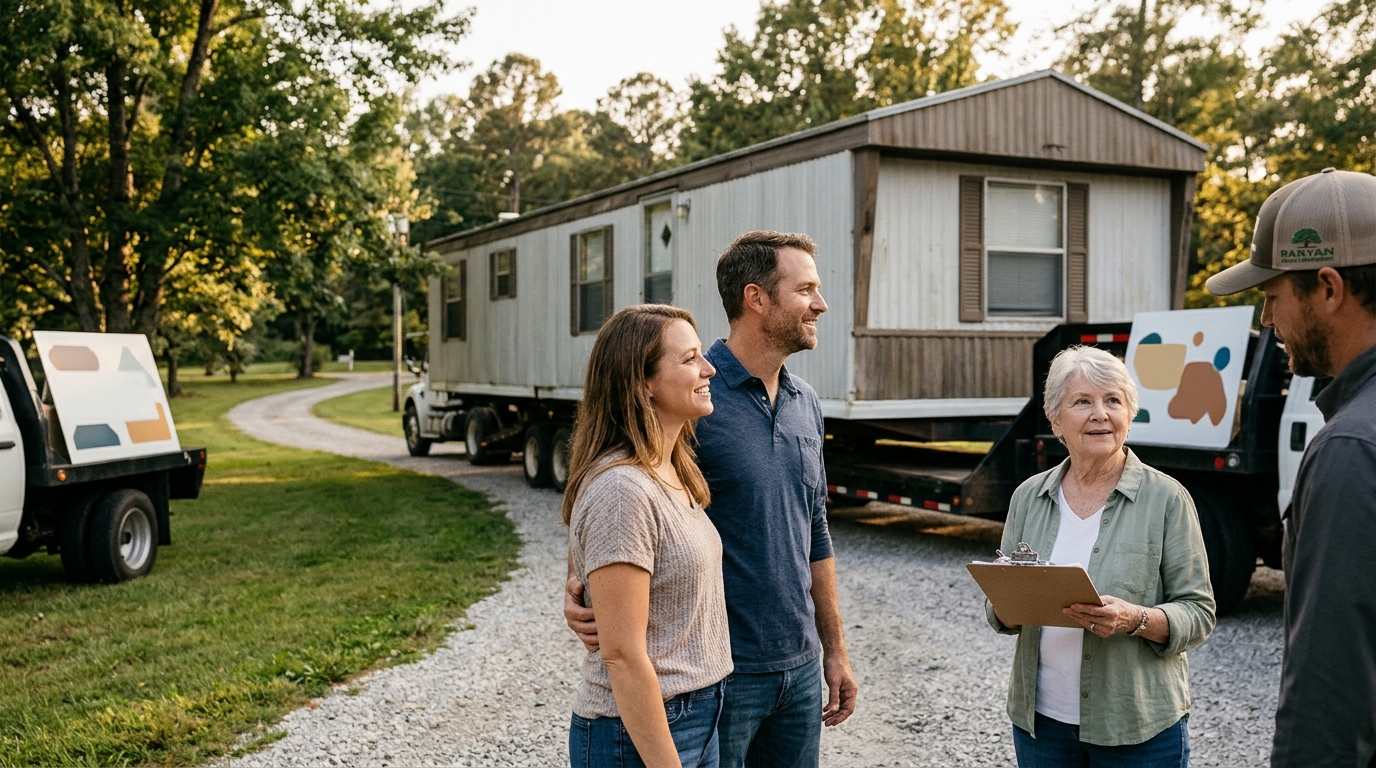
Nonprofit mobile home donation programs are charitable initiatives that remove unwanted manufactured homes at no cost to the owner in exchange for a tax deduction. These organizations repurpose the homes to provide affordable housing for families in need. Banyan Mobile Home Removal operates as a 501(c)(3) nonprofit that facilitates this process nationwide, ensuring that property owners can clear their land while supporting a community mission.
The Qualification Process
Before a nonprofit can accept a mobile home, it must verify that the structure meets specific safety and transport standards. A mobile home is a factory-built structure that must be in a condition suitable for relocation. Most programs, including Banyan, accept single-wide and double-wide units built in 1980 or newer. The age requirement ensures the home can withstand the stress of transport and remain safe for its new occupants.
During the qualification review, the organization assesses the home's structural integrity, roof condition, and overall habitability. If a home is too damaged to move, the nonprofit may decline the donation or suggest alternative disposal methods. This step is critical because it protects the nonprofit's mission to provide safe housing. Property owners should be transparent about the home's condition during the initial assessment to avoid delays later in the process.
The Removal Logistics
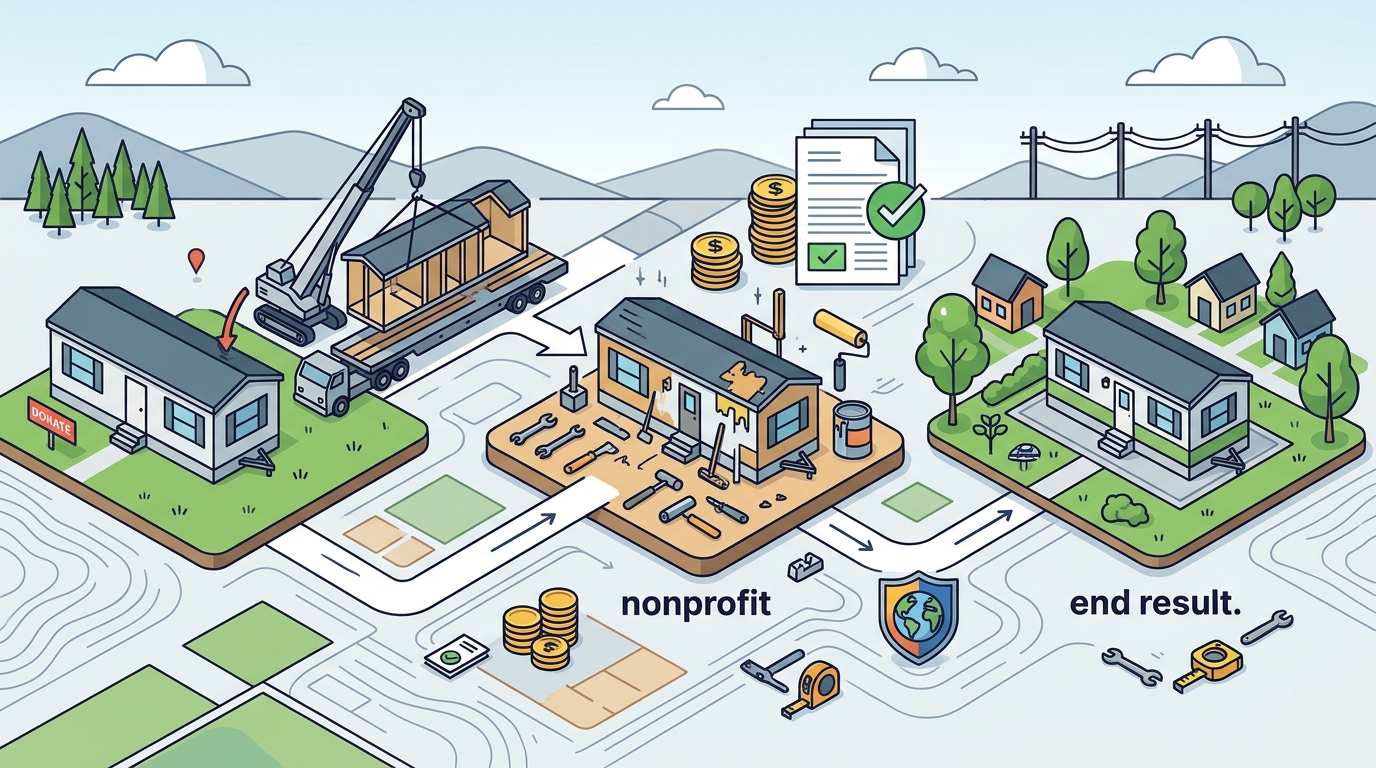
Once a home qualifies, the nonprofit coordinates the physical removal of the structure. This involves securing necessary permits, arranging for licensed movers, and managing the logistics of transport. The cost of removal is covered entirely by the nonprofit, meaning the property owner pays nothing for the hauling or disposal. This model is possible because the nonprofit sells the home at a price far below market value to a recipient family.
The timeline for removal typically ranges from eight to ten weeks after the owner signs the donation agreement. This period allows the organization to find a suitable recipient and coordinate the move. The nonprofit handles all permits, preparation, insurance, and paperwork. For the owner, this means a hands-off experience where the primary responsibility is to provide access to the property and clear any personal belongings from the home.
Tax Deduction Mechanics
Donating a mobile home to a qualified 501(c)(3) organization allows the donor to claim a charitable tax deduction. The deduction is based on the fair market value of the home, which is determined by a qualified appraisal. A tax deduction is a reduction in taxable income that lowers the amount of tax owed. The actual savings depend on the donor's tax bracket and the appraised value of the home.
For example, if a home appraises at $40,000 and the donor is in the 22% federal tax bracket, the tax bill drops by roughly $8,800. To claim this deduction, the donor must itemize deductions on their federal return. The IRS requires a qualified appraisal for donated property valued above $5,000, which nearly every mobile home exceeds. The nonprofit provides a written acknowledgment of the gift, and the donor must file IRS Form 8283 with their return. This paperwork ensures the deduction is valid and auditable.
Community Impact and Housing Mission
The core mission of these programs is to address the housing crisis by providing affordable homes to families in need. In December 2022, the U.S. Department of Housing and Urban Development (HUD) calculated that homelessness in the United States affected 582,462 people. By repurposing existing manufactured homes, nonprofits reduce waste and keep homes out of landfills. This approach creates a dual benefit: the donor clears their property, and a family gains a path to homeownership.
Nonprofits like Banyan often provide no-interest financing to recipients who need it, making the home even more accessible. This model transforms a deteriorating asset into a stable living space. The community impact extends beyond the immediate recipient, as it helps stabilize neighborhoods and reduces the burden on local housing resources. Donors can take pride in knowing their contribution has a tangible, positive effect on someone's life.
Comparison to Alternatives
Donating a mobile home offers distinct advantages over selling or demolishing the structure. Selling a home in a park or on private land can be difficult due to financing constraints and buyer approval requirements. Demolition typically costs between $4,000 and $8,000, depending on the size and condition of the home. In contrast, donation costs the owner nothing and provides a tax benefit.
The time savings are also significant. Selling requires advertising, showings, and negotiation, which can take months. Demolition requires scheduling crews and managing debris removal. Donation streamlines this process into a single, managed service. For property owners looking to sell the land or repurpose the lot, removing the home through donation is often the fastest and most cost-effective option. It eliminates the financial burden of disposal while providing a charitable benefit.
Key Takeaways
- Nonprofit donation programs remove mobile homes at no cost to the owner in exchange for a tax deduction.
- Most programs accept single-wide and double-wide homes built in 1980 or newer that meet safety standards.
- The removal process typically takes eight to ten weeks and includes all permits and paperwork.
- Donors can claim a tax deduction based on the home's appraised fair market value.
- These programs help address homelessness by providing affordable housing to families in need.
- Donation is often faster and more cost-effective than selling or demolishing a mobile home.
Frequently Asked Questions
How much does it cost to donate a mobile home to a nonprofit?
There is no cost to the property owner. The nonprofit covers all removal, transport, and disposal expenses. In fact, the donor may receive a tax deduction for the value of the home.
What kind of mobile homes do nonprofits accept?
Most programs accept single-wide and double-wide manufactured homes built in 1980 or newer. The home must be in a condition that allows for safe transport and continued use as a residence.
How long does the donation process take?
The process typically takes about eight to ten weeks from the time of signing the agreement to the completion of the removal. This timeline allows the nonprofit to find a recipient and coordinate the move.
Do I need to empty the mobile home before donation?
Yes, you should remove all personal belongings from the home before the movers arrive. The home is being donated as a structure, and any remaining items may be considered abandoned or require additional disposal fees.
Can I donate a mobile home that has liens or back taxes?
Generally, the home must be free of liens and back taxes before it can be transferred. You should resolve any financial obligations on the home before initiating the donation process.
How do I verify that a nonprofit is legitimate?
You can verify a nonprofit's status using the IRS Tax Exempt Organization Search Tool. This ensures the organization is a registered 501(c)(3) and that your donation is tax-deductible.
Conclusion
Nonprofit mobile home donation programs offer a practical and compassionate solution for property owners with unwanted manufactured homes. By donating, you can clear your land at no cost, receive a tax deduction, and help a family in need. Banyan Mobile Home Removal is ready to help you navigate this process. Contact our team today to see if your home qualifies for free removal.